Why This Famous Hollywood Heartthrob Abandoned Stardom To Save His Soul
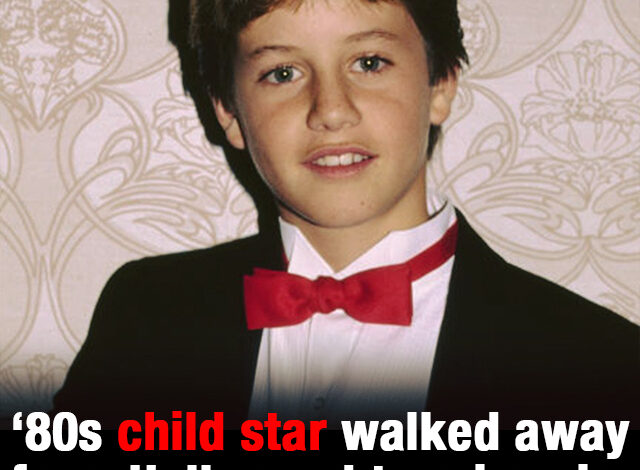
The brightest lights in Tinseltown often conceal the darkest secrets, and for one teen icon, the glittering allure of fame became a terrifying cage he had to escape to survive. He was the face of the 1980s, plastered on every locker and teen magazine, yet behind the scenes, he was staring into a bottomless abyss of ego and moral decay. While the world saw an easy life of luxury and endless opportunity, he saw a twisted sickness that threatened to destroy his humanity. He made the unthinkable decision to walk away from it all at the peak of his career.
Kirk Cameron’s journey into the heart of the industry was never his intended path. He was a bright, driven young man who harbored a genuine dream of becoming a surgeon, not a performer. His entry into acting was purely accidental, sparked when his mother was encouraged by a family friend—the mother of fellow child star Adam Rich—to introduce her son to the world of agents and commercial auditions. He landed his first role in a McDonald’s advertisement, and despite his palpable lack of enthusiasm for the craft, his trajectory was set. He was perpetually annoyed by the grooming and the traffic-choked drives to auditions, yet the offers kept rolling in.
His big break came with the iconic role of Mike Seaver in the hit series Growing Pains, a performance that launched him into a stratosphere of fame he never asked for and deeply resented. As he navigated the pressures of being a young star, he felt a profound internal dissonance. He was performing for millions, yet he felt entirely untethered from his own identity. During his formative teenage years, he was surrounded by educators and peers who openly mocked religious belief as a mere fairy tale, and he adopted a staunch atheistic worldview simply by contagion.
The seismic shift in his life came from a place of unexpected vulnerability. He met a young woman he was interested in, and she invited him to attend church with her family. He later admitted, with refreshing honesty, that his initial motivation was entirely romantic rather than spiritual. However, the experience of that first service acted as a catalyst that would fundamentally rewire his perception of reality. The impact of his burgeoning faith was so immediate and undeniable that even his colleagues in the cutthroat, secular environment of Hollywood began to take notice.
The producers of Growing Pains, accustomed to the predictable behavior of young stars, became increasingly anxious about his transformation. They worried that his newfound devotion would alienate his fanbase or, worse, make him difficult to manage. He recalled a time when his commitment to his faith was treated as a descent into madness, with co-workers openly asking if he was going “Looney Town.” In truth, he was simply trying to navigate his professional life through the lens of a newly established moral compass. He was searching for a higher purpose in a town that he felt was consumed by power, pride, and ego.
His disillusionment reached a breaking point as he gained a clearer view of the industry’s darker underbelly. The recent revelations surrounding individuals like his former dialogue coach, Brian Peck—who has been exposed as a predator in the industry—only validated the deep-seated sense of sickness Cameron had felt all those years ago. He realized that Hollywood’s relentless hunger for fame often came at the cost of the vulnerable. For Cameron, the choice became binary: remain in an environment he viewed as spiritually corrosive or exit the industry entirely to preserve his own integrity.
He made the choice to leave at the young age of twenty, not out of a loss of opportunity, but out of a gain in conviction. He married his co-star, Chelsea Noble, and they embarked on a life that looked radically different from the one the tabloids had predicted for them. Their life together became centered on family and faith, eventually growing to include six children, four of whom were adopted. Adoption became a cornerstone of their existence, as both Kirk and Chelsea were passionate about the process and ensured their children understood their origins, even facilitating reunions with their biological families when the time was right.
By 2021, Cameron felt it was time for another change. He took to social media to announce that he was moving his family out of California, citing a desire for a life rooted in more “wholesome values” and a “healthy freedom mindset.” He settled in Tennessee, a state he views as a hub for faith-based projects and a place where he could finally be close to three of his children who had already established their own lives there. The move allowed him to step away from the relentless intensity of the West Coast and embrace a pace of life that felt more aligned with his personal philosophy.
The transition to Tennessee has been everything he hoped for, culminating in the joyous news in 2024 that he had become a grandfather. He shared the arrival of his granddaughter, Maya Jeanne Noble Bower, with a sense of overflowing gratitude, noting that he couldn’t wait to shower her with love. This new role has brought him a sense of fulfillment that fame never could. Yet, he hasn’t stopped working; he simply changed the nature of his work. He continues to pursue passion projects, including his 2022 film Lifemark, which focuses on the beauty of life and the transformative power of adoption—a project that drew directly from his own personal and familial experiences.
Kirk Cameron’s path is a rare story of a man who looked at the biggest stage in the world and decided it wasn’t worth the price of his soul. He proved that you can walk away from the golden handcuffs of celebrity and build a life of genuine impact and happiness on your own terms. He remains a man who follows his own compass, undeterred by the judgment of an industry he once called home. It is a heartwarming journey of a man who traded the fleeting applause of the masses for the enduring, quiet rewards of family, faith, and a legacy that he actually believes in.