TRAGEDY AT AINTREE AS JOCKEY WHIPS DYING HORSE ACROSS FINISH LINE IN SHOCKING FINAL SECONDS OF LIVERPOOL RACE THAT LEFT VIEWERS IN TEARS
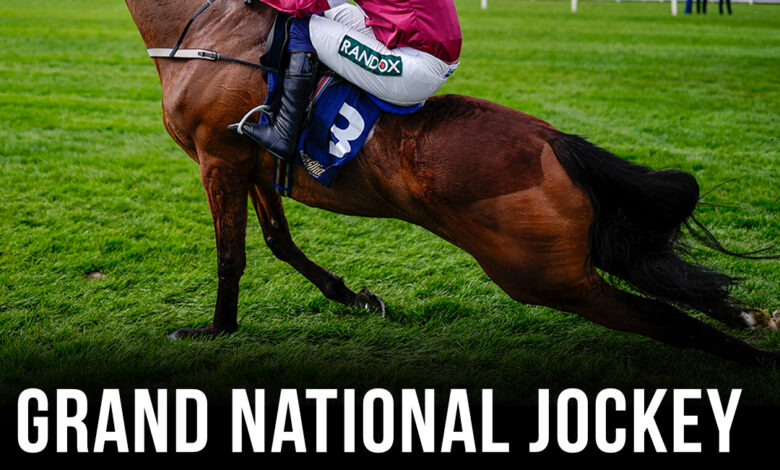
The final agonizing seconds of Gold Dancer’s last race have left the sporting world shaken and ignited a firestorm of controversy over the ethics of modern horse racing. In a scene that has been described as both horrific and heartbreaking the seven year old gelding was forced to drag his failing back legs across the finish line at the Aintree Festival before collapsing into a heap only moments later. This tragic event occurred on April 10 2026 just one day before another horse Get on George would lose his life at the same venue adding to a mounting death toll that has animal welfare activists calling for an immediate and permanent end to the spectacle. Spectators watched in stunned silence as Gold Dancer pushed forward with the sting of a whip striking his flanks despite a catastrophic landing over the final fence that had clearly broken his spirit and unknown to the crowd his spine.
The tragedy began at the final obstacle of the Mildmay Novices Chase. Gold Dancer had been running with immense power and seemed poised for a standard victory until he met the last fence. As he landed his hindquarters slipped sharply on the turf a movement that caused his back legs to splay out to the side in a sickening display of physical trauma. To the trained eye it was the moment the race should have ended but in the high stakes environment of the Aintree Festival the momentum of the competition rarely halts for injury. James Given the director of equine health and welfare for the British Horseracing Authority later explained that the horse appeared to organize himself quickly after the slip taking a half stride before galloping away toward the finish.
Despite the hidden severity of the injury jockey Paul Townend continued to drive Gold Dancer forward using his whip to ensure the horse maintained its lead. Gold Dancer responded with the loyalty characteristic of elite thoroughbreds winning the race by four lengths. It was only after the finish line was crossed and the adrenaline of the chase began to fade that the true extent of the horror became visible to the thousands in attendance. Within seconds of pulling up the horse’s coordination vanished. Townend dismounted almost instantly as veterinary teams rushed onto the track raising large green screens to shield the public and the cameras from the grim reality unfolding on the grass.
Behind those screens the news was as bad as it could possibly be. Gold Dancer had suffered a catastrophic fracture to his lumbar region essentially breaking his back during that final landing. The injury was far beyond the reach of medical intervention and the decision was made to euthanize the gelding on the spot. Eddie O’Leary the racing manager for Gigginstown expressed the deep sadness of the owners but defended the jockey’s actions. He noted that Townend reported the horse felt fine and balanced during the gallop to the finish and that it was only when the horse slowed down and attempted to turn that the injury became apparent. This sentiment was echoed by the British Horseracing Authority’s inquiry which determined that the horse stayed as straight as an arrow during those final strides showing no signs of asymmetry that would have alerted a rider to a broken back.
However the lack of disciplinary action against the jockey has done little to quiet the roar of international condemnation. Animal welfare organizations like People for the Ethical Treatment of Animals have pointed to Gold Dancer’s death as a foreseeable consequence of an inherently hazardous sport. PETA has long argued that the combination of extreme distances high speeds and daunting fences creates a lethal environment where horses are frequently pushed beyond their biological limits. According to data from Animal Aid the festival has seen 76 horse fatalities since the year 2000 including the high profile deaths of young competitors like Willy De Houelle and veterans like Celebre d’Allen. The organization argues that these are not freak accidents but rather the inevitable results of a business model designed to maximize gambling revenue and viewer entertainment at the expense of animal lives.
The debate has moved beyond the specifics of Paul Townend’s ride and into the broader morality of jump racing. Critics argue that if the same level of harm and physical trauma seen on the Aintree track were inflicted on an animal in any other context it would be legally prosecuted as a clear case of animal abuse. Emma the chief executive at the League Against Cruel Sports has called for a total boycott of the festival urging the public to refuse to bet on a sport that she claims glosses over inherent cruelty with tradition and fashion. She noted that Gold Dancer is merely the latest victim in a heartless spectacle that flies in the face of modern welfare standards.
The statistics surrounding horse racing fatalities offer a sobering perspective on the risks involved. While the industry points to a decline in overall fatality rates over the last two decades the concentrated nature of deaths at events like the Grand National remains a point of intense scrutiny. In the United Kingdom the fatal injury rate for jump racing is significantly higher than that of flat racing with approximately 4 out of every 1000 starts resulting in a fatality. At high intensity events like Aintree these numbers can spike leading to multiple deaths in a single weekend. Activists argue that no level of perceived entertainment or economic benefit can justify a death rate that accepts the breaking of an animal’s back as a routine part of the business.
For the fans who witnessed Gold Dancer’s final strides the memory of the horse dragging his paralyzed hindquarters across the line remains a haunting image. It serves as a stark reminder of the physical cost of the victory and the immense pressure placed on these animals to perform even when their bodies are failing. The incident has forced a conversation about whether the rules of racing should be changed to provide jockeys with more immediate indicators of equine distress or if the nature of the obstacles themselves must be fundamentally redesigned to prevent such catastrophic spinal injuries.
As the racing world moves forward the shadow of Gold Dancer and Get on George looms large over the future of the Aintree Festival. The calls for reform are growing louder fueled by a public that is increasingly uncomfortable with the sight of horses dying for a cheap bet. Gold Dancer’s final moments have become a symbol of the struggle between a centuries old tradition and an evolving societal conscience that demands a higher standard of care for the creatures we use for sport. Whether the industry can adapt to these demands or if the Grand National will eventually succumb to the weight of its own casualties remains to be seen. For now the only certainty is that a young horse with immense potential is gone leaving behind a trail of unanswered questions and a legacy of tragedy on the Liverpool turf.