This Wheel Of Fortune Puzzle Has Fans Arguing Wait Until You See The Answer See More
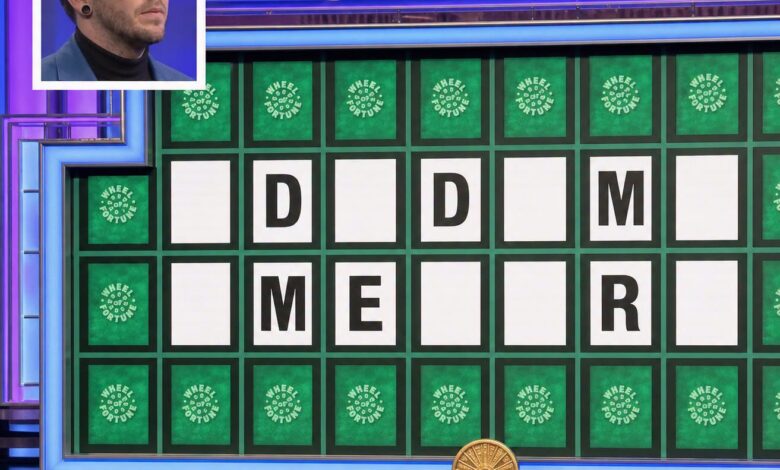
A Wheel of Fortune Bonus Round left viewers debating whether the solution belonged in the category Phrase or was merely an ordinary sentence. Commercial pilot Conner Kemmsies entered the round on a Valentine’s Day episode with 19080 dollars in cash and prizes. The final puzzle offered him a chance at another 40000 dollars, but one missing word kept the answer out of reach until the buzzer sounded.
The board gradually gave Kemmsies the beginning I DID MY. That partial wording allowed many possible endings, and the category did not point to a person, place, or object that might narrow the search. He tried to complete the thought while the short countdown ran. The final word never came, and the puzzle was revealed as I DID MY HOMEWORK.
Kemmsies responded with humor, saying that he did not do homework anymore. He had already won a substantial total, so the missed bonus did not erase a successful game. The audience discussion focused less on his performance than on the classification of the solution. Some viewers recognized the completed line immediately, while others argued that almost any complete sentence could be labeled a phrase under such a broad standard.
In ordinary language, a phrase is sometimes used loosely for a group of words or a familiar expression. In grammar, a phrase often means a group of words that does not form a complete clause in the same way a sentence does. Game-show categories do not always follow a classroom grammar definition. They operate as puzzle labels developed through the program’s own conventions, and Phrase has long covered many conversational expressions and statements.
That history explains the official answer but not the frustration. A bonus puzzle supplies relatively few letters and only seconds to guess. A category that feels too broad offers limited strategic help. I DID MY could be followed by best, part, duty, research, makeup, shopping, or many other words depending on the available pattern. Even with the correct letters displayed, a contestant must select the intended everyday expression under pressure.
Viewers at home experience a different puzzle. They may see a wider television shot, hear guesses without having to speak, and solve while free from studio lights, prize pressure, and a visible timer. Some also see a clip after the solution is already mentioned in a caption or headline. Declaring the answer obvious can therefore underestimate the cognitive load on the contestant who had to produce it in real time.
The lost 40000 dollars amplified the argument. Had the same puzzle appeared in an ordinary round, disagreement about the category might have passed quickly. In the Bonus Round, one word determines a large prize, so every perceived ambiguity feels consequential. The official rules and judges accepted the category and answer; the debate was about fairness and expectation, not whether Kemmsies had spoken the solution before time expired. He had not.
A good puzzle should be solvable from its letter pattern while retaining enough uncertainty to create drama. It should also feel satisfying after the reveal. For some viewers, homework is a familiar enough completion of I did my to meet that standard. For others, it felt like a plain report rather than a recognizable phrase. Both reactions explain why the clip traveled beyond the original episode.
The disagreement also shows how viewers use categories as promises. People expect Person to identify someone, Place to identify a location, and Thing to identify an object or concept. Phrase necessarily has wider boundaries because language contains idioms, commands, exclamations, quotations, and routine statements. The category’s flexibility keeps puzzles varied, but it can create an impression that the answer was selected first and labeled afterward.
Kemmsies left with 19080 dollars and the ability to laugh at the miss. The program kept its official result, and viewers kept arguing over two questions that are not identical: Was I did my homework the correct set of letters, and was Phrase the most helpful label for it? The first answer was settled on the board. The second remains a matter of game-show judgment, which is why the puzzle is still memorable.