These 26 Photos Will Completely Mess With Your Brain, Look Twice Before You Believe What You See
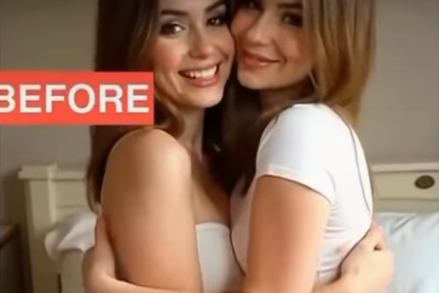
There’s something oddly satisfying about a photo that doesn’t make sense at first glance. The kind that stops you mid-scroll, forces you to squint, and makes you question whether your eyes are playing tricks on you. These aren’t photoshopped illusions or heavily edited images—they’re real moments captured at just the right time, in just the right place, under just the right lighting. And that’s exactly what makes them so compelling.
What you’re looking at in these kinds of images is the perfect collision of timing, perspective, and coincidence. A split second earlier or later, and the magic disappears. A slight shift in angle, and the illusion falls apart. But when everything aligns, you get something that feels almost unreal—like reality itself glitched for a moment.
That’s the core appeal behind these so-called “trick photos.” They don’t rely on digital manipulation or filters. Instead, they lean entirely on the unpredictability of the real world. A shadow lands in just the right spot. Two unrelated objects line up perfectly from a certain angle. Reflections, mirrors, and backgrounds create overlaps that confuse your brain into seeing something that isn’t actually there.
Your brain is wired to recognize patterns and make quick assumptions. It fills in gaps automatically, trying to make sense of what you’re seeing as fast as possible. That’s usually helpful. It’s how you recognize faces instantly or react to movement in your surroundings. But in these photos, that same instinct works against you. You see something that appears obvious… until you take a second look.
And that second look is where everything changes.
Suddenly, what looked like a giant object turns out to be something tiny, just positioned cleverly. A person who seemed to have an oddly shaped body is actually standing in front of something in the background that blends perfectly with them. A reflection might create the illusion of a second person who isn’t even there. These images exploit the way depth, scale, and perspective work together—and how easily they can be misinterpreted.
Lighting plays a huge role in this too. Shadows can stretch, distort, and merge with other elements in a scene, creating shapes that don’t match reality. Bright highlights can erase edges, making objects appear connected when they’re not. Even something as simple as the time of day can completely transform how a photo looks. Early morning or late afternoon light, for example, tends to create long shadows that exaggerate forms and add an extra layer of visual confusion.
Then there’s the role of timing. Some of these photos exist only because someone clicked the shutter at exactly the right fraction of a second. A jump frozen mid-air. A passing object aligning perfectly with something in the background. A moment that lasts less than a blink, captured forever. Miss it by even a tiny margin, and the illusion disappears entirely.
What makes these images especially addictive is that they invite you to participate. You don’t just look at them—you analyze them. Your brain starts working, trying to untangle what’s actually happening. You go from confusion to realization, and that shift feels rewarding. It’s like solving a visual puzzle without even realizing you signed up for one.
And once you get used to spotting these illusions, you start noticing them everywhere. In everyday life. In reflections on windows. In shadows cast on the ground. In how objects overlap from certain angles. It changes how you see the world, even outside of photos.
But there’s also something deeper going on here. These images remind you that what you see isn’t always the full story. Your perception is limited, shaped by angles, lighting, and context. Change any of those factors, and the entire meaning of what you’re looking at can shift. That’s not just true for photos—it applies to real life too.
A single frame can be misleading. Without context, it’s easy to jump to conclusions. These trick photos highlight that perfectly. They show how quickly the mind fills in blanks and how confidently it can be wrong.
That’s why they stick with you.
You might laugh at first when you realize what you were actually looking at. Maybe you feel a bit fooled. But there’s also a sense of appreciation—for the randomness of the moment, for the person who captured it, and for the strange ways reality can present itself when everything lines up just right.
In a world where so many images are staged, edited, and filtered, there’s something refreshing about photos that rely purely on chance and perception. They don’t need enhancement. The illusion is already there, waiting to be noticed.
And the best part? No matter how many of these you see, they never really get old. Each one is a new challenge for your brain, a new opportunity to be surprised by something that shouldn’t work—but somehow does.
So the next time you come across a photo that doesn’t quite make sense, don’t scroll past it too quickly. Pause. Look again. Let your eyes adjust. Because chances are, there’s more going on than you think.
And once you see it, you won’t be able to unsee it.