The Tiny Assassin: Why That Small Black Speck on Your Child’s Skin Is a Silent Death Trap
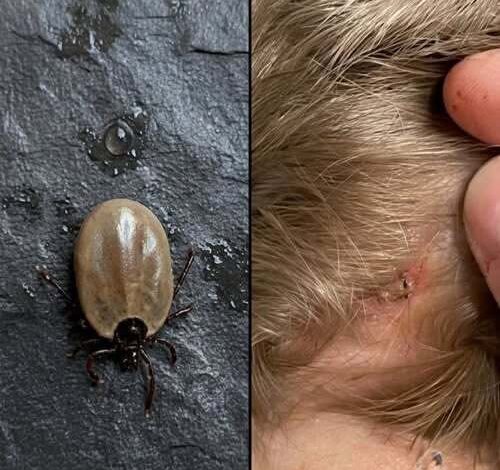
You’re playing in the yard, enjoying a beautiful afternoon, when you spot a tiny, unassuming black speck on your child’s leg. It looks like a piece of dirt, perhaps a stray seed from a tall patch of grass. You go to brush it away, but it doesn’t move—it’s anchored, burrowing deep into their skin. That’s when the blood drains from your face: it’s a tick. This isn’t just a nuisance; it’s a terrifying, high-stakes medical emergency that could carry the seeds of a life-altering, chronic disease. Are you prepared to face the invisible killer lurking in your own backyard?
Finding a tick on your child is an experience that triggers a primal, overwhelming sense of panic in any parent. The sheer thought of a parasite feeding on your child is enough to make your skin crawl, but in the chaos of the moment, it is vital that you override your fear with methodical, cold precision. While the majority of tick bites do not result in catastrophic illness, the window of risk is dictated by the duration of the attachment. The moment of discovery is not a time for spiraling into hysteria; it is a clear, urgent signal to act with deliberate speed and unwavering focus.
The process of removal is the most critical juncture in the entire ordeal, and there is no room for error. You must resist the urge to use heat, petroleum jelly, or jagged fingernails, all of which are common, dangerous myths that can force the parasite to regurgitate its toxic payload directly into your child’s bloodstream. The only acceptable method involves high-quality, fine-tipped tweezers. Grasp the tick as close to the surface of the skin as humanly possible—aiming for the head rather than the body—and pull upward with a steady, unwavering pressure. You must avoid any twisting, jerking, or crushing motions, as these actions increase the probability of leaving the mouthparts embedded in the skin or, worse, squeezing infectious pathogens into the wound.
Once the intruder has been successfully extracted, your work is far from finished. The area must be treated as a potentially contaminated surgical site. Scrub the bite area thoroughly with mild soap and warm water, or use a reliable antiseptic to ensure no lingering bacteria remains on the surface. Many healthcare professionals advocate for a “collect and contain” strategy: save the extracted tick in a sealed, labeled container. If symptoms do begin to emerge in the coming days, having the physical specimen available for expert identification and testing can be a game-changer for your physician, allowing them to pinpoint the exact species and, by extension, the specific profile of the diseases they might be carrying.
However, the removal is only the beginning of a long, vigilant waiting game. The days and weeks following the bite are a period of high-intensity observation. You are no longer just a parent; you are a medical monitor. You must watch your child with hawk-like focus, looking for signs that extend far beyond the site of the bite. Be hyper-alert for the onset of a fever, a crushing or unusual level of fatigue that doesn’t seem to dissipate after a good night’s sleep, or a mysterious rash that appears anywhere on the body—not just near the bite. Headaches, inexplicable joint pain, and subtle changes in your child’s temperament or behavior are all critical red flags.
Many tick-borne illnesses are experts at camouflage. Their early-stage symptoms are notorious for mimicking common viral infections, which leads many parents to dismiss them as “just a bug going around.” This cognitive trap is exactly how diseases like Lyme, Rocky Mountain spotted fever, or ehrlichiosis gain a foothold. By the time the symptoms manifest as something more obviously dangerous, the window for simple, early-stage antibiotic intervention may have already slammed shut. If your child develops any of these warning signs, or if the tick was attached for an extended period—generally more than twenty-four to thirty-six hours—you must seek professional medical advice immediately. A healthcare provider can assess the specific risk based on your geographic location and the clinical profile of the bite, ensuring that if treatment is necessary, it is implemented without a second of delay.
Beyond the immediate crisis, you must transform your lifestyle to adopt a proactive, defensive posture. Prevention is the only truly effective way to guarantee your child’s safety. After every outdoor excursion—whether it’s a hike in the deep woods or a simple romp in a suburban park—implement a mandatory “tick check.” Train your eyes to scan the hidden zones: behind the ears, in the hair, under the arms, behind the knees, and inside the waistband. Use light-colored, protective clothing that allows you to spot a crawling tick before it reaches the skin, and apply EPA-approved insect repellents in high-risk areas.
It is easy to feel overwhelmed by the invisible threats that exist in the natural world, but do not let the fear of these parasites paralyze your child’s ability to enjoy the outdoors. Awareness, prompt action, and a sensible, rigorous monitoring schedule are the fundamental tools that protect a child’s health and provide you with the necessary peace of mind. You are their first line of defense. By staying calm, following the correct medical protocols, and maintaining a state of persistent vigilance, you can ensure that a minor encounter with a tick remains a minor, manageable situation rather than the start of a lifelong health struggle. Your quick, decisive actions are the barrier between a healthy child and a preventable disaster; never underestimate the power of your own preparation.