The Invisible Scaffolding Why I Finally Stopped Paying For A Family That Only Loved My Usefulness
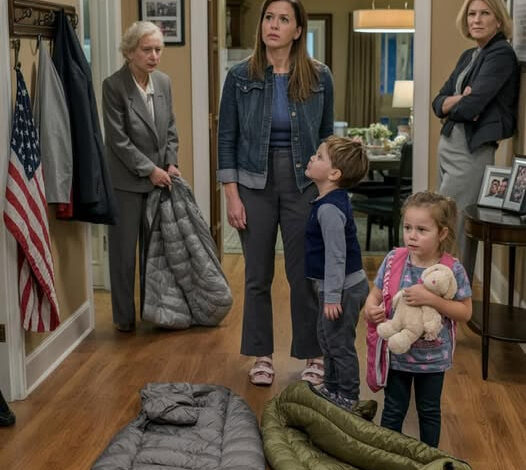
The moment of clarity did not arrive with a thunderclap; it arrived with the sound of nylon hitting a hardwood floor. My mother had just tossed two thin, basement-scented sleeping bags at my children while my sister’s kids were tucked away in the guest room beds. It was the final, undeniable proof of a hierarchy I had spent twenty-nine years trying to climb. In that hallway, the thing that broke was not the sleeping arrangement. It was the last excuse I had for staying loyal to a family that viewed me as a structural support beam rather than a daughter.
To understand the weight of those sleeping bags, you have to understand the math of the preceding four years. When my father died, he left behind a mortgage he had refinanced to cover a new roof, leaving my mother with an $1,850 monthly payment she couldn’t afford on her social security and part-time church salary. My sister, Ashley, was the “fragile” one, perpetually in the midst of a life crisis and thus exempt from responsibility. I was the “strong” one, the dental hygienist with the stable marriage and the organized life. So, I did what my father’s dying wish commanded: I took care of the house.
For forty-eight months, I maintained an invisible scaffolding under my mother’s life. I set up a recurring monthly transfer of $1,850 for the mortgage. I covered her $340 supplemental health insurance premiums. When the furnace died in the dead of a Minnesota winter, I put the $4,200 bill on my credit card. When she wanted a kitchen “glow-up,” I spent $8,500 on materials and used my vacation days to grout the backsplash myself. I even paid $280 a month for my niece’s gymnastics tuition because Ashley “just couldn’t swing it.” All told, I had funneled over $124,000 into a family home where I was still treated like an afterthought.
The Thanksgiving trip was meant to be a celebration of that house. I arrived with a handmade pumpkin pie using my father’s secret recipe and a luxury ivory linen tablecloth for my mother. I didn’t mention the money; I never did. I just wanted to belong. But the hooks in the hallway told the story before dinner was even served: five hooks for my mother, Ashley, and Ashley’s children. Our coats were relegated to the banister. After dinner, I washed the dishes while Ashley rested her “aching back,” a malady that miraculously vanished whenever it was time to take photos of “her” beautiful kitchen for Instagram.
When 8:30 p.m. rolled around and my children, Owen and Ellie, were fading, the true math of the family was revealed. My mother explained that we couldn’t move Ashley’s kids from the guest room because it would disrupt their routine. She then reached into the depths of a mothballed closet and tossed the cheap, cartoon-printed sleeping bags toward my six-year-old son’s feet. Ashley leaned against the doorframe with a triumphant smirk and suggested we “should have booked a hotel.”
I looked at my son, Owen. He was a quiet, observant boy who was already learning the same lesson I had learned at his age: some people in this family get rescued, and others are told they are strong enough to handle the floor. I knelt to his level and told him to pack his things. We were leaving. My mother called me “dramatic,” insisting it was just one night. But as I spoke to the windshield while backing out of the driveway, I knew the truth: it was never just about one night.
The drive back to Rochester was a silent reckoning. My husband, Ryan, had been waiting four years for me to realize that I was being treated as a bank account rather than a daughter. On Black Friday morning, while the rest of the world was hunting for deals, I sat at my kitchen table and began the methodical process of dismantling the debt of love. With a few clicks, I canceled the mortgage transfer. I called the insurance provider and removed myself as the responsible party. I canceled a pending $3,500 roof deposit and revoked my credit card from the gymnastics portal. By the time I closed my laptop, I had reclaimed $2,470 in monthly expenses—money that belonged to my own children’s future, not my sister’s lifestyle.
The reaction was a predictable cascade of indignation. My mother called it a “glitch.” Ashley texted to ask if I had “forgotten” to update my credit card because her daughter’s tuition had bounced. Not once did anyone ask if I was okay or why I had stopped. To them, I wasn’t a person; I was a utility. When I finally met my mother at a coffee shop that Sunday, I brought a manila folder containing fifty-three pages of highlighted bank statements. I showed her the $124,520 total. I told her that while my father said the house doesn’t hold itself up, she had failed to notice who had been standing in the basement for four years.
I laid out the new reality. She could talk to Ashley about contributing, or she could downsize. I was no longer willing to be the invisible labor that allowed them to live a life they hadn’t earned. And most importantly, I told her that if we ever visited again, my children would have a bed. The first “thank you” I received in four years came only after the money stopped flowing.
Now, our life in Rochester is different. We don’t have a renovated kitchen or a large guest room, but every person in our home has a bed. We have real sleeping bags now—high-quality ones with flannel linings and silver stars—that we use for camping trips where the only people we have to take care of are each other. I realized that my father was right: the house doesn’t hold itself up. But the house I was supposed to be guarding wasn’t the one made of brick and mortar in Maple Grove. It was the one I built with Ryan, Owen, and Ellie. That house is standing strong, not because of duty or guilt, but because it is built on a foundation of actual, mutual love.