The Hidden Reality Behind Frances Brutal Tobacco Tax Surge Why Your Next Pack Of Cigarettes Could Cost More Than A Full Meal
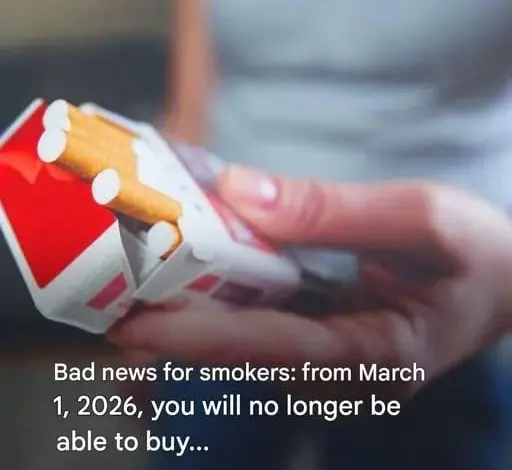
The air in France is thick with more than just the morning mist; it is heavy with the rising cost of a habit that has long been a staple of Gallic culture. Tobacco in France has quietly, yet aggressively, crossed a fiscal line that has fundamentally altered the daily lives of millions. Packs that were once purchased without a second thought at the local tabac now devour a significant portion of a daily budget, forcing smokers into a corner where they must choose between their addiction and their financial stability. As we move through 2026, the landscape of smoking in France is being reshaped not by a shift in cultural attitudes alone, but by a relentless and deliberate political squeeze that has seen prices soar to unprecedented heights. Smokers feel trapped in a vice of rising costs, while politicians speak of public health mandates, and the customs office signs off on every cent of increase with clinical efficiency.
Behind every pack of cigarettes sold on French soil lies a calculated political choice, one that prioritizes the state’s health agenda and its treasury over the consumer’s wallet. While manufacturers are technically responsible for proposing prices, it is the state—operating through the intricate mechanisms of customs and taxation—that ultimately decides exactly how painful each cigarette will be for the buyer. In the current market of 2026, a staggering 75 to 80 percent of the price of a single pack is composed of various taxes. This leaves only a modest margin for the producers and the local tobacconists, who find themselves caught between an angry customer base and an unyielding government. With the average cost of a pack now hovering between 12.50 and 13 Euros, the act of smoking has been elevated from a common habit to a luxury expenditure.
This relentless rise in the cost of tobacco is no accident of the market; it is a feature of a system that has been linked directly to inflation since 2023. Tobacco taxes in France now climb automatically, a self-sustaining cycle of price hikes that the government justifies by citing the 75,000 smoking-related deaths that occur every year across the country. The narrative from the Elysee is clear: the only way to save the public from itself is to make the habit financially unsustainable. However, this logic ignores the reality of nicotine dependence, which often forces those with the least amount of disposable income to sacrifice other necessities just to maintain their habit. The refuge of budget smokers—rolling tobacco—has not been spared from this steep upward curve. Once considered the affordable alternative for the working class, 30-gram pouches of rolling tobacco are now approaching the 18 Euro mark, closing the gap between traditional cigarettes and the “roll-your-own” lifestyle.
The French government is turning the screw in more ways than just the price tag. Public smoking bans have expanded with a ferocity that has left few outdoor spaces untouched. Lighting up is no longer just a social faux pas in certain areas; it is a legal liability. Bans now extend across parks, beaches, and school perimeters, backed by a zero-tolerance policy and heavy fines. Even the simple act of dropping a cigarette butt on the pavement can lead to an immediate and costly citation. This multifaceted approach is designed to make smoking as inconvenient as it is expensive, effectively pushing smokers out of the public eye and into the fringes of social life.
Yet, this aggressive push for a tobacco-free France has created a massive, unintended side effect that is visible along every border. As French prices climb into the stratosphere, neighboring countries continue to sell the exact same brands for nearly half the price. This stark price disparity has fueled a massive surge in cross-border “tobacco runs,” where French citizens drive for hours to stock up on cartons in Spain, Belgium, or Luxembourg. A single carton of cigarettes in France can now soar past the 300 Euro mark, creating a massive financial incentive for smuggling and black-market trade. The customs office finds itself in a constant battle with illicit shipments that flow into the country, exposing a deep tension between the state’s lofty public health ambitions and the everyday reality of addiction and economic inequality.
The smuggling trade is no longer just a small-scale operation run by individuals; it has evolved into a sophisticated network of shadow commerce. The black market offers an “out” for those who refuse to pay the state’s high premiums, but it also brings with it the risks of unregulated products and the enrichment of criminal enterprises. The government’s response has been to increase surveillance and border checks, but as long as the price gap remains so wide, the flow of illicit tobacco is unlikely to slow down. This creates a paradoxical situation where the very taxes designed to reduce smoking are inadvertently funding a criminal underbelly that operates outside the reach of health regulations and safety standards.
For the average French smoker, the future looks increasingly bleak. With the next tax hike already being discussed in the halls of government, there is no end in sight to the upward pressure on prices. The “tobacco-free generation” is a noble goal on paper, but for the millions currently living with addiction, the policy feels less like a helping hand and more like a punitive measure. The social divide is also widening; while the wealthy can absorb the cost of a 13 Euro pack without much thought, the working poor are being squeezed to the breaking point. This has led to a growing sense of resentment toward a political class that many feel is out of touch with the struggles of ordinary people who cannot simply “quit” on command.
As the smoke clears on the 2026 tobacco landscape, the reality is one of profound transition. France is a laboratory for how far a state can push its citizens in the name of health before the economic and social consequences become unmanageable. The battle between the treasury and the tobacco shop is far from over, and as prices continue to rise, the questions surrounding the ethics of such aggressive taxation will only grow louder. Is this a genuine effort to save lives, or is it a convenient way to fill the state’s coffers at the expense of its most vulnerable citizens? In the streets of Paris and the rural villages of the south, the answer depends entirely on whether you are the one holding the pack or the one collecting the tax. One thing is certain: the era of the affordable cigarette in France is dead, and the cost of its burial is being paid by the smokers who remain.