THE HIDDEN PRICE OF THE HUMAN SOUL AND THE SHOCKING REASON WHY MOST PEOPLE SELL OUT FOR CHEAP
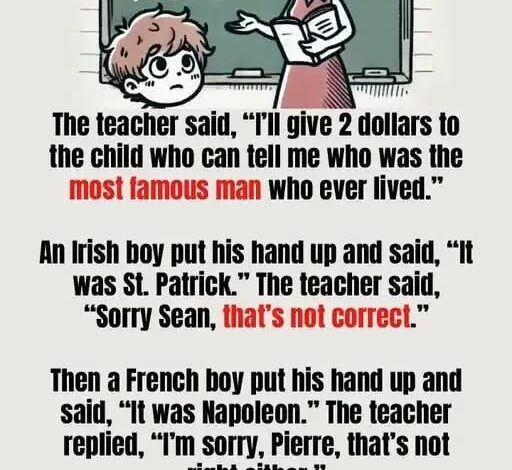
The image of a young boy standing at a crossroads of conscience, choosing a crisp two-dollar bill over a revered religious icon, is frequently played for laughs in the corridors of folklore. We chuckle at the precociousness of the child, viewing his decision as a harmless quirk of youth. However, beneath the layer of lighthearted humor lies a jagged, uncomfortable truth that reflects the darker corners of the human condition. This is not merely a joke about a child’s preference; it is a profound study of the intersection between identity and opportunity. It exposes the terrifying speed at which our most sacred beliefs can be compromised the moment a tangible, immediate reward is placed upon the table. The humor acts as a velvet glove for a steel fist, forcing us to recognize a sobering reality: most of us have, at some point in our journey, negotiated our deepest values for far less than we claim they are worth.
This phenomenon is the “quiet arithmetic” of existence. It is a psychological ledger that we begin balancing in childhood and continue to refine until our final days. While we like to imagine ourselves as protagonists in a grand epic of integrity, the truth is often found in the mundane transactions of everyday life. Consider the classic parable of the impoverished suitor who sets his sights on a wealthy heiress, only to be met with a cold rejection. In a world defined by romantic ideals, one would expect a narrative of heartbreak or the mourning of a lost future together. Instead, the suitor laments the loss of the million-dollar fortune he never actually held. In this stark reversal, love is stripped of its emotional weight and transformed into a failed financial calculation. The phantom pain of a missed investment replaces the ache of a broken heart. It suggests that our highest ideals—love, loyalty, and companionship—are often merely placeholders we occupy until a more profitable option presents itself, turning the most intimate of human desires into a cold balance sheet of credits and debits.
This pervasive cynicism extends even into the realm of the miraculous. Take the story of Stanley, a man offered the chance to purchase a “magic desk” for five thousand dollars—a piece of furniture whispered to grant its owner unparalleled, stratospheric success. Stanley’s hesitation does not stem from a principled disbelief in magic or a commitment to the laws of physics. Rather, his skepticism is rooted entirely in the price tag. He questions whether the wonder is worth the investment, effectively placing a financial ceiling on his own capacity for awe. This is the modern tragedy: we have become a society of skeptics who can calculate the cost of everything but can no longer perceive the value of anything. Even the possibility of the divine or the extraordinary must first pass a cost-benefit analysis before we allow ourselves to believe.
These narratives resonate across cultures and generations because they peel back the shimmering veneer of our high-minded rhetoric to reveal the base transaction simmering beneath. Whether the currency is faith, love, or wonder, we are in a perpetual state of assessment, constantly weighing what—and who—is “worth it.” We wrap ourselves in the comfort of believing our integrity is priceless, yet history and human nature suggest that nearly everyone has a breaking point. There is almost always a number, a title, or a convenience that can turn a lifelong conviction into a mere commodity. The boy in the story isn’t a villain; he is a pragmatist who has mastered the art of the immediate. He understands that while Moses offers spiritual guidance for the distant afterlife, two dollars buys a chocolate bar in the present. He chooses the tangible over the transcendent, a choice we replicate every time we prioritize a shortcut over a standard.
This quiet arithmetic defines the modern professional and social landscape. We see it in the individual who chooses a high-prestige, soul-crushing corporate role over a deeply fulfilling but lower-paying calling because the math of the mortgage makes more sense than the math of the heart. We see it in the person who maintains toxic, hollow social connections because the perceived social capital is too high to liquidate. We sell out our time, our intellectual energy, and our core beliefs in tiny, incremental installments. These sales are so small that we rarely notice the inventory is dwindling, until one day we wake up and realize that the sum total of these minor transactions is the loss of our very identity. We have traded the masterpiece of ourselves for a collection of shiny, inexpensive trinkets.
The humor in these parables is essential because it provides the necessary distance to acknowledge the parts of ourselves we usually keep buried in the shadows of our bank statements. It is easier to laugh at the boy or the suitor than it is to admit that we, too, have a price. We live in a world that constantly asks us to bid on our own ethics. The pressure to conform, to succeed, and to accumulate creates a marketplace where the soul is frequently the most undervalued asset. We are taught that being “realistic” means being transactional, and that holding onto a principle at a financial loss is a form of madness.
Ultimately, these stories challenge us to examine the “aftertaste” of our life’s choices. When the transaction is finalized, when the initial thrill of the gain has evaporated, and the bank balance has settled, what is actually left? If value is never what it appears to be on the surface, then perhaps the most expensive and rare thing any human can own is the integrity they have managed to keep off the market. True wealth is found in the moments where we refuse the two dollars, where we mourn the person and not the purse, and where we embrace the magic without asking for a discount.
The mirror these stories hold up to our faces is not intended to condemn us for our practicality, but to serve as a vital reminder. As long as we are busy calculating the cost of our souls, we are entirely missing the true value of living a life that isn’t for sale. The cost of selling out is always higher than the payout, because when you finally reach the top of the mountain you bought with your convictions, you realize you left the only person who could enjoy the view back at the bottom. The goal of a life well-lived is to reach the end with a soul that is battered, bruised, and well-used, but one that remains entirely unowned by the market. In a world of commodities, being priceless is the only true form of rebellion.