The Hidden Meaning Of Purple Paint Why This Simple Fence Color Is A Vital Warning You Should Never Ignore
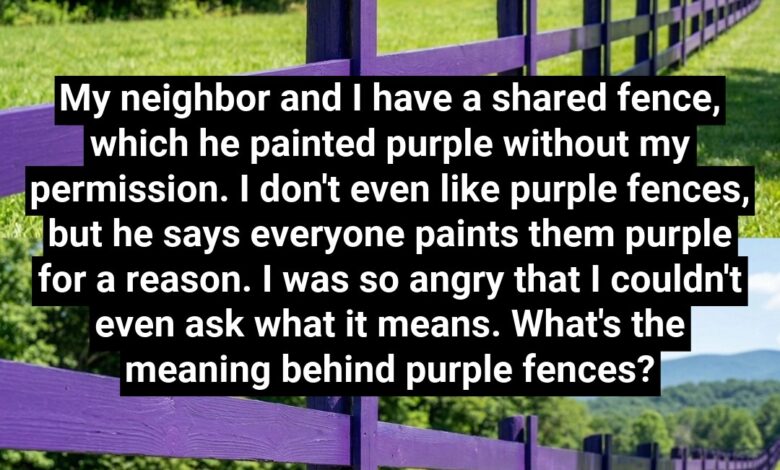
At first glance, a fence painted in a vivid shade of violet or a tree trunk marked with vertical purple stripes might seem like the work of an eccentric homeowner or a local artist trying to add a splash of color to the rural landscape. In an era where “do it yourself” home improvement projects and bold aesthetic choices are more popular than ever, many hikers, hunters, and weekend wanderers would be forgiven for assuming the color is merely decorative. They might see the purple marks as a trail marker, a whimsical design choice, or even a child’s outdoor art project. However, in dozens of states across the country, this specific hue is far from a fashion statement. It is a legally binding “Keep Out” command that carries the same weight as a formal sign, and ignoring it could lead to significant legal consequences.
The phenomenon is known as the Purple Paint Law, and it represents a fascinating intersection of tradition, law, and practicality in rural America. For generations, landowners have struggled with the logistics of marking their property lines. Traditional “No Trespassing” signs are notoriously fragile; they are made of thin metal or plastic that quickly becomes brittle in the summer sun, fades in the rain, or is ripped away by high winds. In more remote areas, signs are frequently used for target practice by passing hunters or stolen by vandals, leaving large swaths of private property unmarked and vulnerable to accidental intruders. For a landowner with hundreds or even thousands of acres, the cost and labor required to constantly replace these signs is staggering.
To solve this problem, state legislatures began adopting statutes that allow for a more permanent and indestructible warning system. Arkansas was the pioneer of this movement in 1989, and since then, many other states—including Texas, Missouri, Florida, Illinois, and Kansas—have followed suit. The color purple was chosen for its distinctiveness. Unlike brown or green, it does not blend into the natural foliage of the forest, and unlike red or orange, it is not easily confused with common markers used by logging companies, surveyors, or utility workers. Most importantly, purple is a color that stands out even to those with colorblindness, ensuring that the warning is accessible to as many people as possible.
The legal requirements for these markings are surprisingly precise and are designed to ensure there is no ambiguity for anyone approaching the boundary. To be legally recognized, the purple marks must be vertical stripes about one inch wide and at least eight inches long. They must be placed approximately three to five feet off the ground—right at eye level for an average adult—and repeated at intervals of no more than one hundred feet. This ensures that no matter where an individual attempts to cross into a piece of land, they will encounter a clear, unmistakable visual cue that they are about to leave public space or another person’s property.
For the outdoor enthusiast, understanding this code is not just a matter of etiquette; it is a matter of law. In states that recognize the Purple Paint Law, these marks serve as “prior notice.” This means that a person who crosses a purple-marked boundary can be charged with criminal trespassing, even if they claim they never saw a physical sign or didn’t realize they were on private land. The law places the burden of knowledge on the intruder. Whether you are a hunter tracking a deer, a hiker looking for a scenic shortcut, or a photographer searching for the perfect sunset shot, the moment you step past that purple line, you have committed a legal infraction.
The benefits for landowners are immense. Beyond the durability of the paint, which can last for years without needing a touch-up, the law provides a level of security that a simple sign never could. A trespasser can tear down a sign and claim ignorance in court, but it is nearly impossible to remove a stripe of high-durability paint from a rough-barked oak tree or a cedar fence post. It provides a permanent, silent sentry that protects the privacy and safety of those living on the land. Furthermore, it helps prevent the accidental liability issues that arise when strangers wander onto properties that may have hidden dangers, such as open wells, livestock, or active hunting zones.
However, the transition to these laws has not been without its growing pains. The biggest hurdle remains public education. Because the law is not universal across all fifty states, many people moving from one region to another are completely unaware of the “purple code.” A hiker from a state without these laws might spend an entire afternoon wandering through private Missouri woods, admiring the “pretty purple trees,” entirely unaware that they are technically breaking the law with every step. This has led to a push for better signage at trailheads and more public service announcements to bridge the gap between rural tradition and urban recreation.
The rise of the purple fence also tells a larger story about the changing nature of land ownership and privacy in the 21st century. As suburban sprawl pushes closer to rural farmlands and more people head into the wilderness for “off-grid” experiences, the friction between private property rights and public access has increased. The purple stripe is a compromise—a way to maintain the openness of the landscape without the clutter of thousands of metal signs, while still maintaining the sanctity of the border. It is a tool of clarity in an increasingly crowded world.
For those who respect the outdoors, the purple fence should be viewed as a sign of respect. It represents a landowner’s desire to protect their home, their animals, and their peace of mind. By learning this simple visual language, we can ensure that we are being responsible neighbors and travelers. The next time you are out for a drive or a walk and you see a fence shimmering with that distinct violet hue, remember that it isn’t an invitation to explore a colorful curiosity. It is a firm, quiet request for privacy. It is a boundary that says, quite clearly: “This is my home, and I value my solitude.” By staying on the right side of the line, you are not just avoiding a fine; you are participating in a long-standing tradition of mutual respect that keeps the American countryside a peaceful place for everyone. The purple paint is a small detail with a massive meaning, and in the world of property law, it is the most vibrant warning you will ever see.