THE FOUR LETTERS NO TRAVELER WANTS TO SEE ON THEIR BOARDING PASS AND THE SECRET TSA PROTOCOLS THAT COULD HALT YOUR ENTIRE VACATION
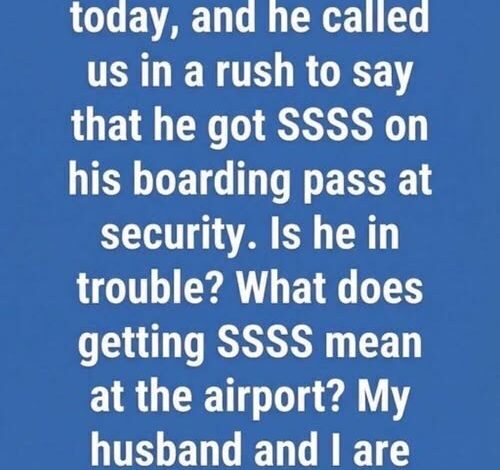
The modern airport experience is often a choreographed dance of logistics, timing, and patience. Travelers navigate the labyrinth of terminals, checking clocks and shuffling through security lines with the singular goal of reaching their gate before the final boarding call. However, for a select and often bewildered group of passengers, that journey is interrupted by a series of characters printed inconspicuously on their boarding pass that changes everything. The appearance of SSSS, standing for Secondary Security Screening Selection, is a digital brand that signals a traveler has been flagged for an exhaustive and often invasive security review. While most passengers breeze through the standard metal detectors or body scanners, those marked with this acronym are pulled into a secondary world of scrutiny, a process governed by complex algorithms and high-level intelligence data that operates largely out of the public eye. Understanding why this happens, how the Secure Flight Program identifies targets, and what truly happens behind the curtain of a secondary check is essential for anyone who hopes to navigate the skies in an era of heightened surveillance.
The moment of discovery is usually marked by a jarring sound at the boarding gate or a refusal of the self-service kiosk to issue a digital pass. When a traveler sees those four bold letters, the standard rules of the airport disappear. This is the handiwork of the Transportation Security Administration’s Secure Flight Program, a behind-the-scenes system that screens passenger information against various federal watchlists before a boarding pass is even generated. The program was designed to identify high-risk individuals before they ever reach a sterile area of the airport, but the net it casts is wide and often catches ordinary citizens in its mesh. The criteria for being selected can range from the obvious to the seemingly random. High-profile reasons include being on a No Fly List or a Selectee List, but many travelers are flagged for more mundane anomalies in their travel patterns. Purchasing a one-way ticket with cash, booking a flight at the very last minute, or traveling to or from high-risk international destinations can all trigger the SSSS designation. Furthermore, the TSA maintains a purely random selection process to ensure that security protocols remain unpredictable, meaning that even the most frequent and law-abiding flyer can find themselves under the microscope without warning.
When you are chosen for secondary screening, the atmosphere of your travel day shifts from one of excitement to one of clinical observation. TSA agents, trained to look for subtle behavioral cues, will escort the passenger to a designated area for a more thorough examination. This is not merely a repeat of the initial walk-through scanner. The secondary check is a comprehensive audit of the traveler’s person and possessions. It typically begins with a detailed pat-down that is significantly more rigorous than a standard check, ensuring that no prohibited items are concealed beneath clothing. Following this, every piece of carry-on luggage is opened and meticulously inspected. TSA officers will often use explosive trace detection swabs on electronics, the waistbands of clothing, and the interior of bags to search for microscopic residues of dangerous substances. In many cases, travelers are asked to power on their electronic devices, including laptops and smartphones, to prove they are functional and have not been tampered with or converted into improvised explosive devices.
The psychological toll of this process can be significant. Being singled out in a crowded terminal feels like a public indictment, and the cold, professional detachment of security personnel can heighten a passenger’s anxiety. However, the key to surviving an SSSS encounter without ruining your travel experience lies in radical calm and preparation. Panic or visible frustration can be misinterpreted by security as suspicious behavior, potentially leading to further delays or even more intensive questioning. Experts suggest that travelers should always arrive at the airport at least three hours early if they suspect they might be prone to extra screening, as the secondary process can add anywhere from thirty to sixty minutes to the boarding routine. Knowing your rights and maintaining a polite, cooperative demeanor is the most effective way to expedite the process. It is also helpful to keep your carry-on luggage organized and your electronics easily accessible, as a cluttered bag only prolongs the manual search.
For those who find themselves repeatedly selected for SSSS, the experience can become a chronic burden that makes air travel almost unbearable. This repetitive flagging often suggests a case of mistaken identity or a name that closely matches an individual on a government watchlist. In such instances, the Department of Homeland Security offers a Redress Number through the Traveler Redress Inquiry Program. By applying for this number, a traveler can request that the government review their records and correct any data errors that lead to frequent secondary screenings. Once a Redress Number is issued and added to a flight reservation, it acts as a digital signal that the passenger has been vetted and cleared, significantly reducing the likelihood of seeing those dreaded four letters on future trips.
The existence of the SSSS protocol is a stark reminder of the tension between personal liberty and collective safety in the twenty-first century. While it is undeniably inconvenient and often feels like an intrusion into the privacy of a traveler, the TSA maintains that these layers of security are the only thing standing between the traveling public and potential threats. The Secure Flight Program is constantly evolving, integrating new data points and refining its algorithms to stay ahead of emerging risks. As technology advances, the methods of screening may change—incorporating more facial recognition and biometric data—but the underlying principle remains the same: the government reserves the right to look closer at anyone entering the national airspace.
Ultimately, the best defense against the stress of an SSSS designation is knowledge. By understanding that the selection is often the result of an automated algorithm rather than a personal judgment, a traveler can detach themselves from the frustration of the moment. The error tone at the kiosk and the cold gaze of an agent are simply parts of a larger, invisible machinery designed to maintain the integrity of the skies. Whether you are chosen for a specific travel anomaly or by the simple roll of a digital die, the experience does not have to be a catastrophe. With the right mindset, a bit of extra time, and a commitment to cooperation, you can move through the secondary check and back toward your gate, reclaiming your seat and your journey with your dignity intact. The four letters on your boarding pass may dictate the next hour of your life, but they do not have to define your entire trip. In the complex world of modern aviation, the secret to a smooth flight is being prepared for the moments when the journey stops being routine.