The Final Curtain Falls on the Secret Screen Legend Who Conquered Bonanza and Rewrote the Rules of Hollywood
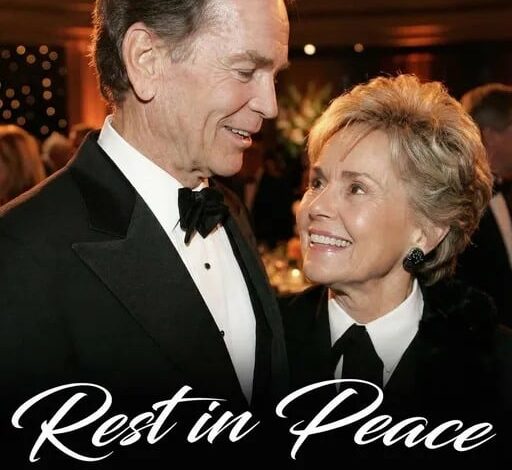
The golden age of Hollywood was a landscape built on rigid archetypes and unbreakable glass ceilings, a place where you were either the face in front of the lens or the mind behind the typewriter, but rarely ever both. It was an era that demanded conformity, yet one woman from the hills of West Virginia decided that the industry’s rules were merely suggestions waiting to be ignored. Today, the world of classic television is in mourning as it bids farewell to Lory Patrick, a pioneer who defied the skeptics, conquered the silver screen, and then quietly walked away to lead a life of even greater purpose. At the age of 92, her passing marks the end of a chapter for a generation that grew up with her in their living rooms, yet many are only now beginning to realize the true depth of the legacy she left behind.
Before she was a fixture of the American Western, she was Loretta Basham, a small-town girl with a vision that extended far beyond the borders of her home state. Her journey into the limelight began in the world of high fashion, but her aspirations were never confined to a runway. When she made the leap to Los Angeles, she was met with the cold cynicism that defined the era. A prominent producer once looked her in the eye and told her that models simply could not become actresses—that they lacked the depth to navigate the emotional complexities of a script. Rather than being discouraged, she used that doubt as high-octane fuel. Within mere days of signing a contract with Universal, she had secured a role on the prestigious Loretta Young Show, effectively silencing the critics before her career had even fully begun.
What followed was a relentless and brilliant decade of work that saw her appear in over 70 television roles, making her one of the most prolific and recognizable guest stars of the 1960s. Her face became synonymous with the adventurous spirit of the American frontier. Whether she was navigating the high-stakes drama of Wagon Train, sharing the screen with the Cartwright family in the legendary Ponderosa of Bonanza, or bringing a sense of grounded humanity to medical dramas like Dr. Kildare, she possessed a steady, luminous presence that commanded attention. She didn’t just play characters; she embodied the quiet strength of the women who shaped the mythical West, earning the respect of her peers and the adoration of a nation.
However, Lory Patrick’s most radical contribution to Hollywood happened when the cameras were turned off. During a time when the writers’ rooms of major studios were exclusively male preserves, she picked up a pen and began to write. She didn’t just want to speak the lines; she wanted to create the narratives. Quietly and with immense skill, she contributed scripts to the very shows she starred in, including the titan of television, Bonanza. By doing so, she was a silent revolutionary, widening the door for female writers and directors long before the industry recognized the need for diversity. Her intellect was as sharp as her screen presence was soft, and she navigated the behind-the-scenes politics of major studios with the same grace she used to handle a horse on a Western set.
Her career was a whirlwind of hit films and iconic television moments, yet she never allowed the vanity of Hollywood to consume her identity. In a move that shocked many of her contemporaries, she eventually chose to step back from the frantic pace of the industry. She walked away from the flashing bulbs of the paparazzi not out of failure, but out of a profound sense of conviction. She had met her match in fellow actor Dean Jones, and together, they embarked on a journey that was defined by faith, family, and a deep commitment to service. To Lory, the accolades of the film industry were secondary to the impact she could have in her private life and her community.
The partnership she shared with Dean Jones was one of Hollywood’s rare success stories—a marriage built on shared values and a mutual desire to look beyond the superficiality of fame. Together, they founded and supported various ministries and charitable efforts, proving that the most important roles are often the ones played off-camera. Lory moved from being a star of the screen to a star of her own community, directing stage plays and devoting herself to a life of quiet dignity. She became a mentor to many, using her experiences in the cutthroat world of show business to guide others toward a life of balance and spiritual fulfillment.
As news of her passing at 92 spreads, there is a renewed interest in the films and television episodes that made her a household name. Fans are revisiting her performances, noticing the subtle nuances of her acting that perhaps went unappreciated during the height of her fame. But more importantly, the industry is beginning to acknowledge her as a trailblazer for women in creative leadership. She proved that a woman could be a model, an actress, a writer, and a director without ever losing her sense of self. She defied the narrow boxes that producers tried to put her in, rewriting her own story until the very end.
Lory Patrick’s life was a masterclass in how to handle success with humility and how to meet adversity with courage. She rose from humble beginnings to the pinnacle of the entertainment world, yet she never forgot where she came from. Her legacy is not just found in the flickering black-and-white images of classic Westerns or the handwritten scripts archived in studio vaults; it is found in the path she blazed for every woman who has ever been told that they are “only” one thing. She showed the world that you can be everything you imagine, and that the greatest power of all is the power to choose when to take your bow.
In the final assessment, Lory Patrick was much more than a classic television actress. She was a visionary who saw the potential for beauty and meaning in every facet of her life. As she joins the ranks of the legends who have gone before her, she leaves behind a world that is slightly less bright but infinitely more inspired by her journey. She came into Hollywood when the rules were set in stone, and she left it with those same rules crumbled in her wake. Her life was a long, beautiful script that she wrote herself, and it was a story of a life very well lived.