The Deadliest Food on Earth: Why Millions Risk Death Every Single Day
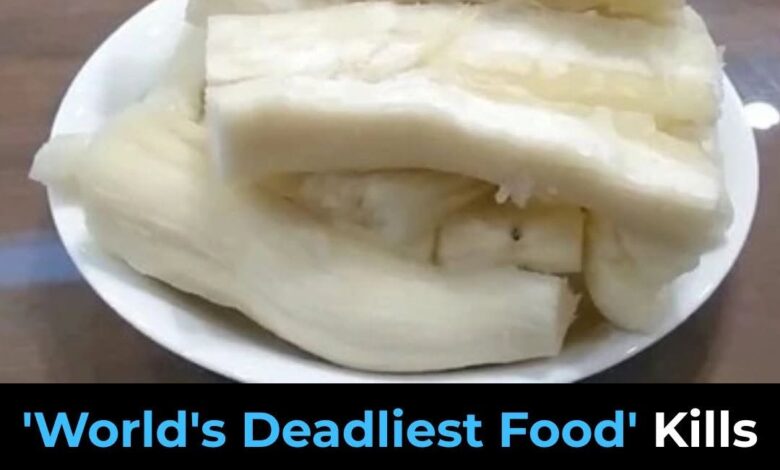
Every year, more than two hundred people make the fatal mistake of consuming the world’s deadliest food, yet nearly half a billion people continue to put it on their dinner plates daily. It isn’t a rare, exotic poison or a mysterious lab-grown toxin—it is a humble, common plant that serves as a vital staple for entire nations. If prepared incorrectly, it transforms into a lethal weapon capable of shutting down human organs within minutes. Why do millions gamble with their lives for a meal, and is the food on your table a ticking time bomb hiding in plain sight?
Cassava, a tuberous root vegetable originating in South America, is one of the most significant calorie sources for populations across the globe. It is a resilient, versatile crop that sustains life during periods of agricultural scarcity and provides the foundation for countless regional dishes. However, this miraculous survival food comes with a chilling biological defense mechanism. The plant’s stems, leaves, and peels are naturally toxic, containing high concentrations of cyanogenic glucosides. When the plant is harvested or damaged, these compounds undergo a chemical reaction that releases hydrogen cyanide—a potent, fast-acting poison that interferes with the body’s ability to use oxygen at a cellular level.
The grim reality of this defense mechanism is that it is intentionally evolved to kill. Nature designed cassava to repel insects, animals, and hungry pests, but human beings have learned to override that design through exhaustive processing. According to the World Health Organization, the dangers associated with improperly prepared cassava are not merely theoretical; they are a tragic annual statistic. Approximately two hundred people die every single year because they lacked the time, the resources, or the knowledge required to strip the poison from the root. This is why the plant has earned the terrifying label of the “world’s deadliest food,” a title that highlights the precarious balance between sustenance and sudden, irreversible collapse.
The mechanisms of poisoning are particularly ruthless, especially in regions plagued by poverty, famine, or conflict. When food insecurity reaches a breaking point, the meticulous, time-consuming preparation required to make cassava safe is often bypassed. The WHO notes that when these cyanogenic glucosides are not processed correctly, they create a high dietary exposure to cyanide. In extreme scenarios, such as in areas of Venezuela or sub-Saharan Africa, people have been forced to rely on improperly processed cassava just to stave off immediate starvation. The cost of this reliance is often paid in catastrophic health crises.
One of the most horrific consequences of cyanide exposure through cassava is a condition known as konzo. This is a debilitating, permanent form of paralysis, usually localized in the legs, that occurs when victims consume bitter cassava—which has a higher cyanide content—without adequate preparation, particularly when their overall diet is deficient in protein. Because protein is essential for the body to detoxify the cyanide effectively, the lack of a balanced diet acts as a force multiplier for the toxin. The condition often flares up in spontaneous, localized epidemics, shattering the mobility of children and adults alike and leaving them with irreversible disabilities that define their futures.
Despite this history, the survival of nearly half a billion people rests on the successful domestication of this plant. How do they do it? The secret to safety lies in the patience of the process. Safe preparation is not a matter of quick cooking; it is a lengthy, deliberate, and non-negotiable ritual. The plant must be peeled, washed, and then soaked in water for up to twenty-four hours to allow the volatile toxins to leach out. In many cultures, this is followed by grating, drying, or fermenting the pulp to ensure that the levels of cyanogenic glucosides fall well below the threshold of danger. This wisdom, passed down through generations, is the only barrier standing between a nutritious meal and a fatal accident.
The danger of cassava is a stark reminder of the hidden complexities in our food supply. We often take for granted that the items we buy at the grocery store are inherently “safe,” but the story of cassava proves that safety is often the result of rigorous, traditional labor. When social structures break down, when poverty prevents proper food preparation, or when the pressure of famine forces desperate measures, that safety evaporates. The stories coming out of regions experiencing food scarcity, such as the crises reported in parts of Venezuela, underscore that hunger can make the unthinkable appear to be the only option.
As global awareness of the risks associated with cassava continues to rise, so too do the efforts to standardize safer processing methods. Agricultural organizations are working to promote varieties of cassava that are naturally lower in cyanide, and educational campaigns are helping to spread the techniques for detoxification in the most vulnerable regions. These efforts are not just about improving food quality; they are about dismantling a public health crisis that has claimed far too many lives in the shadows of the global food system. The goal is to move the narrative away from the grim label of “deadliest food” toward a model where cassava can fulfill its promise as a sustainable, life-giving staple.
If there is a lesson to be gleaned from the paradox of the deadliest food, it is one of humility before nature. We inhabit a world where the line between nourishment and toxicity is sometimes thinner than we realize, maintained by the careful, often invisible work of agricultural traditions and community knowledge. For the millions of people who eat cassava every day, it is not a “deadly risk” to be feared; it is a routine, culturally essential, and deeply valued component of their heritage. They have learned the rules of the game, and by respecting the chemistry of the plant, they have successfully harnessed a weapon of nature to feed a significant portion of the human race.
Ultimately, the story of cassava serves as a sobering, important perspective on how we perceive the risks in our diet. While most of us are unlikely to encounter raw, unprocessed cassava in our daily lives, the underlying principle—that we must understand what we are eating and how it interacts with our bodies—remains universal. Whether we are dealing with complex toxins or the simple consequences of poor nutritional choices, the path to health begins with awareness. When we learn to treat our food with the respect and understanding it deserves, we reclaim control over our own well-being, transforming potential dangers into the fuel that sustains our lives.