My Son Slipped Into a Coma After a Simple Walk, Then I Found the Note He Hid From His Father
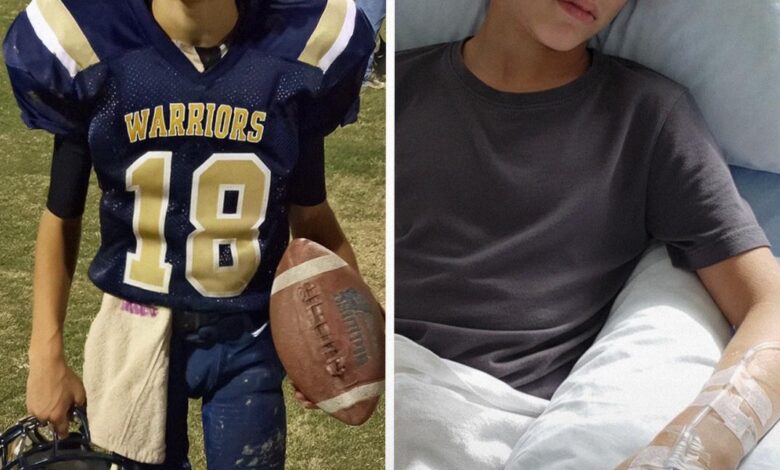
The call came in the middle of the night, and nothing about life has felt normal since.
One moment, my thirteen-year-old son Andrew was heading out for a walk with his father, just like he had done countless times before. The next, he was lying in a hospital bed, surrounded by machines, completely unresponsive.
There are certain moments that divide your life into “before” and “after.” That phone call was mine.
Andrew had always been full of energy. The kind of kid who left half-empty water bottles everywhere and wore through sneakers faster than I could replace them. Before he left that day, I gave him the same reminder I always did.
“Take your inhaler, just in case.”
He rolled his eyes, gave me a quick smile, and walked out the door.
That was the last time I heard his voice.
By the time I reached the hospital, everything had already changed. The fluorescent lights were too bright, the air smelled too sterile, and the world felt like it had narrowed down to one single point—my son, lying still in a bed.
Brendon, my ex-husband, was sitting nearby, pale and shaken. He kept repeating the same thing over and over.
“I don’t know what happened. He was fine. One second he was standing, the next he just collapsed.”
I wanted to believe him.
But something didn’t sit right.
This wasn’t the first time he had brushed off Andrew’s health concerns. He had dismissed symptoms before, told him not to overreact, skipped appointments that I insisted were important. And now my son was in a coma.
The doctor spoke calmly, but her words hit like a shock.
Andrew had suffered a cardiac event. His heart had stopped briefly before they managed to revive him. He was alive—but unconscious, and they didn’t yet know why.
Every hour mattered.
I stood by his bed, gripping the rail, watching the steady rise and fall of his chest, trying to convince myself that he was still there. That he could still hear me.
“I’m here, baby,” I whispered. “You’re not alone.”
Brendon cried behind me, but even that felt off. Too loud. Too rehearsed. Like he was trying to convince himself—or me—of something.
I asked him again.
“Did he say anything? Chest pain? Dizziness? Anything at all?”
He shook his head too quickly.
“No. Nothing. He was fine.”
But I saw it—the flicker in his eyes. Something he wasn’t saying.
Later that night, after visiting hours ended and he left, the room became painfully quiet. It was just me, Andrew, and the sound of machines keeping track of every fragile sign of life.
That’s when I noticed his hand.
It was clenched tightly around something.
At first, I thought it was just tension. But when I gently opened his fingers, I found a small, crumpled piece of paper.
The handwriting was his.
“Mom, open my closet for the answers. BUT DON’T TELL DAD!”
My heart dropped.
Why would he hide something from his father? What could possibly be so serious that he felt the need to leave me a message like that?
I leaned closer to him.
“I promise,” I whispered. “I’ll find out.”
I left the hospital that night with the note still in my hand, my mind racing with questions I didn’t want the answers to.
Back home, everything felt different. The house was too quiet, too still. I stood outside Andrew’s room for a moment, trying to steady myself before stepping inside.
His closet door was slightly open.
That alone made my chest tighten.
I started searching, carefully at first, then more urgently. Clothes, shelves, boxes—nothing stood out until I reached the top shelf.
Behind a stack of old comics, I found a shoebox.
Inside, everything became clear.
There was a cardiology appointment scheduled for the following week. Important. Necessary. Something we had discussed.
And then I saw the note.
“Appointment canceled by parent — Brendon.”
Not postponed. Not rescheduled.
Canceled.
My hands started shaking.
Next to it was another note, written by Andrew.
“Dad said I don’t need it. Mom is going to freak out.”
I couldn’t breathe.
He had known something was wrong. He had been scared. And instead of getting help, he had been told to ignore it.
I called Brendon immediately.
“Why did you cancel his appointment?”
He hesitated.
“I didn’t think he needed it. You always overreact.”
Overreact.
The word hit harder than anything else.
“He trusted you,” I said, my voice shaking. “He told you something was wrong.”
“I didn’t want to worry you,” he replied.
I hung up before I said something I couldn’t take back.
But there was more.
I checked my phone again, scrolling through notifications I hadn’t even noticed in the chaos.
That’s when I saw it.
A video message from Andrew.
Timestamped just minutes before everything happened.
I opened it.
His face filled the screen, pale and uneasy.
“Hey, Mom… I don’t feel good. My chest hurts. I feel dizzy. Dad says it’s nothing, but I’m scared.”
My heart shattered.
In the background, I heard Brendon’s voice.
“Put that away. You’re fine. Stop making a scene.”
The video ended.
I sat there, staring at the screen, replaying it over and over again.
My son had reached out to me.
He had been scared.
And I hadn’t been there in time.
The guilt was overwhelming, but it didn’t matter anymore.
What mattered was what I did next.
I called the hospital immediately, my voice steady despite everything.
“This is Andrew’s mother. I have information you need to hear.”
By morning, everything had changed.
I returned to the hospital with the note, the appointment record, and the video. The doctor listened carefully, her expression growing more serious with every detail.
They updated his chart. Adjusted his treatment plan. Took everything into account.
And for the first time since that night, I felt something shift.
Not relief.
But hope.
Brendon tried to explain himself, but it didn’t matter anymore. This wasn’t about blame.
This was about Andrew.
And I made it clear.
“No more decisions without me.”
He didn’t argue.
Later, I sat beside my son again, taking his hand gently.
“I found your answers,” I whispered.
The machines continued their steady rhythm, each sound a reminder that he was still fighting.
And so was I.
Because when he wakes up—and I believe he will—he’ll know one thing for certain.
I listened.
And this time, I didn’t miss it.