IS THIS THE MISSING PIECE? Why Thousands are Trading Bi for This Viral New Identity!
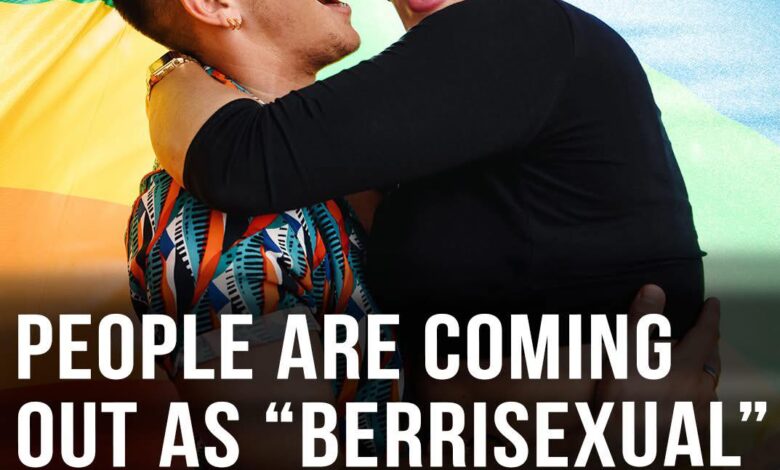
In the quiet, neon-lit corners of the internet, a linguistic revolution is taking hold, providing a name for a feeling millions have carried in silence for decades. For many, the traditional labels of “bisexual” or “pansexual” always felt like a slightly ill-fitting garment—close enough to be functional, but never quite tailored to the actual contours of their heart. They lived in the gray areas of attraction, often feeling like “failed” bisexuals because their desires didn’t distribute themselves in equal, tidy percentages. Now, a single, soft-sounding word is changing the narrative: Berrisexuality.
Berrisexuality isn’t just another buzzword in an ever-expanding lexicon; for those who claim it, it is a long-overdue sigh of relief. It specifically defines a pattern of attraction that is expansive yet weighted—the capacity to be attracted to all genders, but with a persistent, undeniable tilt toward women, feminine-aligned, and androgynous people. While an attraction to men or masculine-aligned individuals remains a real and valid part of their experience, it exists as a softer, rarer, or less central moon orbiting a much larger planet. For years, this imbalance was something people apologized for or tried to “fix” to fit a more symmetrical definition of queerness.
The rise of this term on Reddit threads, Discord servers, and queer wikis has sparked a phenomenon of radical recognition. Users describe the “Berrisexual epiphany” as the moment they realized they weren’t “doing bisexuality wrong.” In a society that demands binary choices—either you are “this” or “that”—having a label that honors the nuance of a “lean” or a “preference” feels like a revolutionary act of self-honesty. It provides a sanctuary for those who felt too queer for heteronormative spaces but perhaps not “queer enough” or “correctly queer” in others because of their specific attraction patterns.
Critically, Berrisexuality does not seek to replace or erase the broader umbrella of bisexuality. Instead, it acts as a high-definition lens, refining a broad spectrum into a specific, recognizable shape. It allows individuals to honor the exact geometry of their desire without distortion. It acknowledges that attraction is rarely a 50/50 split and that a preference for femininity doesn’t invalidate the capacity to love masculinity. It’s about the “center of gravity” in one’s romantic life, providing a shorthand for a complex internal reality that previously required a long, exhausting explanation.
The cultural impact of this “tiny label” is profound. In an era often criticized for over-segmenting identity, Berrisexuality offers a different perspective: that precision in language leads to a deeper sense of belonging. When we name a thing, we give it permission to exist in the light. For the thousands of people currently transitioning to this label, it isn’t about being “special”; it’s about finally being understood. It is a testament to the fact that human desire is fluid, asymmetrical, and gloriously complicated.
As this quiet revolution moves from the smallest corners of the web into the mainstream queer consciousness, it carries a powerful message of permission. It tells the woman who loves women but occasionally finds herself drawn to a specific man that she is not a liar. It tells the non-binary person whose attraction leans toward the ethereal and the feminine that their experience is mapped and documented. In a world that keeps demanding simple, digestible answers, Berrisexuality offers the grace of the “tilt.” It is more than a label; it is a map back to a self that no longer needs to apologize for the way it loves.