I am a Grandma Raising Twin Boys, I Bought a Fridge from a Thrift Store, but It Came with a Secret
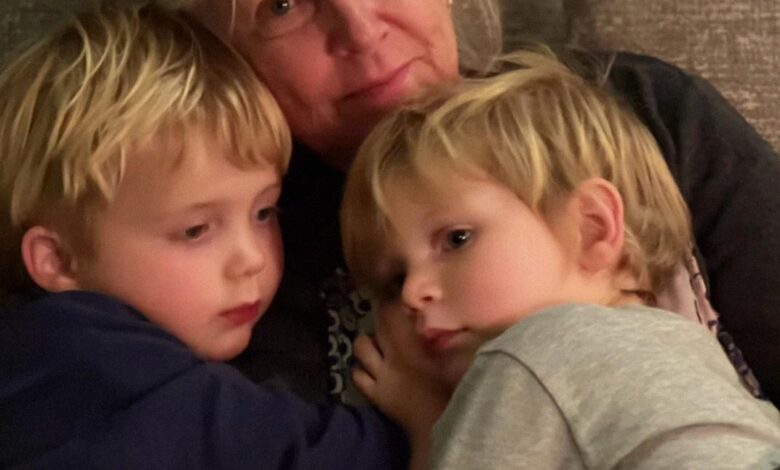
If someone had told me five years ago that I’d be raising eight-year-old twin boys on my own at sixty-three, I would’ve laughed. Or maybe cried. But here I am — me, Noah, and Jack — running on love, instant coffee, and a stubborn kind of faith that refuses to quit.
Their parents, my daughter Lily and her husband Paul, died in a car accident when the boys were just two. I still remember the knock on the door, the look on the officer’s face, the moment time cracked open. Since that night, my life has revolved around making sure those boys grow up surrounded by the love their parents didn’t live long enough to give them. They call me “Grandma-Mom,” which always makes my heart ache and swell at the same time.
Money’s tight. I live off my late husband’s small pension and a few shifts a week at the library. We stretch every dollar like taffy. Still, we get by. Until the day the refrigerator gave up on us.
It happened during a brutal summer heatwave. I opened the door one morning and was hit by a wall of sour air. The milk had curdled, the butter had melted into a greasy puddle, and the freezer was crying water onto the floor. I unplugged, replugged, banged on it like my husband used to — nothing.
By noon, I was throwing half our groceries into trash bags. Jack, my little firecracker, stood beside me holding his toy firetruck.
“Grandma,” he said solemnly, “is the fridge dead?”
I forced a smile. “Looks like it, honey.”
“Do we bury it?” he asked, eyes wide.
His twin, Noah, sighed. “She’s joking, dummy.” Then, seeing my face, he added softly, “We’ll get another one, right?”
That broke me a little. Our savings jar had exactly $180 — meant for their school clothes. Now, that money would have to become fridge money.
The next morning, we drove into town to Second Chance Thrift, a warehouse full of dusty appliances that smelled like old metal and burnt coffee. A sign on the wall read: “Everything Deserves Another Life.”
The owner, a round man in a baseball cap named Frank, greeted me. “What’re you looking for today?”
“Something that gets cold and doesn’t cost more than a week’s groceries,” I said.
He chuckled and led me to the back. “Got just the thing — white Whirlpool, bit of a dent on the side, but runs fine. Hundred and twenty bucks.”
Before I could even say yes, another voice behind me said, “I’ll take it.”
I turned to see a tall woman in her seventies, long gray braid, floral scarf, the kind of presence that filled the room without trying. Her eyes weren’t just looking at the fridge — they were remembering something.
“No, Mabel,” Frank said kindly. “You’ve had your chance. This one’s hers.”
Mabel hesitated, then sighed. “Please, Frank. That fridge… it’s special.”
I frowned. “Special?”
She shook her head and smiled faintly. “Never mind. Let her have it.”
And just like that, she walked away. But something in her expression — that wistful mix of loss and peace — stayed with me long after.
That afternoon, Frank delivered the fridge himself. It wasn’t pretty, but it worked. The boys danced around it, sticking drawings on the door with magnets. “Now our milk won’t die again!” Jack cheered.
For a few days, everything felt normal. Then the noises started.
At first, it was a low hum, then a rhythmic thunk-thunk, like someone softly knocking from inside. The light flickered every time I opened the door.
“Grandma,” Noah whispered one night, “what if the fridge has ghosts?”
I laughed it off, but by the third day, the sound got louder. Determined to fix it myself, I grabbed a screwdriver and muttered, “You picked the wrong grandma to mess with.”
When I unscrewed the back panel of the freezer, something small and metal clinked onto the floor — a tin box, rusted and sealed with old yellow tape. On the lid, written in faded ink, were the words: “If you found this, you were meant to.”
My heart jumped. Inside the box was a folded letter and a tiny velvet pouch. The letter began:
“If you’re reading this, I didn’t make it in time to get the fridge back.
My husband built a hidden compartment during the war — said every home should have a place to keep hope safe.
Inside the pouch is what’s left of his hope.
If you need it, use it.
If you don’t, pass it to someone who does.
— Margaret, 1954.”
I opened the pouch carefully. Inside was a simple gold wedding band and a small envelope marked Insurance Papers. When I unfolded it, a cashier’s check slipped out — dated last month.
The amount: $25,000.
My breath caught. The check was made out by Mabel from the Margaret Estate Trust.
That night I barely slept. Why had she let me take it? She must’ve known.
The next morning, I went straight back to Second Chance Thrift. Frank looked up from his coffee and smiled. “Fridge acting up again?”
“Not exactly,” I said, setting the tin on the counter. “Do you know where I can find Mabel?”
His expression softened. “Oh, honey… Mabel passed away last week. Cancer. She came by right before she went into hospice — said she wanted to make sure that fridge found the right person. Told me, ‘It’s got something important inside.’”
I just stood there, stunned.
Frank sighed. “Maybe she meant it for you.”
I went home with tears stinging my eyes. That night, I wrote a letter to Mabel’s family, explaining everything, and mailed the check and the letter to the estate address listed on the papers.
Two weeks later, a new envelope arrived in my mailbox. No return address. Inside was a handwritten note:
“Dear Evelyn,
I’m Mabel’s son, Tom. My mother told me about you before she passed. She said she met a woman who reminded her of herself — strong, kind, and raising children alone.
That money came from her mother’s trust. Mom wanted it to help someone who needed it more than we did.
Please keep it. She said, ‘If Evelyn finds it, it’s fate.’
Use it for the boys.
And one day, when the time feels right, pass a little of it on.
— Tom.”
I sat at the kitchen table and cried like I hadn’t cried in years. It wasn’t just the money. It was the grace behind it — a kindness from one stranger to another.
I used part of it to fix my old car, pay off our bills, and finally replace the washing machine that had been limping along since the twins were toddlers. The rest went into a savings account for their future.
But the fridge? I couldn’t bring myself to replace it. It sat humming faithfully in the kitchen, dented but proud — a reminder that hope has a funny way of hiding in the most ordinary places.
Then, months later, our pastor announced that a local family had lost everything in a fire. They needed furniture, clothes… even a refrigerator.
That night, I ran my fingers over the fridge’s cool white surface one last time. Then I loaded it into a borrowed truck, tucked the empty tin box back inside, and drove across town.
The woman who opened the door had soot on her hands and a baby on her hip. “You’re giving us this?” she asked, her voice cracking.
I nodded. “It’s special. It helped me when I needed it most. Maybe it’s your turn.”
When I got home, Noah gasped, “Grandma, where’s the magic fridge?”
I smiled and said, “We passed it on, sweetheart. That’s how magic works — it keeps going.”
And that’s the truth of it. Sometimes life’s biggest blessings don’t come in wrapped boxes or shiny packages. Sometimes, they hum softly in the corner of your kitchen, waiting for you to open the door and find the hope someone left behind — just for you.