Hollywood Mourns The Tragic Loss Of Goodfellas Star Beau Starr Who Kept His Incredible Secret Until The Very End
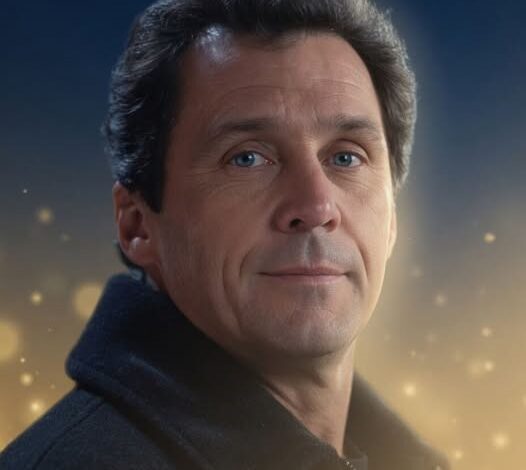
The quiet passing of veteran actor Beau Starr at the age of 81 in the vibrant city of Vancouver marks the end of an era for a very specific type of Hollywood figure. In an industry that is almost universally obsessed with young starlets, dazzling leading men, and headline-grabbing dramatic turns, Starr represented a completely different breed of performer. He was the quintessential working actor, a man whose immense value to a production was measured not by the size of his trailer or the number of paparazzi waiting outside his door, but by his absolute reliability, his intense discipline, and his profound ability to bring unflinching authenticity to every single scene he graced. His career was not built on a foundation of fleeting viral fame, but on a rock-solid base of three decades of quiet, unyielding professional dedication that left an indelible mark on both television and cinema.
Born on September 1, 1944, in the bustling borough of Queens, New York, Starr’s journey into the world of professional acting was anything but conventional. Long before he ever stepped onto a Hollywood soundstage or stood opposite legends like Martin Scorsese and Ray Liotta, he was immersed in a completely different kind of high-pressure arena: professional athletics. His early life was defined by the gridiron. Starr pursued professional football with the same intensity and focus that he would later bring to his acting craft. He played in the Canadian Football League, proudly wearing the jerseys of teams such as the Hamilton Tiger-Cats and the Montreal Alouettes. He also spent time within the highly competitive New York Jets organization, an experience that forged a deep sense of physical discipline, mental toughness, and a highly grounded demeanor. This athletic background proved to be the perfect preparation for the unpredictable and demanding world of show business, allowing him to handle rejection, long hours, and the physical demands of acting with ease.
It was not until his mid-thirties that Starr finally transitioned into the entertainment industry, a remarkably late start by the notoriously rigid standards of Hollywood. Yet, this unconventional timeline turned out to be his greatest asset. He did not arrive in California as a wide-eyed novice trying to figure out who he was; instead, he arrived as a fully formed adult with a rich tapestry of lived experience. He understood the weight of the world, the struggles of the working class, and the quiet dignity of ordinary people. This deep well of experience allowed him to portray authority figures, stern but loving fathers, and deeply grounded characters with a natural realism that younger actors simply could not fake. Casting directors quickly took notice. In his early television work, Starr established himself as a dependable, trustworthy presence, the kind of actor a director could hand a difficult monologue to with full confidence that it would be delivered exactly as needed, without unnecessary ego or theatrical embellishment.
Starr’s most recognizable and culturally significant role came when he was cast in Martin Scorsese’s cinematic masterpiece, Goodfellas. In a film that is widely regarded as one of the greatest motion pictures ever made, Starr took on the role of the father of Henry Hill, the central figure portrayed by Ray Liotta. Although it was not the most prominent role in terms of screen time, Starr’s performance added an extraordinary layer of emotional depth and psychological realism to the sprawling, high-stakes world of organized crime. He anchored the character in a believable, working-class reality, providing a stark contrast to the chaotic and dangerous life Henry was drawn into. Surrounded by towering, iconic performances from the likes of Robert De Niro and Joe Pesci, Starr did not try to shout over his co-stars. Instead, he commanded attention through subtle, understated power, doing what he did best: being completely and utterly believable in every frame.
Beyond the world of mafia dramas and prestige cinema, Starr became a beloved and familiar face to a completely different demographic of the audience: the passionate fans of the horror genre. He secured his place in pop culture history by taking on the role of Sheriff Ben Meeker in Halloween 4: The Return of Michael Myers and Halloween 5: The Revenge of Michael Myers. In a franchise that is heavily defined by relentless suspense, supernatural dread, and terrifying, over-the-top scenarios, Starr’s portrayal brought a much-needed sense of authority, logic, and grounded realism to the chaos. His character served as the voice of reason and the protector of the community, anchoring the bizarre and supernatural elements of the story in a very human, relatable response. His performance provided a crucial sense of continuity and emotional weight during a transitional and highly experimental era for the long-running franchise.
Starr’s talents were not confined to the silver screen, however. He built an incredibly extensive and varied television résumé that showcased his remarkable versatility as a performer. During the height of the 1980s and 1990s television boom, he made memorable guest appearances on almost every major hit series of the era. Viewers with a sharp eye could spot him bringing his unique gravitas to shows such as Knight Rider, The A-Team, MacGyver, and Moonlighting. Whether he was playing a corrupt businessman, a desperate father, or a weary lawman, Starr moved between genres with effortless grace, adapting to the specific tone of the show without ever losing his authentic core. His final credited appearance came years later on the hit series Psych, closing out a career that spanned more than three decades with the same quiet dignity with which it began.
What ultimately made Beau Starr’s career so profoundly meaningful was not just the sheer number of projects he worked on or the famous co-stars he shared the screen with, but the philosophy and the work ethic he brought to his craft. He was never chasing the blinding, intoxicating light of superstardom; instead, he was focused on building a lasting body of work. He understood that a story is only as strong as its supporting characters, and in every single role, no matter how small or seemingly insignificant, he contributed something steady, real, and vital to the narrative. That kind of quiet consistency is often completely overlooked by the media, but it remains the absolute lifeblood of effective storytelling.
As heartfelt tributes continue to pour in from former colleagues, directors, and devoted fans from all across the globe, a very clear picture of the man begins to form. He was a man deeply respected not just for his undeniable talent on screen, but for his exceptional professionalism, his kindness toward crew members, and his unwavering character off screen. His legacy will not live on through sensationalist headlines or public scandals, but through the countless, quiet scenes he helped bring to life. These are the moments that felt truly authentic because he was the one delivering them. In the end, the career of Beau Starr serves as a beautiful and poignant reminder that not all impact has to be loud to be transformative. Some of the most enduring legacies are built quietly, day by day, scene by scene, through a lifelong dedication to the art of acting.