HE ABANDONED US AT THE HOSPITAL THE DAY OUR SON WAS BORN BUT TWENTY FIVE YEARS LATER HE LEARNED A LESSON HE WILL NEVER FORGET
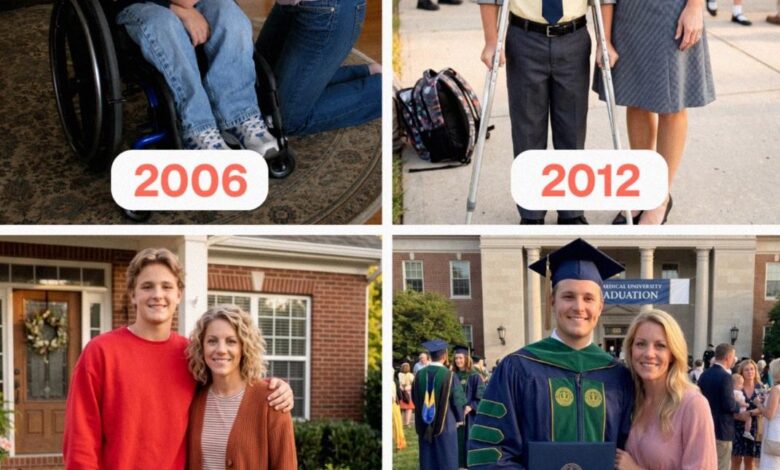
The day my husband Warren left me was not marked by a dramatic slammed door or a shouting match. My mother used to say that a slammed door is at least a sign of life, a manifestation of anger that can be fought and understood. Instead, what Warren gave me was a glance at our newborn son, a brief look at the neurologist, and a silence so cold it felt sharpened. Henry was barely three hours old, and I was still recovering from the physical trauma of childbirth with an IV drip in my arm and my son clutched against my chest. The neurologist spoke with a gentle, practiced softness that signaled my life was about to be cleaved into a before and an after. She explained that Henry had a motor impairment, a condition that would require years of therapy, unwavering support, and specialized follow-up care.
I listened to her with a mechanical sense of duty, nodding as if she were giving me directions to a nearby pharmacy. She told me it was not my fault, that pregnancy is unpredictable, and that with the right resources, my son could still lead a full and meaningful life. I felt a wave of gratitude for her kindness, but when I turned toward my husband, I found that he had already retreated. I asked him for a glass of water, assuming he just needed a moment of air to process the news. He did not move. He stood looking at our son not with grief or fear, but with a clinical appraisal that stripped away any illusion of partnership I had ever held. He told me he was not doing this, stating with cold detachment that he had signed up for a son he could play sports with, not a child burdened by physical limitations. He gathered his jacket and walked out of the delivery room with the casual indifference of a man leaving a meeting that had run longer than expected.
I left the hospital two days later alone, carrying a sleeping baby and a heavy folder of medical instructions, watching other mothers walk out surrounded by flowers, balloons, and supportive husbands. Warren’s lawyer sent the dissolution papers before Henry could even sit up. He abandoned us completely, moving two states away and making it more financially and emotionally draining to seek support than to accept his absence. My apartment became a sanctuary of formula, lemon cleaner, and the relentless, exhausting labor of single motherhood. The hard years that followed were not heroic in the sense that society often depicts; they were simply expensive, draining, and marked by a quiet, persistent survival. I spent years navigating insurance bureaucracies, managing endless physical therapy sessions, and learning to stretch my own capacity for patience until it was thin as paper.
As Henry grew, his intellect sharpened to match the stubbornness of his spirit. By the time he was seven, he had developed a directness that unnerved adults who preferred their children to be compliant and invisible. I remember a school office meeting where an assistant principal suggested we be realistic about Henry’s pace in the classroom. When she implied he might feel frustrated because the curriculum moved too fast for him, Henry looked her straight in the eye and asked if she meant physically or because she thought he was stupid. I had to press my lips together to hide my amusement, realizing then that my son was entirely capable of defending his own dignity. By age ten, he knew more about nerve pathways and joints than most medical professionals, and by sixteen, he had decided he wanted to become a doctor—specifically, the kind of doctor who listens to the patient rather than talking over them as if they were a chart.
Henry excelled in school, graduating at the top of his class and securing his place in medical school. Just days before his commencement ceremony, he found me at our kitchen table, uncharacteristically still. He told me that his father had reached out online. The news dragged my entire body backward through the years, forcing me to confront the ghost I had spent two and a half decades burying. Warren had not sought us out when we were struggling to afford braces, nor when Henry was in pain, but he had arrived just in time to claim a piece of the success he had done absolutely nothing to earn. Henry invited him to the graduation, claiming he did not want his father wandering around with a distorted version of our history.
The night of the ceremony was a blur of flashes and pride. I saw Warren walk into the hall, twenty-five years having silvered his hair and added weight to his frame, carrying a self-assured smile that assumed his presence was a gift. When he approached us, his eyes lingered on Henry’s legs and the absence of any medical equipment, clearly surprised by my son’s independence. He called Henry son, but the warmth was entirely forced. When Henry’s name was called for the final honor, he walked to the podium with a slight, deliberate limp that he had no interest in hiding. He looked out at the audience, cleared his throat, and began to speak.
Henry told the audience that while people love stories of perseverance, his was not a story of individual bravery, but of maternal strength. He recounted the day he was born and the fact that his father had left the hospital because life became too difficult. He spoke of the years I had carried him into rooms his father was too weak to even enter, and the nights we spent on the floor when we were both too tired to function. He told the room that his father left when life stopped looking easy, but that I had stayed when it stopped looking fair. Across the room, Warren went perfectly still, his eyes locked on the son he had abandoned.
Henry looked directly at his father and declared that the moment was not a proud victory for both of his parents, but a triumph for the woman who had never missed a hard day in twenty-five years. He thanked me in front of everyone, telling the room that everything good in his soul had learned my name first. The applause that followed was deafening, a wave of respect that rolled from the back of the room to the front, while I sat there weeping in front of everyone who had known us through the years. When Henry stepped down and approached me in the hallway, Warren tried to interject, clearly stung by the public dismantling of his ego. Henry did not give him the satisfaction of a debate. He told Warren that he had invited him so that he would finally hear the truth: he had abandoned us on day one, and I had stayed for every single day thereafter. As we walked away, the man who had traded his son for convenience was left standing in the shadows of the life he had discarded, finally forced to witness the legacy he had lost.