Your Sleeping Position Reflects Your Level of Laziness?
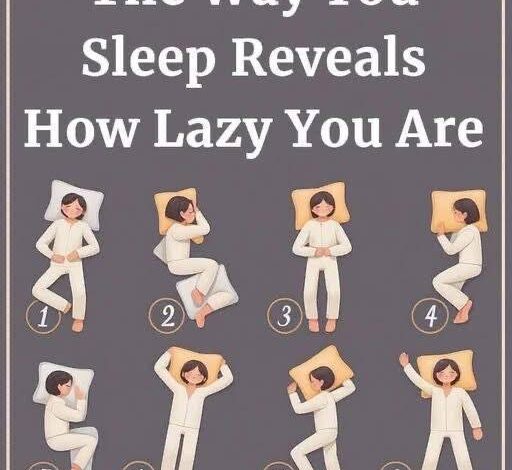
The human body possesses a silent, nocturnal language that continues to speak long after the conscious mind has drifted into slumber. While we often view sleep as a simple restorative lapse in time, psychologists and behavioral experts suggest that our physical orientation on a mattress is a profound manifestation of our internal state. Far from being a sign of “laziness,” the way we sprawl, curl, or stiffen during the night serves as an unfiltered mirror of our stress levels, emotional resilience, and the weight of the responsibilities we carry through our waking hours. By analyzing these common sleeping postures, we can uncover a narrative of dedication, empathy, and the hidden costs of being the person everyone else relies on.
Consider the individual who falls into what is often called the “Completely Drained” position. This isn’t a gentle descent into sleep; it is a total collapse, a surrender to gravity where the limbs are cast wide across the mattress as if the person were dropped from a great height. To an outside observer, this might look like a lack of discipline, but in reality, it is the hallmark of a high-achiever who has given every ounce of their energy to their day. These are the natural leaders and the crisis managers—the people who step up when others retreat. They carry a deep, intrinsic sense of duty that drives them to solve problems at home, excel at work, and support their social circles until their physical form simply gives out. The sprawling nature of this position is a subconscious attempt at total release. After a day spent under the constriction of expectations and the rigid pursuit of perfectionism, the body desperately tries to expand, seeking to shed the tension that has accumulated in the muscles and the mind. It is a posture of resilience, but also a warning that the “fuel tank” is dangerously close to empty.
Contrast this with the “Overworked Caretaker” position, where an individual sleeps on their side, knees slightly drawn and hands tucked near the chest or chin. This posture is defined by a paradox of compassion and exhaustion. These are the souls of any community—the listeners, the volunteers, and the emotional anchors who hold families and workplaces together. Their primary driver is empathy, a trait that makes them beloved but also leaves them uniquely vulnerable to burnout. The act of curling inward is a subconscious quest for security and emotional comfort. While they project an image of calm reliability to the world, their internal landscape is often a whirlwind of replayed conversations and future anxieties. They spend so much time providing a “soft landing” for others that they forget how to receive that same care themselves. Waking up tired after a full eight hours in this position is a sign that while the body stayed still, the heart and mind were still working overtime, tending to the needs of everyone else.
Then there are the stomach sleepers, those who lie face down with their arms tucked beneath a pillow, often described as “Desperately Needing a Vacation.” On the surface, these individuals appear exceptionally confident and assertive. They are doers who thrive on control and tangible progress. However, the act of sleeping face down is frequently an attempt to shield the vulnerable front of the body from the pressures of the environment. It is a defensive stance disguised as a decisive one. For these people, relaxation doesn’t come naturally; it has to be scheduled, and even then, the mind resists. They are the ones who wake up with stiff necks or tight shoulders—physical manifestations of the “emotional armor” they wear to protect their productivity. They are admired for their discipline, yet their body language in sleep reveals a person who is counting down the seconds until they can finally step away from the helm and breathe without the weight of leadership pressing down on them.
A different kind of strength is found in the “Overly Independent” back sleeper. Lying straight with arms at the sides, this position mimics a soldier at attention, even in the depths of REM sleep. This posture belongs to those who value organization, stability, and stoicism. They are the ones who smile through chaos and refuse to let the world see them sweat. While this position looks peaceful, it often masks a high level of internal pressure. These individuals have a deep-seated need for predictability; they want life to be steady and safe. Their independence is their greatest asset, but it can also become a cage. By rarely asking for help, they isolate themselves in their own strength. Their sleeping position reflects a soul that is constantly braced for impact, holding itself together so that nothing else falls apart.
For many, the most telling posture is the “Tightly Curled” fetal position, common among those who carry the world’s weight quietly. This is the ultimate gesture of self-protection. These individuals have often faced significant life challenges or carry the heavy burden of “emotional labor”—the invisible work of managing the happiness and well-being of those around them. They are the quiet survivors. The physical soreness they feel upon waking is a direct result of a body that remains guarded even in dreams. It is a silent cry for the same tenderness they so freely give to others. This position isn’t about laziness; it’s about endurance. It’s the body’s way of trying to create a safe space when the external world feels too demanding or too loud.
Finally, there are the “Stubborn and Unyielding” sleepers—those who fall into one specific position and remain there, frozen and unmoving, until the morning light. This rigidity is a testament to a person who is strong-willed and fiercely protective. Once they make a choice, they stick to it, whether that’s a career path or a sleeping posture. They are selfless and loyal, often pushing through physical or mental pain because they believe it is their duty to do so. However, this same determination prevents them from ever truly letting go. Even in sleep, they are alert, their muscles primed for the next challenge. They don’t just sleep; they “hold the line” until the sun comes up.
Across all these variations, a singular truth emerges: our sleeping habits are rarely about being “lazy.” Instead, they are about the complexity of the human spirit trying to reconcile its ambitions with its limitations. We don’t curl up or sprawl out because we are avoiding work; we do it because we have done too much of it. The body is an honest witness to the stories we hide from our colleagues, our friends, and even ourselves. If you find yourself waking up unrested, it is an invitation to look beyond the physical comfort of your bed and toward the emotional landscape of your life. It is a reminder that being strong, reliable, and empathetic is a noble way to live, but it is not a sustainable way to exist without intervals of genuine, unburdened rest. Your sleeping position is your body’s most intimate form of communication, a quiet, persistent voice telling you that you have done enough, that you have fought hard enough, and that it is finally time to let go and simply be.