Why Dogs Sniff Our Most Private Areas! Understanding the Science!
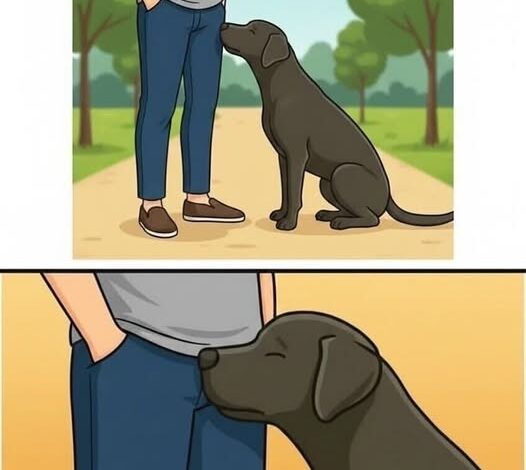
The moment is a familiar one, occurring in living rooms, parks, and entryways across the world. A guest walks through the front door, and within seconds, the family dog has bypassed a polite handshake or a head pat to plunge their nose directly into the guest’s most private regions. For the human involved, it is a moment of acute social mortification—a frantic scramble to pull the dog away while offering a stuttered apology. But for the dog, this act is devoid of malice, mischief, or a desire to embarrass. It is, quite literally, a high-speed data download. To understand why dogs perform this awkward ritual, one must step out of the visual-centric world of humans and into the chemical, sensory, and deeply compassionate world of the canine.
The Olfactory Superpower: Seeing with the Nose
While humans navigate the world through a primary lens of sight, relying on light and color to identify friends and strangers, a dog’s reality is constructed from molecules. A human has roughly five million scent receptors; a dog, depending on the breed, can have upwards of 300 million. Their brain’s olfactory bulb—the part dedicated to analyzing smells—is proportionally forty times larger than ours. When a dog sniffs a person, they aren’t just smelling “perfume” or “laundry detergent.” They are reading a biological biography written in the language of chemistry.
The specific attraction to a human’s private areas is rooted in the presence of apocrine sweat glands. Unlike the eccrine glands found on our hands and foreheads that primarily regulate temperature, apocrine glands produce pheromones. These pheromones serve as a biological ID card. By sniffing these areas, a dog can instantly determine a person’s gender, their approximate age, whether they are pregnant, their hormonal status, and even their general health. In the canine social hierarchy, this is the equivalent of a firm handshake and an exchange of business cards. It is a polite, albeit invasive by human standards, way of asking, “Who are you, and what is your story today?”
The Emotional Chemist: Detecting the Unseen
The sensitivity of the canine nose extends far beyond identifying identity; it serves as a sophisticated emotional barometer. We often marvel at how a dog seems to know when we are sad or stressed before we have even processed the feeling ourselves. This isn’t just a “sixth sense”; it is a mastery of endocrinology. When humans experience fear, stress, or joy, our body chemistry shifts. Cortisol levels rise during anxiety, while oxytocin and dopamine flourish during moments of affection. These hormonal changes alter our scent in ways that are invisible to us but as loud as a shout to a dog.
When a dog sniffs you, they are checking your emotional pulse. They can detect the subtle chemical markers of a rising panic attack or the faint change in breath that precedes a depressive episode. This remarkable ability is the foundation of the work done by medical alert and emotional support animals. These dogs are trained to respond to the specific scent of a plummeting blood sugar level or the chemical precursors to a seizure. Even the family pet, without formal training, acts on these instincts. When your dog insists on leaning against you or resting their chin on your knee after a difficult day at work, it is because they have literally “smelled” your exhaustion and are offering a physical anchor.
The Conflict of Etiquette: Bridging the Instinctual Gap
The primary source of human embarrassment stems from a clash of cultures. Humans have spent millennia building social boundaries around bodily privacy, viewing certain areas as strictly off-limits in polite company. Dogs, however, operate on a philosophy of radical honesty. To them, the “truth” of a person is located exactly where the pheromones are strongest. They do not share our concepts of modesty or shame; they only share a drive for connection.
Recognizing that a dog’s motivation is grounded in curiosity and a desire for social bonding helps bridge this gap. However, living in a human world requires a degree of compromise. If a dog’s greeting becomes too intrusive, it is not an act of defiance but a lack of guidance. Owners can gently redirect this instinctual behavior by utilizing basic commands like “sit,” “stay,” or “leave it.” By rewarding the dog for choosing a more “human-friendly” greeting—like sniffing a hand or waiting for a chin scratch—the dog learns to navigate the boundaries of human etiquette without losing their natural drive to understand those around them.
A Gesture of Loyalty: To Be Known Deeply
If we look past the initial awkwardness, a dog’s sniff is a profound gesture of attention. In a world where we often feel invisible or misunderstood, the dog offers a level of focus that is rare. Each inhale is an act of recognition. When a dog greets you with a deep, lingering sniff, they are affirming your presence. They are updating their internal map of who you are, reaffirming the bond of trust, and ensuring that they are attuned to your current state of being.
For a dog, scent is not just information; it is memory and love. They memorize the unique “perfume” of their favorite humans, using it to find comfort when they are alone and to find their way home when they are lost. Your specific scent offers them a sense of belonging. When they lean in toward you, they are expressing an ancient devotion that predates human language. They are looking for the “you” that exists beneath the clothes, the career, and the social masks.
The Unwavering Devotion of the Nose
Ultimately, a dog’s reliance on scent is what makes the human-canine bond so resilient. They do not judge us by our appearances or our social standing. They do not care if we are wearing a tailored suit or old pajamas. They judge us by the truth of our chemistry—by the pheromones that speak of our health and the hormones that speak of our hearts.
To be sniffed by a dog is to be known without judgment. It is to be recognized by a creature who sees—and smells—exactly who you are and decides, every single time, that you are someone worth knowing. The brief moment of social embarrassment is a small price to pay for the privilege of being loved by a creature whose loyalty is guided by a sensory awareness so deep it touches the very core of our biological being. The next time a dog leans in for a curious sniff, remember that they aren’t trying to be rude. They are simply asking to be let into your world, using the most honest tool they have to say, “I see you, I know you, and I am here for you.”