What Your Thumb Ring Really Says About You!
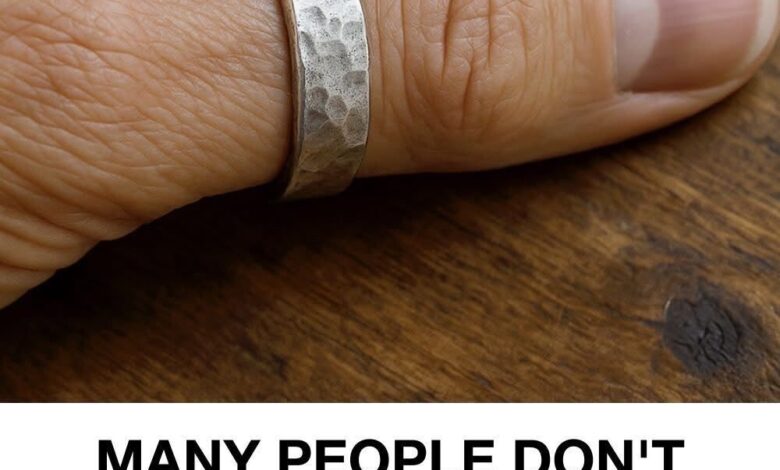
A thumb ring is more than a piece of metal on your hand — it’s a quiet declaration of who you are. Throughout history, thumb rings have carried different meanings: power, independence, rebellion, or sensual confidence. Today, they straddle the line between fashion and self-expression, blending style with subtle symbolism that speaks volumes about the wearer.
Unlike rings on other fingers, the thumb ring stands apart — both literally and symbolically. The thumb itself represents willpower, determination, and individuality. It’s separate from the other fingers, much like how those who wear thumb rings often stand apart from the crowd. Whether worn by men or women, the choice to adorn the thumb often signals confidence, independence, and a strong sense of identity.
For women, a thumb ring has long been a quiet act of rebellion. In recent decades, it’s come to represent self-sufficiency and strength — a subtle reminder that she charts her own course. It can suggest a woman who’s comfortable in her power, someone who doesn’t need validation but chooses expression. Some women wear thumb rings as symbols of feminism or solidarity with the LGBTQ+ community, particularly when worn on the right hand. It’s a way of saying, “I define myself,” without uttering a word.
At the same time, not every woman who wears one is making a political or cultural statement. For many, it’s simply an aesthetic choice — an appreciation for symmetry, or the way a silver or gold band contrasts against skin and motion. A thumb ring can balance other jewelry, draw attention to manicured hands, or complement an outfit. It can be both bold and understated — a small, glinting reminder of personality and presence.
Fashion stylists often describe the thumb ring as the “anchor” of a hand’s jewelry layout. Its placement provides visual balance, grounding the look while making a statement that feels intentional rather than accidental. In this sense, it’s a favorite among those who understand how to use accessories as punctuation rather than decoration.
Historically, thumb rings carried immense significance. In ancient Greece and Rome, they were worn by archers to protect their drawing fingers from injury. Over time, this practical origin evolved into a symbol of strength and control. Among the nobility, thick metal thumb rings represented wealth and authority — only those of high rank could afford the materials or the craftsmanship.
In the Renaissance era, thumb rings became markers of intellectual curiosity and independence. Artists, scholars, and travelers often wore them as emblems of exploration and unconventional thinking. The ring on the thumb — separate from the rest — reflected a mind unbound by conformity.
For men, thumb rings have traditionally been tied to power, virility, and influence. In many cultures, they served as signifiers of social status, often carved from gold, jade, or other valuable materials. A heavy thumb ring could indicate nobility, military achievement, or financial success. Even today, when a man wears a thumb ring, it tends to project confidence — sometimes bordering on dominance.
In modern style, men often use thumb rings to express individuality rather than hierarchy. They’ve become associated with creativity, nonconformity, and an artistic spirit. Actors, musicians, and designers often favor them for that reason: they stand out without shouting. A simple band or a minimalist design can convey quiet strength, while a more ornate piece might reveal a flair for drama and detail.
Psychologically, the thumb is tied to will and control — the part of us that pushes forward, decides, and acts. That’s why wearing a ring on the thumb is often seen as an assertion of autonomy. It draws the eye, signaling someone comfortable taking up space. For some, it’s a declaration of self-possession; for others, it’s a reminder to remain grounded in their own choices.
Certain interpretations even extend into the realm of intimacy. Because the thumb is connected to personal will and self-assurance, a ring there can suggest sexual confidence — not necessarily flamboyance, but a sense of comfort with one’s body and desires. It may also represent openness in relationships, signaling a willingness to engage authentically without insecurity or pretense.
That said, the meaning of a thumb ring always depends on context. On the left hand, it may suggest inner strength, logic, or self-control — a quieter expression of resolve. On the right, it often carries more extroverted or expressive symbolism, hinting at independence, rebellion, or even defiance.
Cultural nuances also shape the story. In India, thumb rings were historically worn by archers and later by men of influence, while in Chinese tradition, they symbolized power and virility. In Victorian England, women wearing thumb rings were sometimes viewed as eccentric — a subtle challenge to the rigid expectations of femininity. In the 1960s and ’70s, the trend resurfaced alongside movements for women’s rights and sexual liberation, reclaiming the symbol as one of freedom.
Today, the resurgence of thumb rings across genders reflects the broader shift toward individuality in fashion. Social media has amplified this — influencers, stylists, and everyday people use jewelry not to signal status but to tell stories. A thumb ring might commemorate a personal milestone, mark a period of transformation, or simply feel like the right weight on the hand.
Design choices also carry meaning. A sleek, unadorned silver band tends to suggest clarity and focus. Gold, especially thick or textured designs, conveys confidence and warmth. Stones — particularly turquoise, onyx, or garnet — introduce layers of symbolism: protection, grounding, vitality. A ring with an open band or asymmetrical shape hints at creative freedom or refusal to be boxed in.
Some people even wear multiple rings across their hands as a kind of visual biography. The thumb ring, in that case, becomes the anchor — the first and most deliberate choice.
Ultimately, a thumb ring is less about trend and more about truth. It’s a small, physical declaration that says something intangible: “I know who I am.” Whether worn to honor a belief, highlight confidence, or simply complete a look, it reflects a decision to be noticed without explanation.
So the next time you notice someone wearing a ring on their thumb, look closer. It might not just be an accessory — it might be a marker of resilience, independence, or quiet rebellion. It might tell a story about self-respect, identity, or the courage to stand alone.
And if you wear one yourself, remember this: it’s not just jewelry. It’s a symbol of intention. Every time the metal catches the light, it reflects a bit of you — your choices, your confidence, your defiance, your style. A reminder that self-expression doesn’t need to be loud to be powerful.
Whether in gold, silver, or something simple and handmade, a thumb ring speaks for you — even when you don’t say a word.