What It Really Means When a Man Scratches Your Palm, And How to Respond With Confidence!
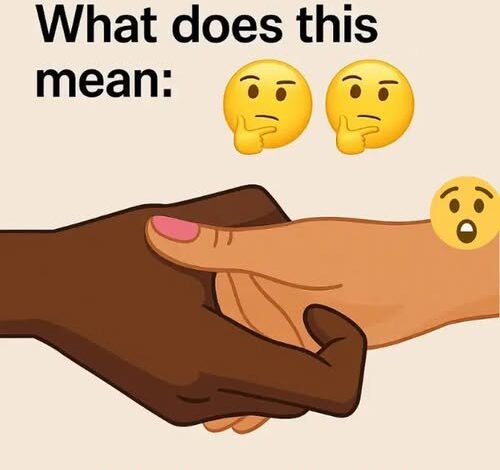
Body language often says what words never quite manage to express. A glance held a second too long, a step taken just a little closer, a pause that feels charged. One of the most quietly loaded gestures is also one of the easiest to miss: a man lightly scratching or rubbing the palm of your hand.
At first glance, it can seem insignificant. A nervous habit. A meaningless motion. But in many social and cultural contexts, especially when paired with eye contact or a softened tone, that small touch can carry intent. Understanding what it may signal—and knowing how to respond without second-guessing yourself—keeps you grounded, confident, and firmly in control of your own boundaries.
For women who have lived enough life to trust their instincts, this isn’t about decoding games. It’s about awareness. About choosing how much access someone gets to you, physically and emotionally, and on your terms alone.
Why the Palm Matters
The palm is one of the most sensitive areas of the body. It’s intimate by nature. Unlike a brief touch on the arm or a polite handshake, contact with the palm activates nerve endings associated with trust, closeness, and vulnerability. That’s why palm contact is rarely accidental in social situations.
In several cultures—particularly parts of the American South, Latin America, and Mediterranean regions—a palm scratch during a handshake or hand-holding moment has long been used as a subtle signal of romantic or sexual interest. It’s quiet, deniable, and designed to be felt more than seen.
That doesn’t mean every palm scratch is intentional or flirtatious. Context matters. Relationship history matters. But when the motion is slow, deliberate, and paired with focused attention, it’s usually not random.
What matters most is not decoding his intent with certainty, but recognizing how the gesture makes you feel.
When the Gesture Feels Welcome
Sometimes, the moment lands exactly where it’s meant to. You feel a spark. A warmth. A flicker of curiosity. Maybe you’ve already enjoyed his company, and the touch feels like a gentle extension of an existing connection rather than a sudden intrusion.
In those moments, confidence—not confusion—is your ally.
A calm smile or steady eye contact can communicate openness without words. You don’t need to exaggerate or rush anything. Presence alone does the work.
If you want to be clearer, mirroring the touch in a subtle way—brushing his hand lightly, maintaining contact a moment longer—signals interest without surrendering control. You’re acknowledging the moment, not escalating it beyond your comfort.
Humor can also be powerful. A playful comment like, “Is that your way of saying hello?” or “That felt intentional,” keeps the exchange light while inviting honesty. How he responds tells you far more than the gesture itself. Respectful interest deepens connection. Awkward defensiveness or entitlement reveals red flags early.
If the energy feels right, you can choose to continue engaging—sit closer, walk together, linger in conversation. You’re not reacting; you’re choosing.
When the Gesture Feels Wrong
Your comfort is the non-negotiable center of every interaction. If the touch feels intrusive, presumptive, or simply unwelcome, that reaction is enough. You do not need to justify it.
Pulling your hand away immediately is a complete response. It communicates a boundary without drama or apology.
If words feel necessary, keep them simple and direct. “Please don’t do that,” or “That made me uncomfortable,” is not rude. It’s clear. Anyone worth your time will respect it instantly.
If the atmosphere shifts uncomfortably after that, let it. Discomfort is information. Change seats. Change the subject. End the interaction if needed. Politeness should never come at the expense of your sense of safety or self-respect.
You owe no one access to your body, your space, or your attention—regardless of age, familiarity, or social expectations.
When the Meaning Is Unclear
Not every moment fits neatly into yes or no. Sometimes the gesture doesn’t offend you, but it doesn’t sit right either. It leaves you alert instead of intrigued.
In those gray spaces, curiosity is more useful than overthinking.
A calm, straightforward question—“What did you mean by that?” or “Was that intentional?”—puts the responsibility back where it belongs. You’re not accusing. You’re observing and asking for clarity.
Pay attention to how he responds. Does he explain respectfully? Apologize if needed? Or does he minimize your question, joke it away, or imply you’re imagining things? His reaction tells you far more about his character than the gesture ever could.
Body language should match behavior. Genuine interest feels open and respectful. Manipulation feels slippery. Your instincts know the difference.
The Power of Boundaries at This Stage of Life
For many women, especially those who have spent decades caring for others, this phase of life is about reclaiming agency. Your time. Your body. Your choices.
You no longer need to tolerate discomfort for the sake of being agreeable. You don’t need to decode mixed signals or accept behavior that leaves you uneasy. You are allowed to enjoy flirtation—and you are equally allowed to shut it down.
Boundaries are not walls. They are filters. They let the right people closer and keep the wrong ones out.
If a man’s subtle touch feels charming and mutual, you’re free to explore that energy with confidence. If it feels invasive or dismissive of your autonomy, you’re free to disengage without guilt.
Real connection—romantic or otherwise—is built on respect that shows up not just in words, but in how someone responds when you assert yourself.
You’ve earned the right to trust your instincts, honor your comfort, and choose interactions that add to your life rather than unsettle it.
And when you move through the world with that certainty, your body language speaks just as clearly as any gesture ever could.