What Can Be Verified About the Viral Bus Crash Image
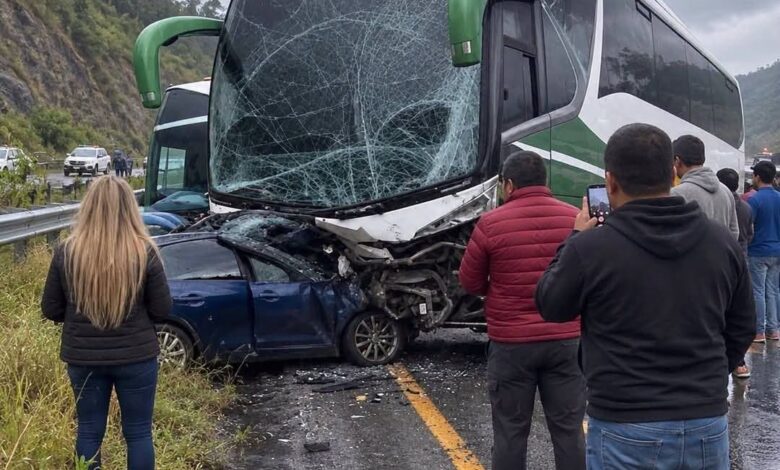
A Facebook post shows a coach and a car with severe damage on a wet road. The caption calls it a major incident involving a bus, and Facebook identifies the post as containing AI content. The link in the comments opens an article about a chicken recipe from 1965. Neither the caption nor that page supplies a place, date, police statement or other details that establish where the depicted collision took place. The image is presented here as an illustration attached to the Facebook post.
The most striking part of the picture is the apparent position of the two vehicles. The front of the bus appears above the smaller car, and the windshield is heavily cracked. People stand nearby, with a railing and vegetation lining the road. Those are things a viewer can describe from the image. The picture does not establish whether anyone was inside either vehicle, what direction the vehicles were traveling, or who was involved. Even a genuine photo of a crash can leave those questions open because it shows a scene after the vehicles have come to rest.
A verified collision report would usually begin with details that can be checked independently. A highway name or road number can be compared with local traffic notices. A date and approximate time make it possible to look up a statement from the agency responsible for the road. The names of the bus operator and responding emergency services can help distinguish one incident from another. When police confirm injuries, a road closure or a diversion, the report can attribute that information to the agency and specify the time it was issued. None of those steps requires a reader to guess what happened from the position of vehicles in a photograph.
The distinction is especially important when a story is shared with dramatic imagery. A caption can be written after an image is created or copied from an unrelated post. A link in the comments can also change, or it can lead to a page whose topic bears no relationship to the caption. In this case, the recipe on the linked page cannot supply facts about a collision. It gives no reason to associate the photo with a particular road, bus company, country or group of passengers.
A public traffic warning and an account of the causes of a crash also answer different questions. The first helps people decide how to travel around a closure. The second depends on facts investigators may only establish later, including witness accounts and physical evidence. A scene that looks severe is not a substitute for either kind of report. Readers who encounter the Facebook image should treat any claim about injuries, location or responsibility as unconfirmed unless a named source supplies those details.
The available Facebook post provides an image and a short caption. It does not provide a verified report of a particular bus crash. This article describes what appears in the image, the mismatch in the linked page and the evidence that would be needed to identify the incident.