US-Israeli strikes on Iran in breach of international law, says Italian minister!
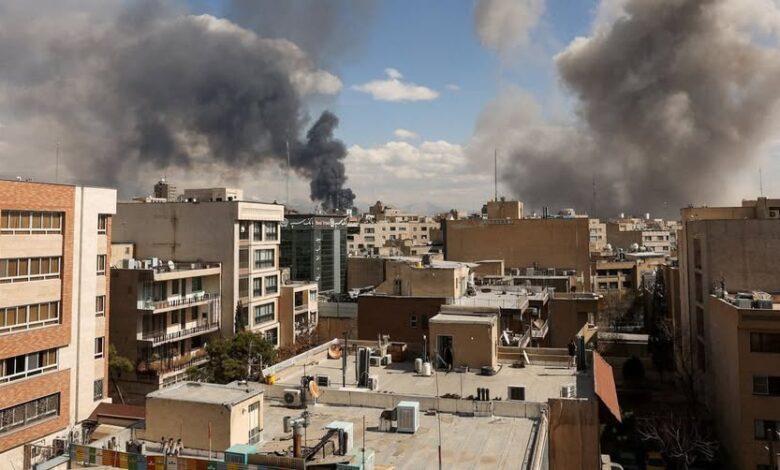
In a diplomatic shift that has sent shockwaves through the corridors of European power, the Italian government has issued a stinging rebuke of the recent military operations conducted by the United States and Israel against the Islamic Republic of Iran. On Thursday, March 5, 2026, Italian Defence Minister Guido Crosetto addressed the lower house of parliament in Rome, stating unequivocally that the joint strikes—which claimed the life of Supreme Leader Ayatollah Ali Khamenei and ignited a firestorm across the Middle East—were in “clear breach of international law.” The remarks represent the most significant fracture to date within the Western coalition, signaling a growing unease among traditional allies regarding the “absolute” speed and unilateral nature of the current U.S. administration’s foreign policy.
The timing of this critique is particularly historic. Since U.S. President Donald Trump took office last year, Prime Minister Giorgia Meloni’s right-wing administration in Italy has moved aggressively to align itself with Washington, seeking to position Rome as a primary European partner for the “America First” agenda. However, the sheer scale of the weekend’s strikes and the resulting regional conflagration have forced a reassessment of that alignment. Crosetto, a foundational member of the Brothers of Italy party, did not mince words before the Chamber of Deputies, asserting that the decision to launch the decapitation strikes “fell outside, needless to say, the rules of international law.”
The primary grievance cited by the Italian government centers on a lack of prior consultation. According to Crosetto, the United States and Israel initiated a “broad wave” of military action without providing so much as a warning to their strategic partners in the Mediterranean or within the NATO framework. This lack of transparency has left Italy and the rest of the European Union in a position of “active awareness” without agency, forced to manage the catastrophic humanitarian and economic consequences of a conflict they did not authorize. “It is a war that was started without anyone in the world knowing,” Crosetto remarked, highlighting a sense of betrayal that is beginning to resonate in other European capitals, from Paris to Berlin.
The “light of truth” regarding the legality of the strikes remains a subject of intense academic and diplomatic debate. While Washington argues that the operation was a necessary act of “anticipatory self-defense” to prevent Iran from finalizing its nuclear threshold, many legal experts at the United Nations contend that such a move requires a degree of imminent threat that has not been publicly evidenced. By explicitly labeling the strikes as a breach of international law, Italy is signaling that it may not provide the same level of diplomatic cover for the coalition that it has in previous conflicts. This shift complicates the “absolute” unity that the Trump administration has sought to project as it attempts to reorder the Middle East.
Despite this sharp rhetorical divergence, Italy finds itself physically entangled in the “historic” fallout of the war. Rome has already begun the process of deploying air defense assets to Gulf nations—specifically targeting the protection of civilian infrastructure in countries like Bahrain and the United Arab Emirates, which have come under fire from Iranian retaliatory drone and missile volleys. Furthermore, Italian naval assets have been moved toward Cyprus to bolster regional security and prepare for potential maritime disruptions. This creates a paradox for the Meloni government: publicly condemning the legality of the war while simultaneously deploying its military to manage the resulting chaos.
The economic implications of the conflict have only intensified the domestic pressure on the Italian parliament. As a major importer of energy, Italy is acutely sensitive to the “absolute” volatility of oil and gas markets. With the Strait of Hormuz facing a de facto blockade and global shipping rates skyrocketing, the Italian economy—already struggling with faltering growth—is staring down a potential recession. Crosetto’s remarks suggest that the Italian government views the current conflict not just as a legal failure, but as a strategic error that threatens the stability of the entire Mediterranean basin.
In the broader context of 2026, the Italian critique may serve as a catalyst for a more independent European security policy. If major NATO allies continue to feel sidelined by the unilateral decisions of the “absolute” executive power in Washington, the drive for “strategic autonomy” within the European Union is likely to accelerate. The “light of truth” revealed by this crisis is that the traditional bonds of the Atlantic alliance are being tested by a new era of transactional diplomacy, where even the closest partners feel like bystanders in a rapidly widening conflict.
As the lower house of parliament processed Crosetto’s address, the political systems of Europe began to reflect a growing demand for a ceasefire or at least a return to multilateral diplomacy. However, with the Iranian government vowing further revenge and the U.S. and Israeli leadership hinting at “surprises” still to come, the prospect of a de-escalation appears remote. Italy’s stance serves as a “historic” warning: even those who seek to be the closest friends of the United States are finding it impossible to remain silent when the foundational rules of the international order are set aside.
The coming days will determine if Rome’s critique leads to a broader diplomatic rift or if it is merely a signal intended to appease a domestic audience concerned about being dragged into a third World War. For now, the “active awareness” of the world is fixed on the Mediterranean and the Gulf, waiting to see if other nations will follow Italy’s lead in challenging the “absolute” speed of a conflict that was started without their knowledge but must be managed by their hands.
The tragedy of the situation, as framed by Crosetto, is that the rest of the world has been forced into a “historic” role of crisis management for a war they did not choose. As political systems strain and trust in the traditional leadership of the West erodes, the Italian minister’s words stand as a testament to a world where the “light of truth” is increasingly found in the dissent of allies rather than the declarations of the principals.