Update about Turning Point USA halftime show!
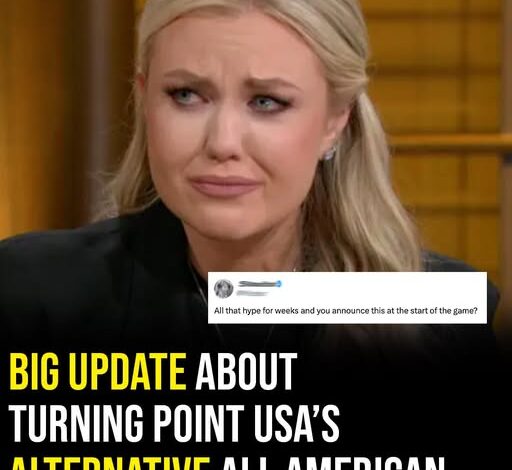
Turning Point USA has issued an update regarding its much-publicized alternative halftime event for the 2026 Super Bowl, a project the organization positioned as a counterpoint to the official NFL halftime show headlined by Bad Bunny. The announcement comes just as anticipation around Super Bowl festivities reached its peak, and it has sparked a fresh wave of criticism aimed not at the concept of the event itself, but at how it has been handled.
For months, Turning Point USA had promoted its own competing broadcast, branding it as “The All-American Halftime Show.” The event was framed as a cultural and political alternative, emphasizing themes of faith, family, and patriotism. It was designed to air simultaneously with the official halftime show, giving viewers a choice between two sharply different visions of American culture.
The origins of the alternative show are deeply tied to TPUSA’s ideological opposition to the NFL’s selection of Bad Bunny as the halftime performer. Conservative commentators aligned with the organization argued that the choice reflected cultural and political values they do not support. In response, TPUSA leaned into a more traditionalist image, marketing its show as a celebration of what it considers core American ideals.
The organization itself has undergone significant change in recent years. TPUSA was founded in 2012 by conservative activist Charlie Kirk, who led the group until his death in September 2025, when he was fatally shot while speaking at a university event in Utah. Following his assassination, TPUSA’s board appointed his widow, Erika Kirk, as both CEO and chair, placing her at the helm during one of the most visible and contentious moments in the group’s history.
Under this new leadership, TPUSA doubled down on its decision to challenge the NFL’s halftime programming. The All-American Halftime Show was announced with a lineup aimed squarely at conservative audiences. Headlining the event is Kid Rock, a longtime Republican supporter and vocal ally of former President Donald Trump. He is joined by country artists Brantley Gilbert, Lee Brice, and Gabby Barrett, forming a roster designed to contrast sharply with Bad Bunny’s global pop influence.
Initially, TPUSA indicated that the event would be streamed live on X, formerly Twitter, leveraging the platform’s reach to compete for attention during one of the most-watched television moments of the year. That plan has now changed.
In an update posted to its official X account, Turning Point USA announced that it would not be able to stream the event on the platform after all. “UPDATE: Due to licensing restrictions, we are unable to stream The All-American Halftime Show on X,” the organization wrote. The post continued with an alternative plan, directing viewers instead to TPUSA’s YouTube channel, where the full show would be available around 8 p.m. Eastern Time.
While the message was straightforward, the reaction was not. Almost immediately, supporters and critics alike took issue with how the update was communicated. Several users complained that the post failed to include a direct link to the YouTube stream, arguing that this omission created unnecessary friction for viewers hoping to watch and share the event.
“You should have posted a link with the post,” one user wrote, echoing a sentiment that appeared repeatedly in the replies. Another added that making audiences search for the stream undermined the group’s own goal of maximizing visibility, suggesting that clearer planning could have avoided confusion.
Beyond the missing link, others questioned the broader execution of the event. Some critics mocked the organization for failing to secure streaming rights in advance, calling the last-minute change unprofessional. One commenter described the situation as “amateur hour,” while another suggested that the inability to stream on X made the entire effort look poorly organized.
The criticism highlights a recurring tension surrounding TPUSA’s alternative halftime project. While the concept generated attention and aligned with the organization’s messaging, its rollout has faced scrutiny at nearly every step. Supporters expected a polished, high-profile production capable of rivaling the NFL’s halftime spectacle, while detractors argue that the logistical issues reinforce doubts about the group’s ability to deliver on that promise.
From a broader perspective, the episode reflects the increasingly politicized nature of pop culture events like the Super Bowl halftime show. What was once primarily an entertainment decision has become a cultural flashpoint, with artists, audiences, and advocacy groups projecting larger ideological battles onto a single performance slot.
Bad Bunny’s selection as the official halftime performer placed those tensions front and center. As one of the most streamed artists in the world, his inclusion aligns with the NFL’s global branding and diverse audience. For critics, however, his music, language, and public positions symbolize cultural changes they resist. TPUSA’s alternative show was conceived as a direct rebuttal to that shift.
The streaming update, however, has complicated that narrative. Instead of focusing on the artists or the message, much of the conversation has shifted to execution and planning. Even among sympathetic audiences, there is frustration that an event billed as a major alternative appears to have stumbled over basic logistics.
TPUSA has not issued additional clarification beyond the initial post, nor has it responded publicly to the criticism regarding links or licensing. As of now, the organization is standing by its plan to host the show exclusively on YouTube, betting that its audience will follow despite the inconvenience.
Whether the All-American Halftime Show ultimately draws significant viewership remains to be seen. What is clear is that the controversy surrounding it has already ensured attention, albeit not always the kind TPUSA may have intended. In an era where visibility and ease of access are crucial to online engagement, even small missteps can overshadow messaging.
The situation also underscores the challenges advocacy groups face when attempting to compete with large-scale entertainment productions. The NFL’s halftime show is backed by massive budgets, established infrastructure, and years of experience. Replicating that reach, even symbolically, requires meticulous coordination and flawless execution.
As Super Bowl Sunday approaches, TPUSA’s alternative event remains scheduled, its lineup intact, and its message unchanged. The platform, however, has shifted, and with it the expectations of viewers who were promised a seamless counterprogramming experience. What began as a cultural statement has now become a test of organizational competence under public scrutiny.
In the end, the update serves as a reminder that in the attention economy, presentation matters as much as intent. For Turning Point USA, the All-American Halftime Show is no longer just a protest against a musical choice. It is also a live demonstration of how effectively the organization can translate ideology into execution on one of the biggest media days of the year.