What Your Hands May Reveal About Your Overall Health!
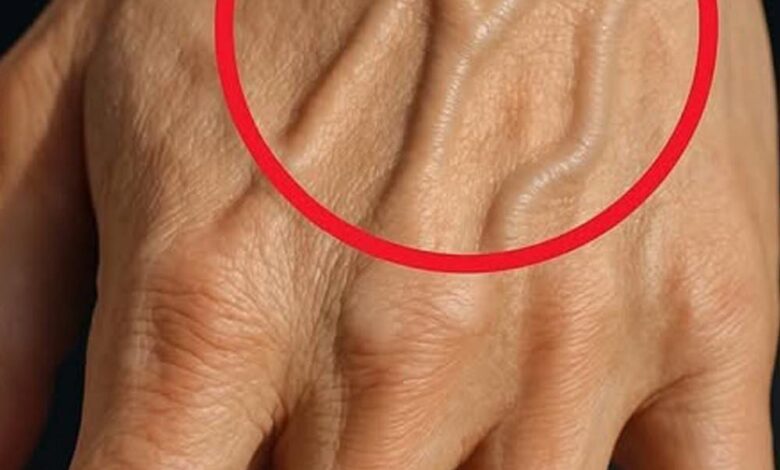
Looking down at your hands and noticing veins that seem more visible than usual can be unsettling. It’s one of those small changes that catches your attention and immediately sends your mind searching for explanations. In a world where information spreads quickly and not always accurately, it’s easy to come across claims suggesting that prominent veins might signal something serious happening inside your body.
But the reality is far less alarming—and far more grounded in basic physiology than in hidden disease.
In most cases, visible veins on your hands are completely normal. They are not a warning sign of a failing system or a silent internal issue. Instead, they are simply a reflection of how your body is built, how it changes over time, and how it responds to everyday conditions.
One of the most common reasons veins become more noticeable is age. As the years pass, your skin naturally becomes thinner. It loses some of the collagen and elasticity that once gave it a fuller, more cushioned appearance. As that layer thins, the structures beneath it—especially veins—become easier to see. This is a natural process, not a cause for concern.
Body composition also plays a major role. People with lower body fat tend to have more visible veins because there is less tissue between the skin and the blood vessels. This isn’t a problem; it’s simply how the body is structured. Two people can be equally healthy, yet one may have very visible veins while the other does not.
Genetics contribute as well. Some individuals are simply predisposed to having more prominent veins, just as others are predisposed to certain eye colors or heights. If visible veins run in your family, it’s likely just another inherited trait.
Even daily activities can influence how your veins look. Physical exercise increases blood flow, causing veins to expand temporarily. This makes them more visible during and after activity. Heat has a similar effect—warm temperatures cause blood vessels to dilate, which can make veins appear more pronounced. That’s why you might notice your veins more after a hot shower or on a warm day.
Hydration levels also play a subtle role. When you’re slightly dehydrated, the volume of fluid in your bloodstream decreases, which can make veins stand out more. This effect is usually temporary and resolves once normal hydration is restored.
Taken together, these factors explain why vein visibility can change from day to day or from one person to another. None of them, on their own, indicate a serious underlying issue.
To understand why visible veins are not linked to deeper problems, it helps to look at how the body actually signals when something is wrong.
Your internal filtration system—responsible for removing waste, balancing fluids, and maintaining essential chemical levels—operates continuously and quietly. When it begins to struggle, it does not announce itself through the appearance of veins. Instead, it produces a set of well-documented symptoms that develop gradually.
One of the most common signs is swelling. When fluid regulation is disrupted, the body tends to retain water, leading to puffiness in areas like the hands, feet, ankles, or face. This condition, known as edema, is often noticeable and persistent.
Fatigue is another frequent symptom. As waste products accumulate in the bloodstream, energy levels can drop, leaving you feeling unusually tired even after rest. Changes in bathroom habits may also occur, either increasing or decreasing frequency, and sometimes the presence of foam can indicate substances where they don’t belong.
Blood pressure often rises when these systems are under strain, as they play a direct role in regulating circulation. In more advanced cases, people may experience nausea, loss of appetite, or shortness of breath due to fluid imbalances affecting the body more broadly.
What’s important to recognize is that visible veins are not part of this pattern. They do not appear on the list of recognized warning signs because they are not connected to these processes in a meaningful way.
In fact, the relationship between fluid balance and vein visibility works in the opposite direction of what many assume. When the body retains excess fluid, tissues become swollen, and veins are often less visible because they are obscured by the buildup of fluid. On the other hand, when fluid levels are slightly reduced, veins can appear more prominent.
This distinction matters. It shows that visible veins are more often a surface-level reflection of external and structural factors rather than an indicator of internal dysfunction.
There are rare situations where veins become noticeably larger due to medical treatment. In certain advanced conditions, specialized procedures may be performed to create access points for ongoing care. These procedures intentionally enlarge veins, making them more visible and prominent. However, this is a result of intervention, not a natural symptom of the condition itself.
Understanding this helps separate fact from assumption.
If you’re concerned about your health, it’s far more useful to focus on symptoms that have been clearly identified through medical research and clinical experience. Persistent swelling, unexplained fatigue, significant changes in daily habits, or sustained increases in blood pressure are all signals worth paying attention to. These are the kinds of changes that warrant further evaluation.
The most reliable way to assess how your body is functioning is not through observation alone, but through proper medical testing. Blood work can measure waste levels and provide precise information about how efficiently your system is working. Other tests can detect imbalances or abnormalities that are not visible on the surface.
Visual cues, while sometimes helpful for noticing general changes, are limited. They cannot provide the detailed insight needed to understand internal function.
When you see veins on your hands, what you are really seeing is a combination of factors—your skin thickness, your body composition, your hydration level, your environment, and your genetics. These are all normal elements of how the body presents itself.
The key is perspective.
Not every change you notice is a warning. Many are simply variations—natural, harmless, and expected. Learning to distinguish between these and genuine signs of concern can prevent unnecessary anxiety and help you focus on what truly matters.
Your hands can tell you certain things. They can reflect circulation, hydration, and age-related changes. But they are not a diagnostic tool for internal systems.
Real health awareness comes from understanding your body as a whole, paying attention to patterns that persist or worsen, and seeking proper evaluation when something doesn’t feel right.
And in most cases, when it comes to visible veins, what you’re seeing is not a problem—it’s simply your body being exactly what it is.