Tommaso Cioni Questioned by Authorities in Ongoing Nancy Guthrie Investigation!
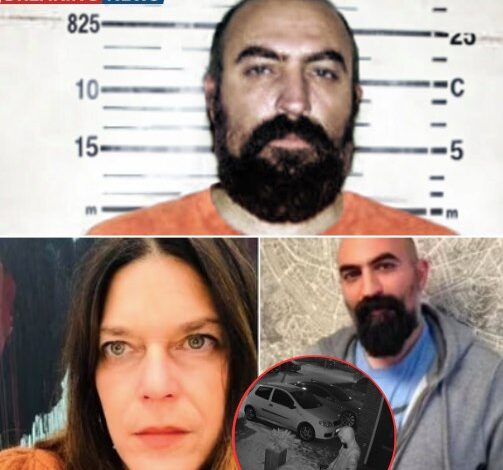
The disappearance of 84-year-old Nancy Guthrie has evolved into a complex forensic puzzle that has transfixed the nation, shifting from a localized missing persons report into a high-stakes investigation involving the Pima County Sheriff’s Department and the FBI. At the center of the current public fascination is a significant development involving Guthrie’s son-in-law, Tommaso Cioni. In an era where social media often outpaces official facts, the news of Cioni’s recent interaction with law enforcement became a flashpoint for intense speculation. Authorities have confirmed that Cioni voluntarily appeared for an extensive, multi-hour interview to assist in the investigation. While digital rumors quickly escalated into false reports of an arrest, Sheriff Chris Nanos was firm in his clarification: Cioni was not taken into custody, no charges have been filed, and his cooperation is currently viewed as a necessary step in the grueling process of reconstructing a fractured timeline.
The events of January 31, 2026, began with the deceptive normalcy of a family dinner. Nancy had spent the evening with her daughter, Annie Guthrie, and Tommaso Cioni. Following the meal, Cioni acted as the escort, driving Nancy back to her home in the Catalina Foothills—an upscale, serene neighborhood known for its quiet streets and panoramic views of the Tucson landscape. Cioni reported to investigators that he dropped Nancy off at approximately 9:45 p.m. and, following a standard safety protocol, remained in his vehicle until he saw her cross the threshold and close the front door. This was the last time a family member would confirm seeing Nancy Guthrie. When she failed to attend her usual Sunday morning church service the next day and stopped responding to calls, the silence from her home became an immediate signal of distress.+1
When deputies arrived to perform a welfare check, the tranquility of the foothills was shattered by a crime scene that suggested a calculated and violent intrusion. The investigation quickly moved beyond a simple search for a wanderer as forensic teams discovered clear evidence of a struggle near the entryway. The most chilling detail was the tactical nature of the disappearance: a security camera positioned to monitor the front door had been manually and deliberately disconnected in the early morning hours, creating a digital blind spot that shielded the perpetrator’s movements. On the porch, investigators located small traces of blood. Laboratory analysis later confirmed a nightmare for the family—the DNA matched Nancy’s.
The investigation has also leveraged the frontiers of modern forensic technology, moving beyond physical clues to analyze the “digital ghost” left behind by Nancy’s medical devices. In a harrowing revelation, investigators disclosed that Nancy’s pacemaker provided a precise timestamp for the disruption. The device’s data logs showed an unexplained spike followed by a cessation of normal communication at approximately 2:00 a.m. on February 1. This technological footprint suggests that the elderly woman was likely confronted and removed from her home under the cover of total darkness, nearly four hours after the time Cioni reported seeing her safely inside. This gap in time is now the primary focus of the Pima County Sheriff’s Department and federal agents, who are working to determine who had access to the property during those critical early morning hours.
The decision to interview Tommaso Cioni for an extended period is a procedural necessity that law enforcement describes as “ruling out the inner circle.” In high-profile abductions, the final person to see the victim is always subjected to intense scrutiny to ensure their account remains consistent with the forensic evidence. Sheriff Nanos has appealed to the public to remain objective, noting that in an investigation of this magnitude, every family member, neighbor, and close associate must be vetted with clinical precision. Cooperation, he reminded the public, is an act of assistance to the victim, not a tacit admission of guilt. However, the vacuum created by the lack of a suspect has allowed the public’s imagination to run wild, creating a secondary battle for the Guthrie family: the fight against unverified online narratives.
Adding another layer of cruelty to an already tragic situation, the Guthrie family became the targets of “predatory opportunism” shortly after the case hit the national airwaves. While the family was at their most vulnerable, they began receiving ransom demands via encrypted channels, insisting on large payments in cryptocurrency in exchange for Nancy’s return. The FBI’s cybercrime division moved quickly to track these threats, leading to the arrest of a suspect in California. Federal prosecutors have clarified that this individual had no connection to the kidnapping and was merely a “grief predator” attempting to capitalize on a high-profile tragedy. This distraction served as a grim reminder of how the digital age can facilitate secondary victimization, forcing authorities to divert precious man-hours away from the desert search to track down a fraudster.
On the ground, the search for Nancy Guthrie has transformed into a massive logistical operation. The rugged, cactus-strewn terrain of the Arizona desert provides a difficult environment for search and recovery. Teams have utilized K-9 tracking units trained specifically for human scent, while drones equipped with infrared sensors have performed night-time flyovers to detect heat signatures in the washes and canyons surrounding the Catalina Foothills. The FBI has incentivized the public by offering a $50,000 reward for information that leads to Nancy’s safe return. For the Guthries, every hour that passes is a ticking clock, not just because of the nature of the abduction, but because Nancy relies on daily medication for chronic health conditions—a fact the family has emphasized in several emotional televised appeals.+1
The role of the media in this case remains a double-edged sword. While the constant coverage keeps Nancy’s face in the minds of the public, the pressure for constant updates has led to the dissemination of “armchair detective” theories that can muddy the waters of a legitimate investigation. Law enforcement continues to stress that forensic science—specifically the DNA analysis of the porch blood and the reconstruction of the pacemaker data—is a methodical process that cannot be rushed by the demands of a 24-hour news cycle. They are currently looking for any witness who may have seen unusual vehicles or activity in the Catalina Foothills between 10:00 p.m. on Saturday and 4:00 a.m. on Sunday.
As the search enters its third week, the investigation into Nancy Guthrie’s disappearance remains a multifaceted race against time. The physical evidence of the blood and the disconnected camera, combined with the digital evidence of the pacemaker’s failure, paints a picture of a targeted and professional event rather than a random act of violence. Investigators are currently deep in the process of reconciling these forensic markers with the voluntary statements provided by Tommaso Cioni and other members of the household. The community remains on high alert, holding vigils for the 84-year-old grandmother and hoping that the combination of modern technology and old-fashioned police work will finally provide the breakthrough the family so desperately seeks.