This girl grew up to become one of historys most notorious figures!
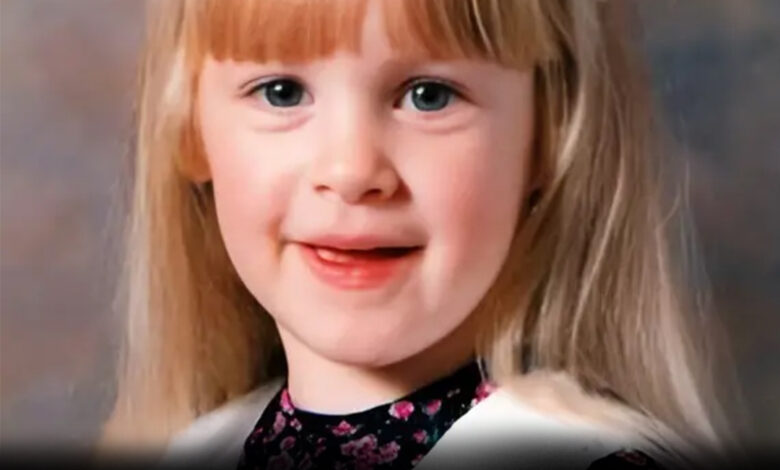
The chronicle of Lucy Letby is a haunting trajectory that begins in the quiet, historic city of Hereford, England. Born in 1990 as the only child of a furniture salesman and an accounts clerk, her early years were marked by a striking normalcy that would later baffle criminal profilers and the public alike. Childhood photographs captured a girl with a gap-toothed grin and a seemingly bright, thoughtful disposition. There were no fractured domestic echoes or early behavioral warnings; she was, by all accounts, a dedicated student who harbored a singular ambition: to become a neonatal nurse. This career path, rooted in the profound responsibility of caring for the most fragile lives, led her to the University of Chester, where she graduated in 2011. Shortly thereafter, she began her tenure at the Countess of Chester Hospital, embarking on a professional life that would eventually become the centerpiece of one of the most complex and controversial legal sagas in British history.
In the early years of her career, Letby was the embodiment of clinical devotion. Colleagues remembered her as a kind, conscientious nurse who wore brightly colored scrubs to soften the sterile environment of the neonatal unit. She was known for her meticulous nature and her ability to provide comfort to parents navigating the terrifying uncertainty of having a critically ill newborn. However, the atmosphere within the unit began to undergo a sinister shift in 2015. Between June of that year and June 2016, senior clinicians noticed a statistically improbable rise in unexplained collapses and infant deaths. These were not the expected outcomes for premature babies; these were sudden, catastrophic deteriorations that defied standard medical explanations and failed to respond to conventional resuscitative efforts.
The lead neonatologist, Dr. Stephen Brearey, was among the first to notice a chilling correlation: Lucy Letby was consistently on shift during these incidents. Following his ethical and professional obligations, he reported these patterns to hospital leadership. What followed was a period of institutional inertia that remains a point of intense scrutiny. Reports suggest that clinicians were initially discouraged from “pointing fingers” and were even told to apologize for making such grave insinuations. It wasn’t until late 2017 that the Cheshire Police were formally invited to conduct an investigation. By the time the authorities began their work, the unit had seen a cluster of heart-wrenching losses that left families shattered and the medical community in a state of deep unrest.
The subsequent investigation led to Letby’s arrest in July 2018. The prosecution’s case, which eventually went to trial at Manchester Crown Court in October 2022, was built on a foundation of circumstantial clinical evidence and disturbing personal artifacts. They alleged that Letby had used her specialized knowledge to harm infants through various methods, including the injection of air into feeding tubes or bloodstreams, overfeeding with milk, or poisoning with insulin. While there were no eyewitnesses to these specific acts, the Crown relied heavily on the interpretation of medical records and the testimony of expert witnesses who claimed the collapses could only have been caused by deliberate human intervention. Perhaps the most sensational evidence involved handwritten notes recovered from Letby’s home, which included phrases such as “I killed them on purpose” and “I am evil, I did this.” While the defense argued these were the ramblings of a woman in deep psychological distress, the prosecution presented them as candid admissions of guilt.
In August 2023, the jury delivered a verdict that resonated across the globe. Letby was found guilty of murdering seven infants and attempting to murder several others. In a 2024 retrial, she was convicted of an additional count of attempted murder. The judge, characterizing her actions as “calculated, cold-blooded, and cruel,” issued 15 whole-life orders, ensuring she would remain in prison until her death. Despite the finality of the sentencing, the case has continued to evolve in the court of public and scientific opinion. As of 2026, a growing chorus of international medical experts and statisticians has begun to raise critical questions about the evidence used to secure her convictions.
A significant turning point occurred in early 2025, when an international panel led by Dr. Shoo Lee suggested that many of the deaths could be attributed to natural causes or systemic failures in hospital care rather than malice. These experts argued that conditions like respiratory distress and complications from extreme prematurity provided a more plausible explanation for the “sudden” deteriorations than the theories of air embolism or insulin poisoning presented at trial. Furthermore, statisticians have pointed out that “clusters” of deaths can occur naturally in high-risk environments and that using a nurse’s shift pattern as the primary evidence of guilt can lead to a “Texas Sharpshooter” fallacy—where data is gathered first and a pattern is drawn around it later.
The societal impact of the Letby case has also been explored through popular media, most notably in the 2026 Netflix documentary, The Investigation of Lucy Letby. This production brought previously unseen police bodycam footage and nuanced interviews into the living rooms of millions, further fueling the debate over whether the legal system had caught a serial killer or if a series of tragic hospital failures had found a convenient scapegoat. The documentary highlighted the tension between the emotional testimony of grieving parents and the cold, often contradictory nature of the clinical data.
Concurrently, the Thirlwall Inquiry—a public statutory investigation—began its work to examine the institutional oversight at the Countess of Chester Hospital. The inquiry’s objective is to determine how such a spike in mortality went unchecked for so long and whether the hospital’s culture of silence contributed to the tragedy. It seeks to answer whether earlier intervention by leadership could have prevented further losses, or if a lack of staffing and resources created a dangerous environment for both the staff and the patients. The report, expected in early 2026, aims to provide a definitive account of the systemic failures that allowed this crisis to reach such a devastating conclusion.
Today, Lucy Letby remains in HM Prison Bronzefield, serving her life sentence in a high-security facility. Her name has become synonymous with a unique form of modern horror, yet the lingering questions surrounding her case refuse to fade. The debate now sits at a complex intersection of law, medicine, and statistics. It forces a reckoning with how we interpret “unexplained” events and how we balance the need for justice with the rigor required for scientific proof. Whether viewed as a calculated predator who betrayed the most sacred trust of her profession or as the victim of a flawed clinical narrative, the story of Lucy Letby remains a profound and unsettled chapter in the history of the British justice system.