The Truth About Your Hands, Why Visible Veins Are Sending Millions to the Doctor and What Your Body Is Really Trying to Tell You
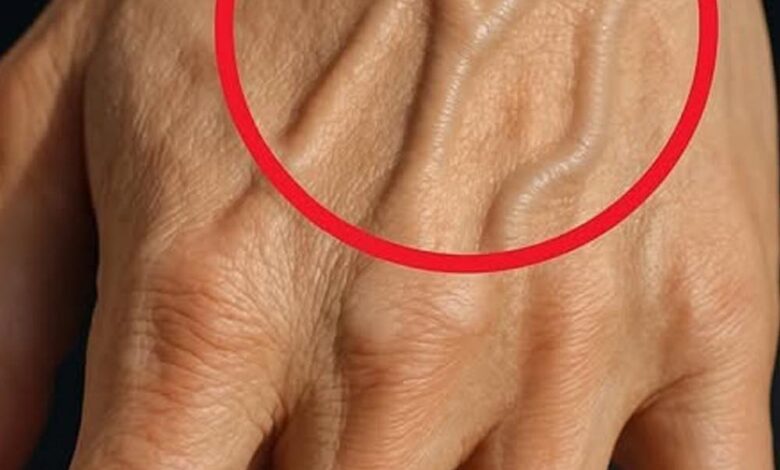
If you’ve ever looked down at your hands and noticed a sudden roadmap of blue, bulging veins, you aren’t alone. Across the country, a wave of concern has hit as more people start to wonder if their visible veins are a “silent siren” for internal health issues. In an era of viral health hacks and quick internet diagnoses, rumors have spread like wildfire that prominent hand veins are a direct signal of a failing “filtration system”—the kidneys. But before you panic and rush to the emergency room, it’s time to separate medical fact from digital fiction.
In the vast majority of cases, visible hand veins are a completely normal anatomical variation. They are not a symptom of disease, but rather a reflection of your lifestyle, genetics, and the natural passage of time. One of the most common culprits is aging. As we move through life, our skin naturally thins and loses the collagen that once acted as a thick, opaque cushion. Without that padding, the vascular structures beneath become far more apparent to the naked eye. Similarly, individuals with lower body fat percentages will often see more pronounced veins; without a layer of adipose tissue to hide them, the vessels simply have nowhere to go but toward the surface.
Physical activity and environmental factors also play a massive role in this visual “bulge.” When you exercise, your blood flow increases significantly, temporarily engorging the veins. If you’ve just finished a workout or stepped out of a hot shower, your blood vessels dilate to help regulate your body temperature, making them appear larger and more prominent. Even hydration levels can trick the eye; when you’re slightly dehydrated, the volume of fluid in your bloodstream decreases, which can actually cause the veins to stand out more sharply against the surrounding tissue.
But what about the “filtration system” myth? Medical science is clear: prominent veins are not a recognized indicator of kidney or liver trouble. In fact, if your filtration system were actually struggling, the opposite would likely be true. When kidneys fail to regulate fluid properly, the body enters a state of fluid retention known as edema. This causes the hands and feet to swell and become puffy. This extra fluid acts like a heavy blanket, actually obscuring the veins and making them harder to see, not easier.
So, if hand veins aren’t the warning sign, what should you actually be looking for? Doctors emphasize that genuine filtration concerns manifest through measurable, systemic changes. Persistent swelling in the ankles and face, a sudden and chronic sense of fatigue that sleep can’t fix, and noticeable changes in bathroom habits—such as foamy output or a significant change in frequency—are the real red flags. Additionally, elevated blood pressure and unexplained nausea are far more accurate indicators that your body’s internal filters need professional attention.
The bottom line is that your hands are a diary of your life’s activity, your age, and your DNA, but they are not a crystal ball for your internal organ health. While some specific medical treatments, like dialysis, require the surgical creation of enlarged veins (fistulas), these are intentional medical interventions and not something that occurs naturally as a symptom of disease.
If you are concerned about your internal health, the most effective tool isn’t a mirror—it’s a blood test. Objective data from laboratory screenings is the only way to truly “see” what’s happening inside. So the next time you notice those blue lines on the back of your hand, remember: they likely just mean you’re staying active, getting older, or maybe just need a glass of water. Focus on the symptoms that matter, and leave the vein-watching to the anatomists.