The Empty Desks That Still Haunt a Nation, Why the World Cant Forget the 32 Children of Karatu
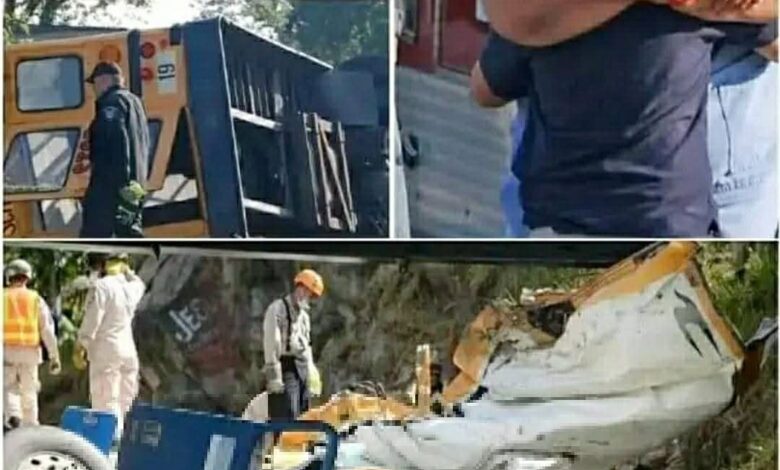
Time is often described as a healer, a force that mends the jagged edges of a broken heart until the pain becomes a manageable shadow. But in the quiet corridors of Karatu, Tanzania, time has proven to be something entirely different. It has been nine years since a school bus plunged into a roadside ravine, claiming the lives of thirty-two innocent children, two dedicated teachers, and a driver. Today, in 2026, the tragedy hasn’t faded into the archives of history; it has merely changed its shape, weaving itself into the very fabric of a nation that refuses to let their names be forgotten.
The “Karatu tragedy” remains a staggering reminder of how quickly a morning filled with the promise of education can dissolve into a landscape of unimaginable grief. For the families left behind, this isn’t a story from nearly a decade ago—it is an ever-present reality. Grief, as they have learned, does not sit quietly in the past. It walks beside them during every birthday that passes in silence and during every graduation season that feels hollow. There are empty chairs at dinner tables that still speak louder than any eulogy, and untouched toys that remain exactly where they were left on that fateful May morning.
Yet, amidst this persistent absence, love has performed its most difficult work. Parents in Karatu have become the guardians of a living memory. They repeat the same stories, not out of a refusal to move on, but because memory is a form of preservation. They speak their children’s names with a deliberate, gentle care, ensuring that these thirty-two lives are defined by their laughter and their bright futures rather than the single, violent moment that took them away. To these families, “remembering” isn’t a passive act; it is a quiet, daily rebellion against the finality of death.
The impact of the loss reached far beyond the borders of Karatu, touching the hearts of people across Tanzania and the globe. It was a tragedy that bridged the gap between distant news and human connection. Schools across the country still observe moments of silence, and teachers speak with a renewed, heavy sense of responsibility regarding the precious lives entrusted to their care. There remains a collective, unspoken understanding that this loss could have belonged to any family, anywhere. It transformed a local accident into a national catalyst for awareness and communal mourning.
As the years pass, the public attention inevitably drifts toward newer headlines, but the “wound that never fully closed” remains a focal point for those who understand the true weight of the Karatu thirty-two. Anniversaries are not viewed as a time to reopen old scars, but as a commitment to ensuring these children are never reduced to mere statistics. They were individuals with unfolding dreams, questions that will never be answered, and potentials that were cut short just as they were beginning to bloom.
Grief and love are the twin legacies of Karatu. The grief reminds us of the fragility of life and the gaps in our social fabric that must be mended to protect our children. The love, however, is what provides the continuity. It is what turns a silent school bag into a symbol of a life that still matters. As we look back from the vantage point of 2026, the silence of Karatu still holds a tremendous weight, but within it, there is a steady voice. It is a voice that urges us to be attentive, to value what is entrusted to us, and to recognize that while life can change in an instant, the decision not to forget is a powerful act of justice. Their stories continue, not in the sensationalism of the news cycle, but in the enduring care of a world that still feels their absence.