SOTD – Donald Gets More Bad News!?
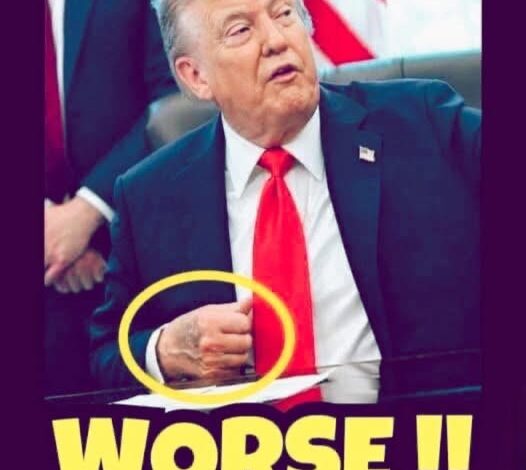
In a legal development that has sent ripples through the heart of the American political landscape, President Donald Trump finds himself at the center of an unprecedented judicial storm. The latest series of indictments represents a historic moment in the intersection of law and the executive branch, marking a significant escalation in the ongoing investigations into his conduct during the final months of his presidency. The charges, filed in federal court, outline a sweeping narrative of alleged efforts to subvert the democratic process and undermine the peaceful transfer of power, bringing to the forefront fundamental questions about the limits of presidential authority and the resilience of constitutional safeguards.
At the core of the indictment are four major criminal counts, each carrying profound implications for the former president’s legal standing and political future. The primary charge is conspiracy to defraud the United States—a high-stakes allegation that Trump and his associates engaged in a dishonest and coordinated effort to interfere with the functions of the federal government, specifically the certification of the electoral college results. This charge suggests a deliberate plan to bypass established legal procedures in order to maintain a hold on power, a narrative that has become a central focus for federal prosecutors.
The legal pressure intensifies with the second and third charges: conspiracy to obstruct an official proceeding and the actual obstruction of, or attempt to obstruct, an official proceeding. These counts refer directly to the events of January 6, 2021, when the joint session of Congress was interrupted by the breach of the U.S. Capitol. Prosecutors allege that the former president’s rhetoric and subsequent actions were part of a calculated attempt to prevent lawmakers from fulfilling their constitutional duty. By framing these actions as a criminal attempt to block the machinery of democracy, the Justice Department is treading on legal ground that is as significant as it is rare, seeking to hold a former commander-in-chief accountable for the disruption of a pivotal government function.
The fourth and perhaps most philosophically weighty charge is the conspiracy to violate rights guaranteed by the Constitution. This count harkens back to Civil War-era statutes designed to protect the integrity of the voting process. In this context, it alleges that the attempts to discount or overturn legitimate votes in several swing states constituted an illegal effort to disenfranchise millions of American citizens. By including this charge, the prosecution is not just focusing on the physical events at the Capitol, but on the broader, systematic attempt to challenge the foundational right of the American people to choose their leaders through a fair and transparent election.
The fallout from these charges has been instantaneous and highly polarized. For many legal experts and historians, the indictments serve as a necessary test of the principle that no individual, regardless of their status or office, is above the law. They argue that the clarity of the evidence presented in the charging documents is essential for maintaining public trust in the judicial system. Conversely, the former president and his staunchest allies have characterized the proceedings as a politically motivated “witch hunt” designed to derail his 2024 campaign efforts. This clash of narratives has ensured that the courtroom battle will be played out against a backdrop of intense public scrutiny and national debate.
As the legal process begins to grind forward, the implications for the 2026 political cycle and beyond are inescapable. The prospect of a former president facing trial on charges related to the obstruction of democracy is a scenario that has no precedent in American history. It places the judiciary in the unenviable position of navigating a hyper-partisan environment while attempting to adhere to the strictures of due process and evidentiary standards. Every motion, hearing, and testimony will be analyzed for its potential impact on the upcoming elections, making this not just a criminal trial, but a cultural and political landmark.
Furthermore, the international community is watching the proceedings with a mixture of fascination and concern. The United States has long championed itself as a global beacon of democratic stability and the rule of law. The sight of a former leader being indicted for attempting to subvert an election is a powerful image that resonates across the globe, either reinforcing the strength of American institutions or highlighting their vulnerabilities, depending on one’s perspective. The resolution of this case will likely set the tone for how democracies worldwide handle the challenges of populism and the contested transfer of power in the modern era.
In the midst of this legal whirlwind, the former president remains a defiant and central figure in his party. His ability to maintain a strong lead in the polls despite the mounting “bad news” from the courts is a testament to the deep fractures in the American electorate. For his supporters, the indictments are seen as proof of a “deep state” working to silence their movement; for his detractors, they are the long-awaited arrival of accountability. This dichotomy ensures that regardless of the eventual verdict, the impact of these charges will be felt for generations.
The path ahead is fraught with complexities. Legal scholars anticipate a series of high-level appeals, potentially reaching the Supreme Court, as the defense raises questions of executive immunity and freedom of speech. These are not merely technical arguments; they are foundational disputes that will define the legal boundaries of the American presidency for the 21st century. The outcome will determine whether a president can be prosecuted for actions taken while in office that are alleged to be criminal attempts to stay in power.
As the world waits for the next phase of the legal process, the indictment stands as a stark document of a turbulent era in American politics. It is a chronicle of a country struggling to reconcile its democratic ideals with the realities of modern political warfare. The “bad news” for Donald Trump is, in a broader sense, a sobering moment for the entire nation—a reminder that the institutions once thought to be immovable are subject to the same pressures and challenges as any other part of the human experience. The trial of the century is no longer a hypothetical; it is an unfolding reality.