Some Say They Will Never Eat McDonalds Again After Watching This Video
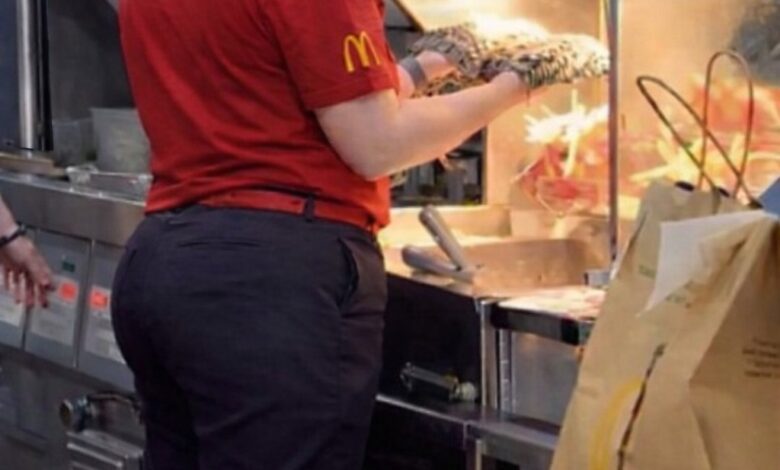
McDonald’s, one of the most recognizable fast-food brands in the world, found itself at the center of controversy after a video from one of its Australian locations began circulating across social media. The footage, recorded at a branch in Brisbane, sparked outrage and renewed debate about hygiene standards in the fast-food industry.
In the now-viral clip, a McDonald’s employee is seen placing a visibly wet mop underneath a heat lamp typically used to keep French fries warm before serving. The heat lamps in such kitchens are designed to maintain food at safe serving temperatures, not to dry cleaning equipment. What intensified the backlash was the claim that a manager was aware of the situation and may have even directed the action, though this detail was widely debated online.
The incident reportedly took place in full view of customers. According to accounts shared alongside the video, another staff member warned that placing the mop under the heat lamp could pose a health and safety risk. Despite this, the action allegedly continued, prompting those who witnessed it to record and share the footage. The video was later distributed to media outlets and widely reposted on platforms such as TikTok, X, and Facebook.
As the clip gained traction, thousands of viewers expressed disgust and frustration. Many questioned how such a decision could be made in a professional kitchen environment. Others raised broader concerns about what practices might occur out of sight if such an act happened openly. For some, the incident reinforced long-standing skepticism about fast-food hygiene, while for others it was a shocking and unexpected lapse from a global brand known for strict operational standards.
McDonald’s Australia responded publicly after the footage began trending. A company spokesperson acknowledged the seriousness of the situation and confirmed that corrective action had been taken. While specific disciplinary measures were not detailed, the company emphasized that the behavior did not reflect its established food safety protocols. McDonald’s reiterated its commitment to maintaining rigorous cleanliness standards and assured customers that the matter was addressed promptly.
The backlash online was swift and emotional. Some social media users called for the temporary closure of the location involved, arguing that such breaches undermine public trust. Others demanded greater transparency regarding employee training and oversight. The incident became part of a larger conversation about accountability within the fast-food sector and the pressures faced by employees working in high-speed kitchen environments.
Large restaurant chains operate under detailed food safety guidelines designed to prevent contamination. Heat lamps, for instance, are calibrated to keep cooked food within specific temperature ranges that inhibit bacterial growth. Introducing non-food items—particularly cleaning tools like mops—into that space contradicts standard hygiene practices. Even if the mop did not directly touch food, the optics of the situation were enough to alarm viewers.
Health and safety experts often stress that perception matters as much as procedure in food service. Customers expect visible cleanliness and strict separation between cleaning supplies and food preparation areas. Any action that appears to compromise that separation can damage consumer confidence, even if no contamination ultimately occurred.
The controversy also highlighted the power of social media in shaping public opinion. A single short clip, captured on a smartphone, was able to spark international headlines and prompt a corporate response. In today’s digital environment, businesses operate under constant scrutiny. Incidents that might once have remained local can now become global within hours.
For McDonald’s, the challenge extended beyond addressing one specific location. As a multinational corporation serving millions of customers daily, maintaining consistent standards across thousands of branches is an enormous undertaking. Incidents like this, even if isolated, can influence public perception of the brand as a whole.
Rebuilding trust after such events requires more than a statement. It involves reinforcing training programs, reviewing oversight procedures, and communicating clearly with customers. Transparency plays a crucial role. Companies that openly acknowledge mistakes and outline corrective measures often recover more effectively than those that remain silent or dismissive.
The broader lesson from this episode is not limited to one restaurant chain. It serves as a reminder of the critical importance of hygiene in all food service environments. Proper handling of equipment, strict separation of cleaning tools from food areas, and attentive supervision are essential safeguards. Lapses, even brief ones, can have far-reaching reputational consequences.
At the same time, it is important to recognize the complexity of fast-food operations. Employees work in fast-paced, high-pressure settings where efficiency is constantly prioritized. While that context does not excuse poor decisions, it underscores the need for comprehensive training and leadership that models proper behavior.
In the months following the incident, discussion gradually subsided, as online attention shifted elsewhere. However, for many viewers, the image of a mop beneath a heat lamp remained difficult to forget. The story became another example of how quickly public trust can be shaken—and how challenging it can be to restore.
Ultimately, the well-being of customers depends on unwavering adherence to safety standards. Food service companies carry a responsibility not only to provide quick and affordable meals but also to ensure those meals are prepared in environments that meet the highest hygiene expectations. Incidents like this reinforce why vigilance, accountability, and consistent oversight remain essential pillars of the industry.
As businesses continue navigating the era of instant digital exposure, maintaining integrity behind the counter is more important than ever. Reputation, once damaged, requires sustained effort to rebuild. For global brands and local restaurants alike, every action taken in the kitchen matters—both for public health and for public trust.