Smallpox vaccine scars! What they look like and why?
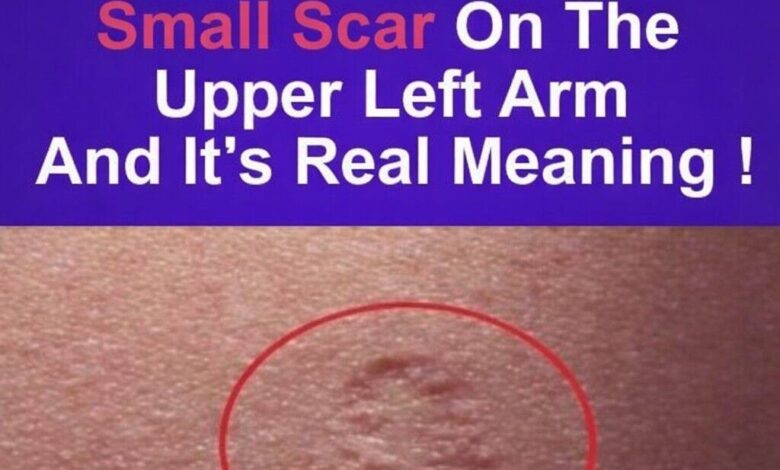
For as long as she could remember, there was a small, unusual mark on her mother’s upper arm. It wasn’t a typical scar from a cut or surgery. Instead, it looked deliberate: a circular pattern of tiny indentations surrounding a deeper central mark. As a child, she studied it with curiosity, tracing it with her eyes, wondering how it got there. Eventually, like many childhood mysteries, it faded into the background of memory.
Years later, that same pattern reappeared unexpectedly. While helping an elderly woman step down from a train, her sleeve shifted just enough to reveal the identical scar, in the exact same place. The moment was brief, but the recognition was instant. That old question resurfaced, sharper this time. Unable to ask the stranger, she called her mother instead. The answer came quickly, almost casually: it was from the smallpox vaccine.
That scar, once so common it barely warranted explanation, is now a quiet historical marker. It tells the story of one of the deadliest infectious diseases humanity has ever faced—and one of the greatest triumphs of modern medicine and global public health.
Smallpox was not a mild illness or a passing inconvenience. It was a highly contagious viral disease caused by the variola virus, spreading rapidly through respiratory droplets and close contact. Once infected, people developed high fever, intense body aches, and profound fatigue. Soon after, a rash appeared, evolving into fluid-filled pustules that covered the body. These lesions often left permanent scarring, and for many, the disease proved fatal.
According to data from the Centers for Disease Control and Prevention, smallpox killed an estimated 30 percent of those infected during the 20th century alone. Survivors were frequently left with lifelong disfigurement, blindness, or other complications. For centuries, outbreaks devastated communities, halted economies, and reshaped populations across continents.
The scale of destruction eventually led the global medical community to pursue something unprecedented: complete eradication. Through coordinated vaccination campaigns, surveillance, and rapid response strategies, nations worked together under the leadership of the World Health Organization. In 1980, the impossible was declared reality. Smallpox became the first human disease officially eradicated worldwide.
In the United States, routine smallpox vaccination ended in 1972, long before eradication was formally announced, because the disease had already been eliminated domestically by 1952. That decision marked a turning point in preventive medicine, but it also meant future generations would no longer carry the visible proof of immunity that older adults still bear today.
The scar itself exists because the smallpox vaccine was unlike most modern vaccinations. Instead of a single injection, it was administered using a bifurcated, or two-pronged, needle. This needle was dipped into a vial containing the vaccine and then pressed repeatedly into the skin, puncturing the surface multiple times in rapid succession. The goal was to introduce the vaccine directly into the dermis, not just beneath the skin.
The vaccine contained a live virus called vaccinia, a close relative of smallpox but far less dangerous. Once administered, the body mounted a strong immune response. A raised bump formed at the site, developing into a blister that filled with fluid. Over the following days, the blister burst, scabbed over, and slowly healed. When the scab eventually fell away, it left behind the distinctive scar.
That scar was permanent. It became a visible confirmation that the immune system had successfully responded to the vaccine. In many parts of the world, it even functioned as an early form of vaccine documentation. Health officials could quickly identify who had been immunized simply by checking the upper arm.
Today, smallpox feels distant, almost abstract. Younger generations have grown up without fear of it, thanks to the success of vaccination programs and international cooperation. Yet the scar remains a physical reminder of a time when infectious diseases dictated daily life and survival was uncertain.
From a modern health perspective, the eradication of smallpox represents one of the most cost-effective and impactful achievements in medical history. It eliminated the need for ongoing vaccination, surveillance, and treatment, saving billions in healthcare costs while preventing unimaginable human suffering. Public health experts often cite it as proof that vaccines work—not just on an individual level, but on a global scale.
The smallpox scar also carries cultural and emotional weight. For those who have it, the mark can evoke memories of childhood clinics, school vaccination days, or public health campaigns that swept through neighborhoods. For others, it is a conversation starter, a piece of living history etched into skin.
In recent years, interest in vaccine history, immunity, and infectious disease prevention has surged, driven by global health crises and renewed focus on pandemic preparedness. Search terms like “historic vaccines,” “eradicated diseases,” “vaccine scars explained,” and “public health milestones” have seen increased traction, reflecting a broader desire to understand how past medical breakthroughs continue to shape modern life.
The smallpox vaccine scar stands at the intersection of science, history, and human resilience. It symbolizes trust in medicine, cooperation across borders, and the willingness of millions to participate in a collective effort for the greater good. Unlike many historical artifacts, it is not kept in a museum. It lives on people’s bodies, quietly telling a story of survival and progress.
While smallpox itself is gone, preserved only in high-security laboratories for research purposes, its legacy remains relevant. It reminds us that diseases once considered unstoppable can be defeated through evidence-based medicine, global collaboration, and sustained public trust.
For those who bear the scar, it is more than a mark. It is proof of protection, a relic of a global victory, and a reminder that humanity, when united by science and purpose, can overcome even its most terrifying threats.