SHE LEFT ME A KEY AFTER SHE DIED, WHAT I FOUND IN HER LOCKED SHED CHANGED MY ENTIRE LIFE
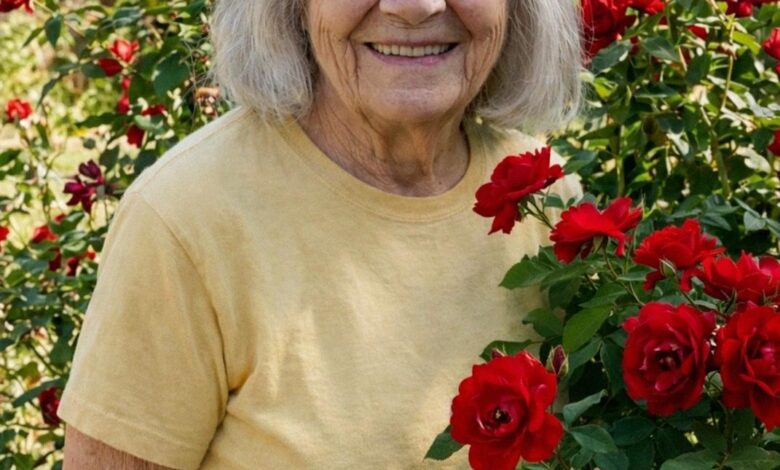
I thought I knew my neighbor.
For three years, she had been one of the constants in my life—the kind of person who makes a place feel like home without trying too hard.
Mrs. Whitmore was the type of neighbor everyone hopes for but rarely gets. Warm, attentive, and quietly present. The kind of woman who would show up at your door with a freshly baked pie before you’d even unpacked your last box. The kind who remembered small details, asked genuine questions, and made you feel like you belonged long before you actually did.
When I first moved into the neighborhood, she was there within days.
A blueberry pie in hand. A smile that felt familiar even though we had never met.
She lived two houses down in a perfectly kept white house, with flower beds that changed with the seasons as if she had some unspoken agreement with nature. Everything about her home reflected care—order, intention, attention to detail.
Except for one thing.
In the far corner of her backyard, partially hidden behind the fence, stood an old wooden shed.
It didn’t match the rest of her world.
The paint was worn. The door was secured with a heavy, rusted padlock. And no matter how many times I visited or how many casual conversations we had, she never mentioned it. Never opened it. Never even acknowledged its existence.
It was the only thing about her that felt closed off.
Then, four days ago, she passed away.
Quietly. In her sleep.
No warning. No long goodbye. Just gone.
The funeral was small—neighbors, a few unfamiliar faces, and the kind of silence that comes when people are trying to process something they weren’t ready for. I stood outside afterward, unsure of what to do next, when a young girl approached me.
“Are you Amber?” she asked.
I nodded.
She handed me a small envelope. “She told me to give you this today. On the day of her funeral.”
Before I could ask anything else, she was gone.
The envelope had my name written in Mrs. Whitmore’s careful, deliberate handwriting. I opened it immediately.
A key fell into my hand.
Along with a note.
“Amber dear, I should have kept this a secret even after my passing. But I can’t. You deserve to know the truth. You will understand everything when you open my shed.”
I stood there, holding that key, knowing one thing for certain.
I wasn’t going home without answers.
That evening, I walked into her backyard through the side gate. The air felt still, like the space itself was holding something back. Her flowers were still in place, her house unchanged—but the shed seemed heavier now, more present than before.
Up close, the padlock looked even older.
I slid the key in.
It turned after a slight hesitation.
The door creaked open slowly.
And everything changed.
The first thing I noticed was the smell—cool, dusty air with a faint trace of clay. The inside was dim, lit only by the fading light from the doorway. Every surface was covered in white sheets, as if whatever was inside had been deliberately hidden from view.
At the center of the room stood something larger than everything else.
Covered.
Still.
Shaped like a person.
My heart started racing before I even moved.
I stepped forward, reached out, and pulled the sheet away.
I didn’t think.
I didn’t prepare.
I just reacted.
And I screamed.
I stumbled backward, grabbing my phone without even realizing it.
“911… I need help. There’s something here.”
Within minutes, police arrived.
One of the officers approached the figure, pulled the sheet back fully, and shined a flashlight over it. Then he turned to me.
“It’s a sculpture,” he said calmly.
I stepped closer.
He was right.
It wasn’t a body.
It was a life-sized sculpture made from wax and plaster, detailed with unsettling precision. Every feature had been carefully shaped, refined, perfected over time.
And the face…
The face was mine.
I couldn’t breathe for a moment.
It wasn’t just similar.
It was exact.
Once the officers left, I stayed.
Because I knew this wasn’t random.
There was something here I wasn’t seeing yet.
On a nearby workbench, I found stacks of sketches—dozens of them, some loose, others tied together. I picked one up.
It was the same face.
My face.
But the date written in the corner stopped me cold.
That was decades ago.
Another sketch.
Same face.
Different angle.
Another date.
Another variation.
And then it hit me.
The woman in the drawings didn’t just look like me.
She looked like my mother.
I found an envelope beneath the sculpture, my name written across it.
Inside were photographs.
Old ones.
Faded.
In one, a younger Mrs. Whitmore stood beside a young woman—laughing, arms wrapped around each other.
That young woman looked exactly like my mom.
A memory surfaced instantly.
Weeks after I had moved in, I had shown Mrs. Whitmore a photo on my phone.
“That’s my mom,” I had said casually.
I remembered the way she had gone quiet.
I hadn’t thought anything of it at the time.
Now, everything made sense.
I opened the letter.
And the words inside changed everything.
“Amber, you are my granddaughter. I knew the moment I saw your mother’s photo. She is my daughter.”
I sat down right there on the floor.
Unable to process it.
She had known.
All this time.
She had lived just two houses away from me.
Spoken to me.
Cared for me.
Loved me.
And never told me who she really was.
I drove to my mother’s house that same night.
Placed the photos in front of her.
Watched her face change as recognition set in.
And then she told me everything.
How she had been adopted.
How she had run away when she was young.
How guilt, distance, and time had kept her from ever going back.
She thought she had lost her mother forever.
She had no idea her mother had spent decades remembering her.
Drawing her.
Recreating her face over and over so she wouldn’t forget.
The next day, we returned to the shed together.
My mother walked in slowly, stopped in front of the sculpture, and broke.
Thirty years of silence collapsed into that one moment.
Later, at the cemetery, she whispered apologies she had carried her entire life.
And for the first time, she understood.
She had never been forgotten.
A few days later, a lawyer called.
Mrs. Whitmore had left everything to me.
Her house.
Her belongings.
Her savings.
Everything.
Not because I had been there at the end.
But because I had been there all along.
Even when I didn’t know it.
In her final letter, she wrote something I’ll never forget.
“I was afraid to tell you. Afraid of losing you before I truly had you. So I stayed close the only way I could.”
Every pie.
Every conversation.
Every wave from her porch.
That was her way of loving me.
Not as a neighbor.
But as a grandmother.
And she made sure that, even after she was gone, I would finally understand who she had been to me all along.