She Found a Hidden Fortune in an Old House, But the Decision She Made Next Changed Her Life Forever
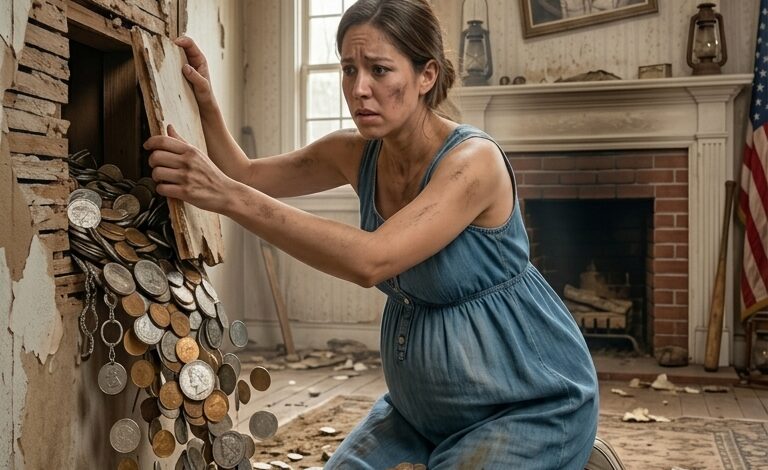
Esperanza held the letter like it might fall apart in her hands.
The paper was fragile, worn thin by time, the ink faded but still legible—still alive. It wasn’t just writing. It felt like a voice reaching across decades, speaking directly to her as if the woman who wrote it had known, somehow, that one day someone like Esperanza would stand in that same place.
“For whoever finds this…” the letter began.
It wasn’t a casual message.
It was a goodbye.
A confession.
And, in a quiet way, an act of love.
The woman who had written it spoke of waiting—of nights filled with silence, of hope that never quite faded, of children who left and never returned. She wrote about loneliness not as a complaint, but as something she had learned to live with. And then she explained the treasure.
It wasn’t hidden for greed.
It wasn’t buried for power.
It was protected—for her children, if they ever came back.
And if they didn’t…
“Then may whoever finds it use it to do good.”
Esperanza felt the words settle inside her.
Because she understood them.
She was a widow too.
Another woman standing alone in a house filled with echoes of someone else’s past. Another life interrupted. Another story that hadn’t turned out the way it was supposed to.
For a moment, it didn’t feel like coincidence.
It felt like a continuation.
Like time had folded in on itself and brought her exactly where she needed to be.
“Thank you,” she whispered, pressing the letter against her chest.
That night, she didn’t sleep.
She sat outside on the worn steps of the house, the sky stretched wide above her, filled with stars that didn’t care about her decision—but somehow made it feel heavier.
Beside her was the box.
Closed.
Waiting.
Inside it was everything she didn’t have.
Money. Jewelry. Possibility.
A way out.
She could leave.
She could sell it all, move somewhere safer, prepare properly for the birth of her child, build a life without fear or uncertainty. No one would question it. No one would blame her.
No one would even know.
But the letter changed everything.
Because what if someone was still out there?
What if the promise written all those years ago still mattered?
She placed her hands on her stomach.
The baby moved.
And in that moment, something became clear—not easy, but clear.
“I don’t want you to grow up believing that what’s easy is always right,” she whispered.
The days that followed weren’t peaceful.
They were filled with doubt.
Esperanza tried to continue her routine—carrying water, cooking what little she had, repairing the house piece by piece—but her mind kept returning to the same place.
The box.
The letter.
The choice.
She counted the coins again. Examined the jewelry. Read the letter over and over until she could almost recite it without looking.
Then she looked at the medallion.
Inside it was a small portrait—a woman with a calm expression, someone who now felt strangely familiar.
She didn’t sell anything.
Not yet.
First, she needed answers.
The journey to the village wasn’t easy. The path was long, the sun relentless, and the weight of her pregnancy made every step harder. But she kept going.
Because once she made the decision to look for the truth, turning back wasn’t an option.
When she arrived, she went straight to the place where old records were kept. The same clerk who had once warned her about the house looked surprised to see her.
“I thought you’d have left by now,” he said.
“I’m still here,” she replied. “But I need information.”
Hours passed.
Names were searched.
Records were pulled.
Stories were pieced together from fragments that didn’t quite fit.
Eventually, something surfaced.
The woman from the letter had existed.
She had children.
But at some point, they disappeared from the records entirely.
“They probably left the area,” the clerk explained. “That happened a lot.”
It wasn’t a clear answer.
But it was enough.
It meant they might still be out there.
And that meant the story wasn’t finished.
Esperanza didn’t stop.
She used a few coins—only what she needed. She wrote letters, asked questions, followed leads that seemed small but might have meant something. Some days brought nothing. Some weeks passed without a single response.
But she kept going.
At the same time, her own life continued.
Her pregnancy progressed.
And one day, without warning, everything shifted.
The labor came quickly.
There were no doctors.
No assistance.
Just her.
The house.
And the silence of the mountains.
The pain was overwhelming, stretching time into something unrecognizable. Hours blurred together. Her strength faded, then returned in waves. She pushed forward because there was no other choice.
And yet, in the middle of it all, something felt different.
She didn’t feel alone.
She couldn’t explain it, but she wasn’t alone.
“Stay with me,” she whispered into the empty air.
And when morning came, the sound of a newborn’s cry filled the house.
Esperanza held her daughter close, tears falling freely.
“Your name is Josefina,” she said softly.
After the woman in the letter.
Life changed after that.
The house wasn’t empty anymore.
It had laughter. Movement. Warmth.
Esperanza rebuilt it piece by piece. She planted seeds in the soil, raised chickens, repaired the roof, added windows that let light in where there had only been shadows.
And every night, she looked at the portrait on the wall.
Remembering where it all started.
The treasure remained untouched.
Still waiting.
Almost a year passed before anything changed.
Then one day, a letter arrived.
It came from far away.
Her hands shook as she opened it.
And when she read the name inside, she broke down in tears.
She had found someone.
Someone connected to the past.
Someone who knew the story.
Weeks later, a woman arrived at the house.
She stood at the doorway, taking in every detail, her eyes filling with emotion.
“It’s exactly how my father described it,” she said.
They embraced without hesitation.
Like they already understood each other.
No long explanations.
No need for proof.
Just recognition.
Esperanza didn’t hesitate.
She brought out the box.
The coins.
The jewelry.
The letter.
The medallion.
Everything.
She handed it all over.
Without keeping a single piece.
Because it felt right.
The woman didn’t speak immediately.
She simply looked at Esperanza, taking in what she had done.
Then she smiled.
“No,” she said gently. “This belongs to you too.”
Esperanza shook her head.
But the woman stepped closer.
“You protected something most people would have taken,” she said. “You honored a story that wasn’t yours. That matters.”
She placed the necklace around Esperanza’s neck.
“Now we share it.”
They divided the treasure.
Not out of obligation.
But out of respect.
And in that moment, Esperanza understood something deeper than she ever expected.
The treasure was never just about money.
It was about choice.
About integrity.
About doing what’s right when no one is watching.
Over time, the house changed again.
It became something more.
A refuge.
A place for women who had nowhere else to go—women who had lost everything, just like she once had. She offered them shelter, work, and something even more valuable.
A second chance.
Years later, as she watched her daughter run freely through the yard, Esperanza smiled.
The treasure had changed her life.
But not because of what it was.
Because of what she chose to do with it.
Because in the end, the greatest value wasn’t in what she found.
It was in what she gave back.
And that… is what stayed.