Passengers Ignored This Common Flight Rule Until One Airline Decided Enough Was Enough
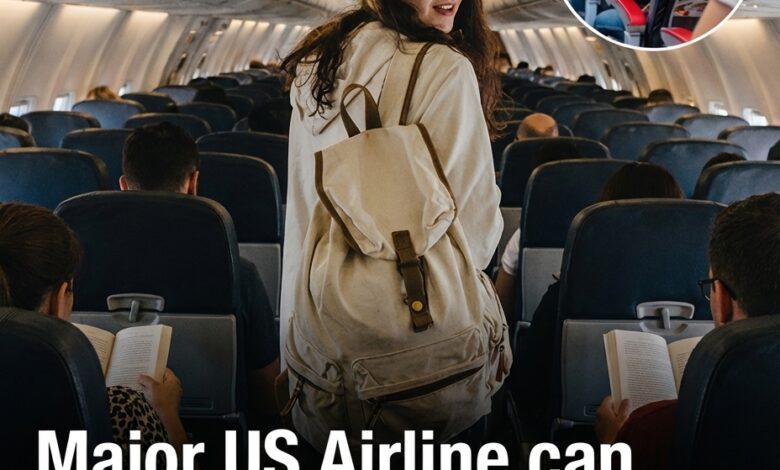
Flying has always come with its own set of small annoyances. Tight seats, delayed departures, overhead bins filling up faster than expected—most travelers accept these as part of the experience. But in recent years, a different kind of frustration has quietly taken over cabins, one that has nothing to do with legroom or turbulence. It comes from something much simpler, and far more avoidable.
The sound of someone else’s phone.
At first, it might just be a faint noise. A video playing a few rows back. A game with constant sound effects. A playlist leaking through tiny speakers not meant to fill a shared space. But as the minutes stretch into hours, that background noise starts to feel less like a minor inconvenience and more like an intrusion.
Passengers notice. They shift in their seats, glance around, or try to ignore it. Some put on their own headphones to block it out. Others say nothing, even when the irritation builds. It is one of those unspoken tensions that exist in close quarters, where everyone is aware but few are willing to confront it.
That quiet tension is exactly what United Airlines decided to address.
The airline recently updated its Refusal of Transport policy, a document that outlines when a passenger can be denied boarding or even removed from a flight. Among the expected entries—things like safety risks or refusal to follow crew instructions—there is now a very specific addition. Playing audio or video from personal devices without headphones is officially considered disruptive behavior.
On the surface, it might sound like something that should not need to be written down. For years, using headphones in shared environments has been an unwritten rule, something most people follow without thinking. But the reality inside modern aircraft has changed.
Technology has transformed how people spend time in the air.
With stronger onboard Wi Fi and easy access to streaming services, flights are no longer quiet stretches of waiting. They have become extensions of daily life. Passengers watch full movies, scroll endlessly through social media, play games, and listen to music as if they were sitting in their living rooms. The difference is that they are not alone.
Inside a plane, every sound travels.
What might feel like low volume to one person can carry several rows away. A short video clip can repeat over and over. Notification sounds can cut through conversations. Without headphones, even the smallest audio becomes part of a shared environment that no one else agreed to.
That is where the new rule comes in.
By clearly stating that playing audio without headphones is unacceptable, United Airlines has turned an informal expectation into an enforceable standard. It gives flight attendants something they did not always have before—a clear policy they can point to when asking a passenger to lower or mute their device.
And if that request is ignored, the situation can escalate.
The updated policy allows crew members to take further action if a passenger refuses to comply. That could mean anything from additional warnings to being removed from the aircraft entirely. It is a strong stance, especially for something that might seem minor at first glance. But in a confined space thousands of feet in the air, small disruptions can quickly become bigger problems.
From the airline’s perspective, the reasoning is straightforward.
Comfort matters.
A flight is one of the few environments where people have no easy way to leave. You cannot step outside, move to another room, or put distance between yourself and the source of frustration. That makes maintaining a respectful atmosphere even more important. What might be tolerable in a café or public park feels very different when you are seated shoulder to shoulder with strangers for hours.
For flight attendants, the rule also simplifies a common challenge.
Before this update, asking someone to turn down their device could feel subjective. It relied on personal judgment and sometimes led to pushback. Passengers might argue that their volume was low or that no one had complained directly. Now, the expectation is clear. Headphones are not optional. They are part of the standard behavior required onboard.
Many travelers have welcomed the change.
For frequent flyers, this has been a long time coming. The idea that personal audio should stay personal is not new. It is something people expect in libraries, public transportation, and waiting rooms. Extending that expectation to airplanes feels less like a new rule and more like a correction.
There is also a broader shift happening in how people think about shared spaces.
As devices become more central to daily life, the line between private and public behavior has blurred. People are used to consuming content constantly, often without considering how it affects those around them. Policies like this one serve as a reminder that convenience does not override consideration.
The message to passengers is simple, even if it had to be formalized.
If you plan to watch, listen, or play anything during your flight, bring headphones.
It is a small step, but it makes a significant difference. It keeps the cabin quieter. It reduces friction between passengers. It allows everyone to engage with their own entertainment without becoming part of someone else’s experience.
And in a setting where comfort is already limited, that matters more than it might seem.
The rule is not about restricting behavior. It is about setting a baseline for respect.
Because at the end of the day, a flight is not just a journey from one place to another. It is a shared environment where dozens, sometimes hundreds, of people coexist in a space that offers little room for escape. Small choices—like whether or not to use headphones—shape that experience in ways that go far beyond the individual.
What United Airlines has done is take something that was once assumed and make it explicit.
Not because people did not know better, but because not everyone followed it.
Now, there is no ambiguity.
The next time a device lights up mid flight, the expectation is already set. The sound stays with the person holding it, not the entire cabin. And if it does not, there are consequences that go beyond a simple request to turn it down.
In a world where travel continues to evolve alongside technology, sometimes the most important changes are not about speed or convenience.
They are about restoring a sense of balance between personal freedom and shared responsibility.
And all it takes is a pair of headphones.