Parkland Survivor Donovan Metayer Dies at 26, Renewing Focus on Traumas Long Reach!
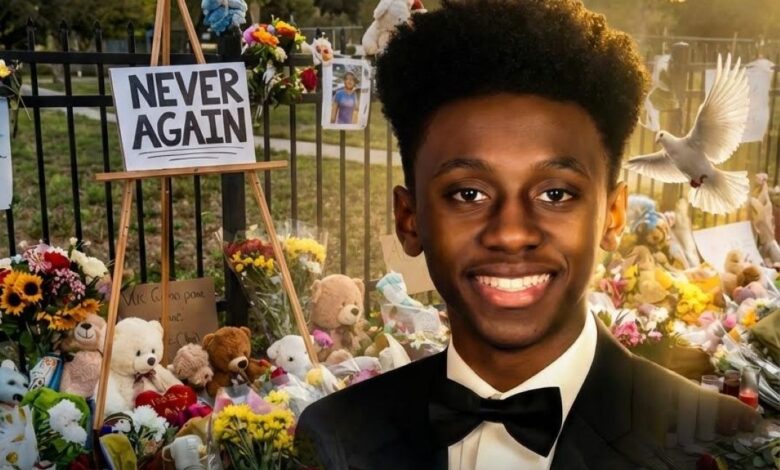
The passing of Donovan Metayer at the age of twenty-six serves as a somber, heart-wrenching reminder that the scars of mass violence are rarely contained within the timeframe of a news cycle. While the world often views survival as a final destination—a triumphant closing of a tragic chapter—the reality for those who lived through the 2018 shooting at Marjory Stoneman Douglas High School is far more complex. For Donovan, the events of that Valentine’s Day were not a distant memory to be filed away, but a persistent, atmospheric weight that reshaped the trajectory of his young adulthood. His death in December 2025 has reignited a critical national conversation about the “long reach” of trauma and the urgent necessity for sustained, lifelong support for those who carry the invisible wounds of tragedy.
To those who knew him best, Donovan was a young man of profound intellectual depth and a gentle, inquisitive spirit. Before the world knew him as a “Parkland survivor,” he was a student with a vibrant future, possessing a natural aptitude for technology and a drive to innovate. He looked at the world with the optimism of youth, seeing a landscape of digital possibilities waiting to be explored. However, the massacre that claimed seventeen lives on the Parkland campus acted as a seismic fracture in his life. Though he walked away from the building that day, the version of the future he had once envisioned remained behind in those hallways.
Following his graduation in 2018, the immediate adrenaline of survival began to fade, replaced by the grueling, silent reality of Post-Traumatic Stress Disorder (PTSD). His family observed a gradual but undeniable shift in his demeanor. The bright, ambitious young man they knew began to struggle under the crushing gravity of his experiences. For Donovan, the emotional toll manifested in significant mental health challenges that made the standard milestones of early adulthood—higher education, steady employment, and social consistency—feel like insurmountable mountains. His journey became one of periodic hospitalizations and intensive therapy, a cycle of fighting for air in an ocean of trauma that never quite receded.
Despite these immense hurdles, Donovan’s story was also one of extraordinary resilience. He refused to be defined solely by his victimhood. In his clearer moments, he channeled his intellectual energy into earning professional certifications, seeking out work that provided a sense of purpose and a connection to the tech world he loved. He was a young man who wanted desperately to be “okay,” to contribute, and to find a rhythm of normalcy. Yet, his family pointed out that the struggle was compounded by a fragmented healthcare system. Securing consistent, long-term mental health support that specialized in mass casualty trauma proved to be an exhausting battle of its own. His experience highlights a systemic gap: the world is often ready to provide immediate crisis intervention, but it frequently falters when the healing process stretches into years and decades.
The historical context of the Parkland shooting is often discussed in terms of policy and legislative reform. The tragedy led to significant changes in Florida’s gun laws and school safety protocols, and the eventual sentencing of the perpetrator to life without parole provided a legal sense of closure for the state. However, Donovan’s death forces a confrontation with the “human” timeline of such events. Legal closure does not equate to psychological peace. While the cameras moved on to the next headline and the school buildings were renovated or replaced, survivors like Donovan were left to navigate a haunted interior landscape. His passing is a stark declaration that the “aftermath” of a shooting is not a static period, but a living, evolving struggle.
Donovan’s journey echoes the tragic losses seen among other survivors of school shootings, such as those from Columbine and Sandy Hook, who eventually succumbed to the secondary effects of their trauma. These “collateral deaths” are a call to action for advocates and mental health professionals alike. They argue that the definition of a “victim” of mass violence must be expanded to include those who die of heartbreak, despair, or the long-term physiological erosion caused by chronic stress. Honoring a survivor’s journey means recognizing that their needs do not diminish as the years pass; if anything, the isolation of their experience can intensify as the rest of society forgets.
In the wake of his passing, Donovan’s family has been vocal about the need for a national shift in how we approach trauma. They want his legacy to be more than a footnote in a tragedy; they want it to be a catalyst for a “continuum of care” model. This approach argues that survivors of high-impact trauma should have access to a permanent, subsidized network of mental health resources that do not require them to constantly re-prove their need or navigate the labyrinth of insurance denials. True compassion, they suggest, is measured by our presence in the five-hundredth week after a tragedy, not just the first.
As the community of Parkland mourns another of its sons, there is a palpable sense of weariness but also a renewed commitment to advocacy. Donovan Metayer’s life was a testament to the beauty of the human spirit under duress, and his death is a searing indictment of a society that often prioritizes the “quick fix” over the long-term heal. By sharing the details of his struggle, his loved ones are performing a final act of service: stripping away the sanitized version of survival and showing the world the raw, difficult truth of what it takes to live after the unthinkable.
The story of Donovan Metayer reminds us that empathy is not a seasonal emotion. It is a commitment to standing with the broken until they are whole, even if that process takes a hundred years. It teaches us that every survivor we see in a photograph is a person fighting a battle we cannot fully comprehend. As we look back on his twenty-six years, we see a life that was both shortened by tragedy and enlarged by the courage it took to keep moving forward. Donovan may have left us, but his story remains as a guardian for those still fighting their own quiet wars. It is a reminder that while trauma has a long reach, our compassion must be longer still, reaching across the years to ensure that no survivor is ever truly left behind in the silence.