Online Users Discuss Possible Detail in Image Linked to Nancy Guthrie Investigation!
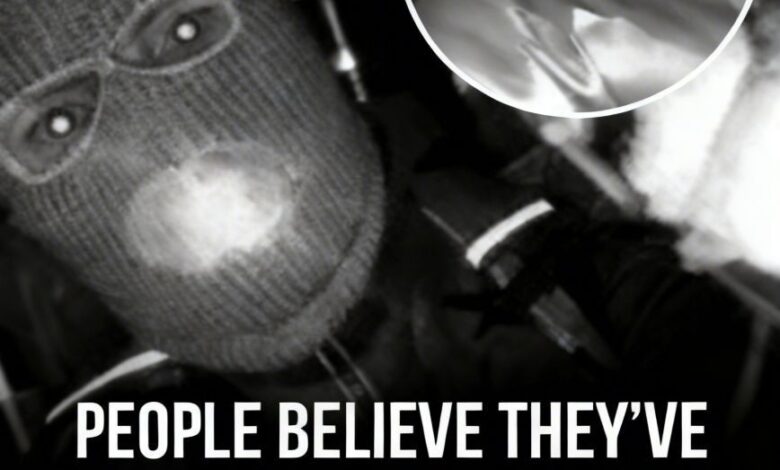
Newly released surveillance images connected to the disappearance of Nancy Guthrie have sparked intense public discussion as investigators continue their efforts to determine what happened. The footage, made public by federal authorities, shows an unidentified individual near Guthrie’s Tucson residence in the early morning hours of the day she was reported missing. Officials confirmed that the material was recovered after forensic technicians accessed previously unavailable data from the home’s security system.
According to law enforcement, the images were retrieved through advanced digital recovery methods after recording devices had been removed or compromised. The release marks one of the most tangible developments in a case that has generated significant national attention. Authorities emphasized that the investigation remains active and ongoing, and that the footage is being shared to encourage credible tips rather than speculation.
The images depict a person wearing a mask, gloves, a jacket, and a backpack. The individual appears to be standing near the front entrance and interacting with the home’s video doorbell camera. Investigators have not publicly identified the person, nor have they confirmed whether the individual is directly responsible for Nancy Guthrie’s disappearance. Officials have been clear that at this stage, the footage represents a lead—not a conclusion.
Shortly after the images were made public, online communities began examining them frame by frame. Viewers focused particularly on the visible portion of the individual’s face, especially the eyes and eyebrows exposed between the mask and hood. Some social media users speculated about possible characteristics such as gender, age, or demeanor based on eye shape and posture. Others debated the person’s body language and movement patterns captured in the footage.
However, law enforcement agencies have cautioned against drawing firm conclusions from limited visual details. Experts in criminal investigations frequently note that partial facial features, lighting conditions, camera distortion, and compression artifacts can significantly alter perception. A single still image may appear clear, but context and technical limitations often complicate interpretation.
Public commentary has also centered on the individual’s apparent interaction with the doorbell camera. In the footage, the person seems to reach toward or manipulate the device. Some commentators have suggested that this action could indicate an attempt to disable or obscure the camera. Others have pointed out that without full context, it is impossible to determine intent. Investigators have not publicly confirmed whether the device was tampered with or if additional footage was affected.
Former law enforcement professionals who have weighed in publicly described certain aspects of the person’s posture and handling of visible equipment as potentially indicative of inexperience. For example, the way the individual appears to position their body or carry items has been analyzed by commentators. Nonetheless, authorities have reiterated that online analysis does not substitute for forensic review. Only evidence verified through official channels will shape the direction of the case.
The release of the images has generated a surge of tips from members of the public. Investigators are currently reviewing this information carefully. In high-profile cases, officials often rely on community input to identify vehicles, clothing, or behaviors that may connect an image to a known individual. However, they have stressed that speculation or misidentification can hinder investigative progress.
Nancy Guthrie’s disappearance has prompted widespread concern. Authorities have not disclosed specific details regarding potential motives or suspects. They continue to examine digital data, communication records, surveillance footage from surrounding areas, and physical evidence collected during the ongoing inquiry.
Law enforcement has also emphasized the importance of patience. Complex investigations involving digital recovery and forensic analysis require time to ensure accuracy. Officials have warned that prematurely assigning identity or intent based on limited imagery can create confusion and distract from factual developments.
In addition to visual analysis, investigators are likely evaluating the timeline of events surrounding the footage. Determining precisely when the individual appeared near the residence, how long they remained there, and whether other cameras captured related activity are key components of building an accurate sequence of events. Analysts may also be examining environmental factors such as lighting, shadows, and background audio for additional clues.
Experts note that in cases involving security footage, subtle details can sometimes prove more significant than obvious ones. The positioning of a backpack, the way gloves are worn, or the angle of movement relative to the camera can all contribute to a broader understanding of the situation. However, such analysis is typically conducted within controlled forensic environments rather than through public speculation.
Authorities have not confirmed any assumptions regarding the individual’s gender or physical characteristics. While online viewers have offered theories, law enforcement continues to rely on measurable evidence rather than visual impressions alone. They have urged members of the public to report concrete information—such as recognition of clothing, distinctive movements, or potential vehicle sightings—rather than interpretive guesses.
The case remains a priority for investigators. Multiple agencies are reportedly involved in coordinating efforts, including reviewing digital evidence and following leads generated by the image release. Officials have stated that additional updates will be provided once information has been verified.
For now, the images represent both a step forward and a reminder of the case’s unresolved nature. They provide a glimpse of a moment captured on camera, but they do not yet answer the central question of what happened to Nancy Guthrie.
As authorities continue their work, they emphasize the importance of separating analysis from assumption. The public release of surveillance footage can be a powerful tool, but it requires careful interpretation. Investigators remain focused on assembling verified facts, preserving evidence, and pursuing credible leads.
Nancy Guthrie has not yet been located, and officials maintain their commitment to clarifying the circumstances of her disappearance. The investigation continues, guided by forensic analysis, verified data, and coordinated efforts across agencies.