My Neighbors Greedy Children Framed Me For Grand Theft But They Forgot The One Secret Camera That Caught Their Every Move
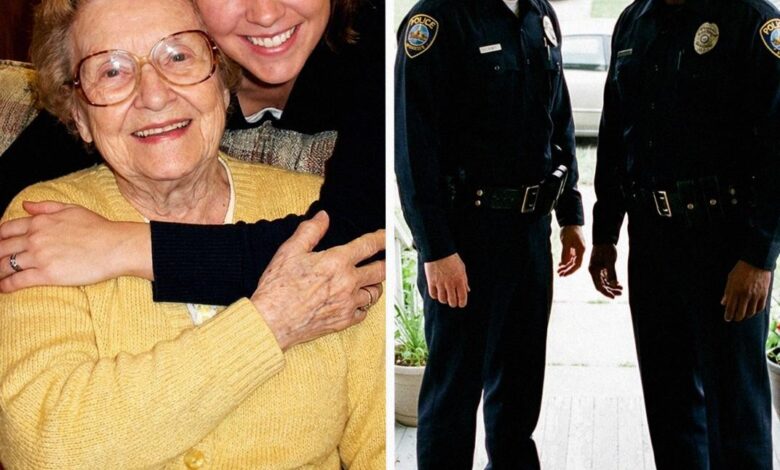
For three years, my life was defined by the quiet rhythm of service and the gentle creak of a porch swing. It began with a simple gesture: Mrs. Whitmore, my eighty-two-year-old neighbor, was struggling with a mountain of unopened mail, her hands trembling as she tried to navigate the bureaucratic debris of a long life. What started as an afternoon of sorting papers evolved into a deep, soul-sustaining friendship that saved us both. We were two women tethered by different shades of grief. I had lost my daughter and my marriage to a cruel combination of illness and sorrow, leaving me drifting in a sea of silence. Mrs. Whitmore had lost the active presence of her biological children—two daughters and a son—who seemed to remember her existence only when they were mentally measuring her hallways for their future inheritance.
I became the daughter she deserved, and she became the anchor I desperately needed. I knew her favorite Earl Grey tea steeped for exactly four minutes; she knew the exact moment my silence became too heavy and would offer a story instead of a question. We spent hundreds of evenings together, shielded from the world by the scent of old books and gardenias. When she passed away peacefully in her sleep, the light on my street didn’t just dim—it felt extinguished.
Grief is a heavy burden, but I carried it through the funeral arrangements with the meticulous care of a devoted family member. I ensured the hymns she loved were sung by a choir that understood her spirit, and I served the exact bakery cookies she used to smuggle into my kitchen. Her children arrived for the service in sharp, expensive black clothing, their faces set in masks of practiced solemnity. However, even during the eulogy, I noticed their eyes darting toward her antique watch and scanning the room for bank statements. By the time the reception began, they were already whispering in the corners of the funeral home, arguing over the estate before the soil had even settled on her casket.
The following morning, my mourning was shattered by a violent, rhythmic pounding at my front door. I opened it to find two stony-faced police officers and Mrs. Whitmore’s eldest daughter, Cynthia. Her face was a grotesque mask of triumphant malice. She screamed that I was a thief, accusing me of stealing a priceless diamond necklace—a family heirloom she claimed her mother would never have parted with. I felt a surge of indignation, but I was so certain of my innocence that I stepped aside without hesitation. I told the officers they were welcome to search my home, believing that transparency would end this nightmare.
My confidence evaporated into pure, cold terror when an officer reached into the side pocket of the purse I had carried to the funeral the day before. He pulled out a small, blue velvet pouch. Inside was the exact diamond necklace Cynthia had described. My knees buckled, hitting the hardwood floor with a dull thud. I looked at the shimmering stones and then at Cynthia, who was wearing a sickly, satisfied grin. The humiliation of being led to a patrol car in handcuffs while my neighbors watched from behind their curtains was a trauma I wouldn’t wish on my worst enemy.
At the police station, the air was thick with skepticism. The detectives laid out the facts: I had unrestricted access to the house, I was the last person to see her alive, and the stolen property was physically inside my bag. Every word I spoke sounded like a desperate lie, even to my own ears. But as the panic began to swallow my reason, a flicker of a memory surfaced from the fog of the funeral. I remembered the reception—how I had been so busy greeting guests and handing out programs that I had left my purse unattended on a velvet chair in the corner of the parlor for nearly twenty minutes.
I begged the lead detective to check the security footage from the funeral home. I think something in my voice—perhaps the raw desperation of a woman with nothing left to lose—convinced him. We moved to a grainy viewing room, the blue light of the monitors reflecting off our faces. On the screen, the reception hall came into view. I saw myself walk away from my bag to comfort a crying guest. Seconds later, a figure in black moved toward the chair. It was Cynthia. She glanced around with a nervous, twitching energy before reaching into her coat, pulling out a small object, and slipping it into the side pocket of my purse.
The detective rewound the tape, zooming in on the motion. The evidence of a calculated frame-up was undeniable. The “stolen” necklace had never been stolen; it had been planted by the very woman who called the police.
When Cynthia was brought into the interrogation room, her composure didn’t just crack—it disintegrated. Under the weight of the video evidence, she confessed to a sinister family plot. The children had discovered that Mrs. Whitmore had surreptitiously changed her will six months prior, leaving a substantial portion of her liquid assets and the house to me. She had left them enough to be comfortable, but she had rewarded the person who had actually cared for her with the bulk of the estate. The siblings were desperate to disqualify my inheritance. They knew that if I were convicted of a felony involving the theft of marital property, they could contest the will on the grounds of “undue influence” or criminal misconduct.
I was cleared of all charges immediately. Cynthia was arrested on the spot for filing a false police report, perjury, and evidence tampering. The son and the other daughter are currently facing a civil suit that will likely strip them of what little they were originally left.
I returned to Mrs. Whitmore’s porch that evening, the weight of the world still heavy on my shoulders but the shadow of prison finally gone. A few days later, her estate lawyer visited me. He handed me a sealed envelope, a letter she had written for the specific possibility that her children might turn “predatory,” as she put it. In her elegant, loopy handwriting, she told me that the inheritance wasn’t a payment for my time, but a gift of freedom. She told me I had given her three years of life when she felt like a ghost, and she wanted me to have the means to find my own life again.
She urged me not to let the bitterness of her biological children dim the kindness in my heart. As I folded the paper and looked out at the street we had shared, I realized a profound truth. Blood might make people related, but it is the simple, consistent act of showing up that makes you family. Mrs. Whitmore had seen me when I felt completely invisible to the world, and in her final, brilliant act of foresight, she ensured that the world would finally see the truth about my heart and her children’s greed. I stayed in her rocking chair as the sun dipped behind the horizon, no longer just a neighbor, but a woman with a future she finally felt brave enough to claim.