My Grandma Left Five Letters for the Neighbors Who Tormented Her – After I Delivered the First One, Police Showed Up!
When my grandmother passed away, she left me her small, paid-off brick house in a neighborhood that felt a little too quiet and a little too watchful. I moved in two weeks after the funeral, hoping to find a place to grieve. Instead, I found a neighborhood that felt like a perfectly manicured brochure, where curtains twitched as I carried boxes inside and the air felt heavy with unspoken judgment. My first encounter was with Mrs. Keller, the self-appointed “mayor” of the block, who stood on her porch with a tight-lipped smile and warned me that they liked to keep things “tidy” around there.
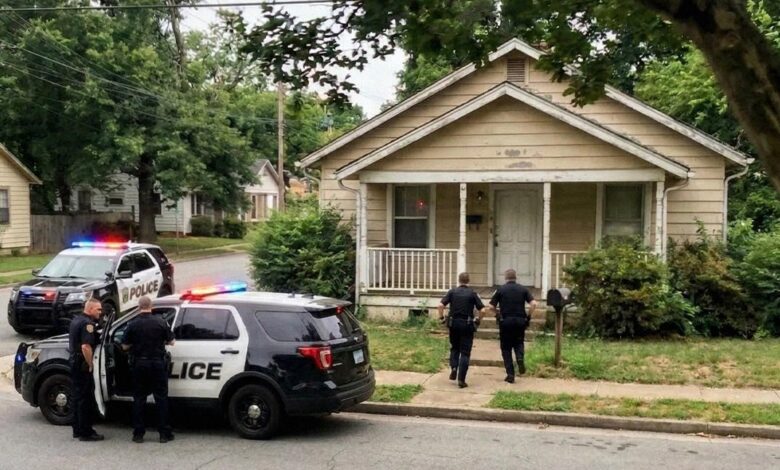
While clearing out Gran’s dresser, I discovered five sealed envelopes addressed to specific neighbors: Mrs. Keller, Don, Lydia, Jared, and Marnie. On top sat a chilling note: “After I’m gone, deliver these.” Assuming they were final words of peace, I crossed the street to hand Mrs. Keller hers. She took it with two fingers, a look of profound unease crossing her face. Less than an hour later, the silence of the street was shattered by the wail of sirens. Two squad cars pulled up to Keller’s house. When I approached an officer, he looked at me with startling intensity. “She reported the letter as threatening,” he said. “It contained documents and a flash drive.”
I retreated inside, my skin prickling. Ignoring the officer’s warning out of sheer desperation to understand, I opened the remaining envelopes. What I found was a meticulously documented archive of psychological warfare. Gran hadn’t been “eccentric”; she had been a target. Don’s envelope contained a “Timeline of Incidents,” detailing every time a neighbor had entered her yard or filed a false report. Lydia’s letter listed items that vanished after “contractor visits” Lydia had insisted on arranging. Jared’s held a map showing blind spots in her security lights. The final envelope, Marnie’s, began with a sentence that made my blood run cold: “If anything happens to me, this is why.”
Detective Rios arrived that evening, sifting through the evidence at the kitchen table. She explained that the neighbors had engaged in “elder bullying”—a coordinated effort to isolate Gran and make her appear unstable so that any complaint she made would be dismissed as the rants of a confused old woman. “They thought she was easy,” Rios whispered, “but she noticed everything.”
The tension broke two nights later. Rios and I waited in the darkened living room, watching a hidden camera feed Gran had secretly installed in a birdhouse. At 11:30 PM, the backyard motion lights clicked on. Shadows moved with practiced ease. Mrs. Keller, Don, and Lydia appeared on the screen, whispering urgently about finding “the papers” and making them disappear. As Keller hissed that she knew the back gate didn’t lock, Rios signaled the backup units. Flashlights flooded the yard, trapping the “porch committee” in the harsh glare of their own crimes.
In the chaotic aftermath, the neighbors’ unity dissolved instantly. Don blamed Keller; Lydia sobbed that she was just a bystander; Keller spat that my grandmother was a liar. But the cameras and the letters told the truth. They hadn’t been “protecting the neighborhood”; they had been trying to intimidate a vulnerable woman into leaving so they could control the block.
A week later, the neighborhood felt different—actually peaceful, rather than performatively so. A sixth note, tucked behind the others, finally found its way to me. Gran wrote, “I was scared sometimes, but I was prouder than I was scared. I did not want my life edited into a story where I was the problem.” I walked onto the porch and nudged her wind chimes. They rang out stubborn and clear, a final, beautiful victory for the woman who refused to be silenced.