My 3-Year-Old Son Cried And Begged Me Not to Take Him to Daycare, I Gasped When I Stormed Into the Facility
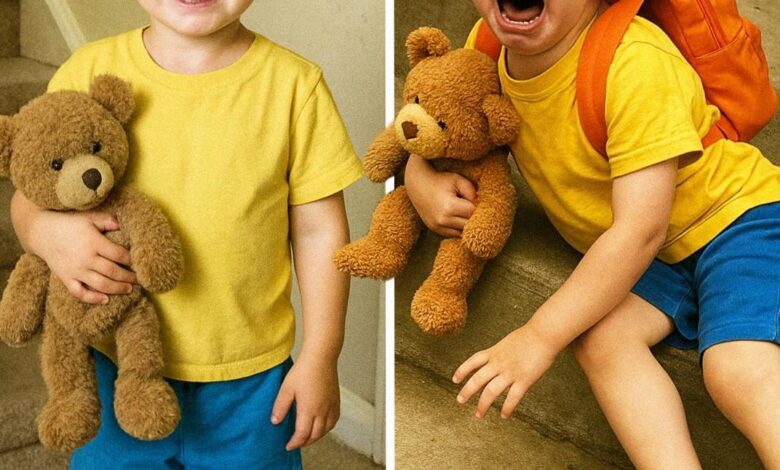
Until recently, my three-year-old son, Johnny, loved daycare. Every morning, he’d jump out of bed humming little songs, shove his favorite toy cars into his backpack, and run to the car shouting, “Let’s go, Mommy!” He’d barely look back as he dashed toward the classroom, full of excitement. It made mornings easy—and honestly, I felt a little jealous that he seemed to enjoy being away from me so much. But I was happy. I thought I’d found the perfect place for him.
Then, one Monday morning, everything changed.
I was pouring coffee when a scream shattered the quiet. It wasn’t just a whine or a cry—it was pure terror. I dropped the mug and sprinted upstairs, heart pounding. Johnny was curled in the corner of his room, clutching his blanket, his face red and streaked with tears.
“What happened, baby? Are you hurt?” I asked, crouching beside him. “It’s okay, sweetheart. We need to get ready for daycare.”
He shook his head violently and screamed, “No, Mommy, no! Don’t make me go!”
At first, I thought maybe he’d had a nightmare or wasn’t feeling well. Kids his age have phases, right? But the next day, it happened again. And the next. By midweek, every morning was a battle. He clung to me, crying until he couldn’t breathe, begging not to go.
I called his pediatrician, Dr. Adams. “It’s normal,” she said kindly. “Kids go through separation anxiety at this age.”
But something in my gut told me she was wrong. Johnny wasn’t sad. He was terrified.
By Friday, I’d had enough. I was late for work again, exhausted and frazzled. When he started sobbing in the hallway, I snapped. “Stop it! You have to go to daycare!” I shouted before I could stop myself.
The look on his face broke me. He froze, shaking, tears falling silently now. I knelt, my throat tight. “I’m sorry, baby,” I whispered, hugging him close. “Please tell me why you don’t want to go.”
He hid his face against my shoulder and whispered, “No lunch.”
I froze. “What do you mean, no lunch?”
He sniffled. “Please, Mommy. No lunch.”
The way he said it made my stomach turn. I decided to keep him home that day and called my neighbor’s teenage son, Kenny, to babysit. Johnny adored him, and I needed time to think.
The next morning was Saturday, and though I usually kept Johnny home, I wanted answers. His daycare offered weekend care, so I decided to test a theory. I knelt down, looked into his eyes, and said, “You only have to stay until lunch, okay? I’ll pick you up before then.”
He hesitated, then nodded. For the first time all week, he let me buckle him into his seat without crying. But when I dropped him off, he looked at me with pleading eyes that said, Please don’t leave me.
I barely got anything done that morning. I couldn’t shake the unease gnawing at me. At 11:30, I left work and drove to the daycare. Parents weren’t allowed inside during meals, but I knew the lunchroom had glass panels. I circled to the side and peered through the window.
What I saw made my blood run cold.
Johnny was sitting at the end of the table, head bowed, tears streaking down his face. Next to him sat an older woman I’d never seen before—gray hair in a tight bun, glasses on a chain, floral blouse. She didn’t have a staff badge.
She was forcing a spoon toward his mouth, pressing it against his lips while he cried silently. When he turned away, she scolded him harshly. “You’re not leaving until that plate is empty,” she barked.
I didn’t think—I just acted. I slammed the door open so hard it hit the wall.
“Ma’am, you can’t be in here—” a staff member began.
“I don’t care!” I shouted, storming toward them. Johnny’s eyes lit up when he saw me. He bolted into my arms, sobbing.
I turned on the woman. “If you ever touch my son again, I’ll have the state shut this place down.”
She blinked, startled. “It’s our policy—kids must eat what’s served.”
“Policy?” I repeated, my voice shaking with fury. “Forcing a crying child to eat until he chokes isn’t a policy—it’s abuse.”
The other staff members froze, unsure what to do. “Who is she?” I demanded. “Where’s her badge?” No one answered.
I took Johnny and walked straight out.
That night, after his bath, I tucked him into bed and asked gently, “Sweetheart, why didn’t you want to eat lunch at daycare?”
He hesitated, clutching his blanket. “The lady says I’m bad if I don’t finish,” he whispered. “She tells the kids I waste food. Everyone laughs.”
My heart broke. He wasn’t afraid of the food—he was afraid of being humiliated.
On Monday morning, I called the daycare director, Brenda. “Your staff forced my child to eat while he cried,” I said.
Brenda sounded surprised. “We don’t force children to eat here.”
I described the woman: gray bun, floral blouse, no badge.
There was a long pause. Then Brenda sighed. “That might be Miss Claire. She’s not technically staff—she’s my aunt. She volunteers sometimes.”
I could barely speak. “You have volunteers handling children unsupervised?”
“She’s always been good with the kids,” Brenda said defensively. “She’s just… old-fashioned.”
“Old-fashioned?” I snapped. “She traumatized my son. She shouldn’t be anywhere near children.”
I hung up and immediately filed a report with the state licensing board.
A week later, inspectors showed up unannounced. What they found was worse than I imagined. The daycare was overcrowded, several employees lacked certifications, and volunteers like Miss Claire were working without background checks or supervision. Multiple kids confirmed they’d been “made to finish” their food even when they felt sick.
It wasn’t just my son. It had been happening to others for months.
The daycare received a formal warning—fix everything or face closure. Brenda called me in fury. “Why would you go to the state instead of coming to me?”
“I did,” I said calmly. “You chose to protect her instead of the kids.” Then I hung up.
A week later, at the grocery store, I ran into another mom, Lila. Her daughter, Sophie, had been in Johnny’s class. She stopped me near the bread aisle, eyes full of tears. “Thank you,” she said.
I frowned. “For what?”
“My daughter used to cry at lunch too. I thought she was just being picky. After the inspection, she told me Miss Claire called her ‘spoiled’ and ‘ungrateful’ for not finishing her food.” She swallowed hard. “I kept telling her to stop fussing. I feel horrible.”
“You didn’t know,” I told her.
She nodded. “But your son gave her courage to tell the truth.”
That day, I looked at Johnny differently. My little boy had spoken up—not just for himself, but for others too.
The daycare eventually lost its license for failing to meet the state’s requirements. Parents scrambled to find alternatives, but most were relieved. We all deserved better.
I found a new center for Johnny—one that valued kindness and communication. The teachers greeted every child by name, and the lunch policy was simple: Eat when you’re hungry, stop when you’re full.
Now, Johnny wakes up happy again, singing as he packs his tiny backpack. He runs into class with a grin and waves goodbye without fear. Watching him walk confidently into that bright classroom, I finally exhaled.
And I learned the most important lesson of all: always listen to your child. Even when it sounds trivial, even when others dismiss it.
Because sometimes, that small voice is the only warning you’ll ever get.
Johnny’s words still echo in my head.
“No lunch, Mommy.”
Two simple words that changed everything.