Inside the last hours of Noelia Castillo Ramos!
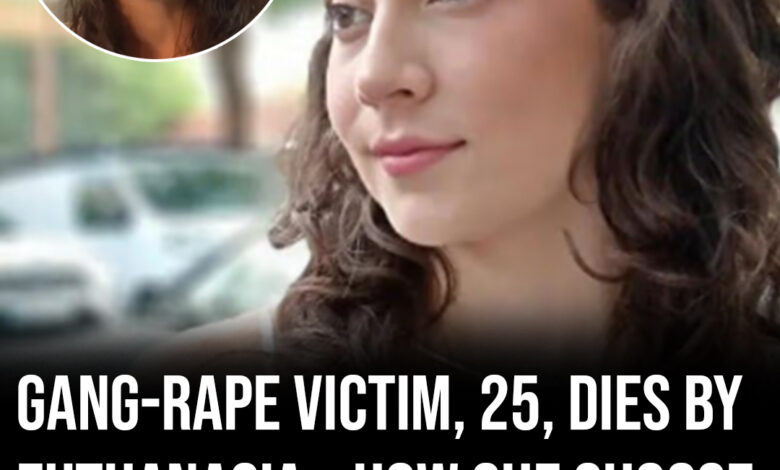
The story of Noelia Castillo Ramos has resonated far beyond the borders of Spain, igniting a profound global conversation on the intersections of trauma, mental health, and the right to die. At just 25 years old, the Barcelona native ended her life through legal euthanasia, concluding a journey defined by severe physical pain, deep-seated psychological suffering, and a high-profile legal battle that pitted her against her own family. Her passing has left a wake of emotional debate regarding the ethical boundaries of assisted dying laws, particularly for those whose primary agony is rooted in past trauma and mental health disorders.
Noelia’s life was tragically marked by systemic and personal violence. She survived two separate sexual assaults—the first at the hands of a former partner and the second involving multiple individuals while she was under the care of a state-run facility in 2022. The weight of these experiences led to a suicide attempt shortly after the second assault, where she jumped from a fifth-floor window. While she survived the fall, the incident left her paralyzed from the waist down, adding chronic, debilitating physical pain to an already fragile psychological state. Her history with mental health was long-standing; diagnosed with borderline personality disorder and obsessive-compulsive disorder at 13, she had endured years of psychiatric care and prior instances of self-harm.
The request for euthanasia transformed her private suffering into a public legal odyssey. Spain legalized the procedure in 2021 for individuals with “serious and incurable” conditions, but Noelia’s case was uniquely contentious because her father launched a relentless judicial campaign to stop her. Supported by conservative legal organizations, he escalated the challenge to Spain’s highest courts and eventually the European Court of Human Rights. He argued that his daughter was too vulnerable to make such a permanent decision, while Noelia maintained that her father’s refusal to accept her choice only added to her torment. Ultimately, every court upheld her right to bodily autonomy, setting a significant legal precedent.
In the final hours at Sant Camil Hospital in Barcelona, the atmosphere was one of heavy, somber finality. Noelia remained resolute, expressing a desperate need for the “peace” that had eluded her for over a decade. She viewed the procedure not as a surrender, but as an assertion of dignity. She meticulously planned her final moments, choosing to wear her favorite dress and makeup, wanting to feel beautiful and in control of her image one last time. She kept four personal photographs close to her—artifacts of a life that contained meaning beyond the trauma that eventually defined it.
The division within her family highlighted the agonizing complexity of these cases. While her father fought the process until the end, her mother chose a path of pained companionship, staying by Noelia’s side through her final night despite her personal opposition to euthanasia. Noelia’s own words served as a stark reminder of the individual at the center of the policy debate: “The happiness of a father, a mother, or a sister cannot be more important than the life of a daughter.”
Her death has reignited the firestorm over whether euthanasia laws sufficiently protect those with complex psychological histories. Supporters argue that denying relief to those with unbearable mental suffering is a form of cruelty, while critics worry about the implications for vulnerable individuals who might feel they have no other options. For Noelia, the decision was no longer a matter of abstract ethics or legal theory. It was a singular, personal quest for an end to a cycle of pain that had become impossible to bear. She sought a quiet exit from a world that had, in many ways, failed to protect her when she was alive.