Industrial Explosion Leaves One Worker Dead and Several Injured
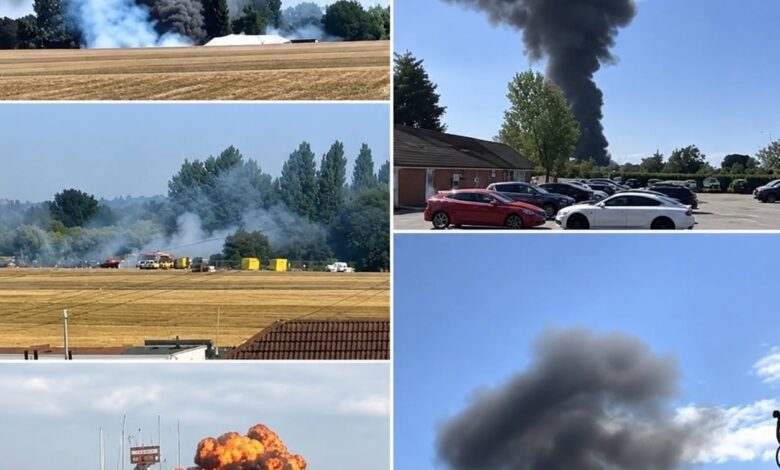
The explosion was reportedly powerful enough to shake nearby buildings, alarming employees and people living or working in the surrounding area. Within moments, the facility became engulfed in smoke and flames, prompting emergency evacuations and an urgent response from firefighters, medical personnel, and other emergency services.
As the situation developed, reports that several workers could not immediately be accounted for added another layer of urgency. Rescue teams faced the difficult task of controlling the fire while preparing to search the damaged facility for anyone who might still be trapped inside.
Then came the devastating confirmation: one worker had died following the explosion, while several others were injured and taken to hospitals.
Behind the emergency response was a human tragedy involving a family who had lost a loved one, injured employees facing an uncertain recovery, and colleagues struggling to understand how a routine workday could end in such devastating circumstances.
A Sudden Explosion Shakes the Industrial Facility
The emergency began with a sudden blast that reportedly shook nearby buildings.
Workers who were inside or close to the facility were immediately confronted with a frightening situation. The force of the explosion was followed by the appearance of thick black smoke rising above the property as flames spread through sections of the industrial site.
For people in the surrounding area, the sight of smoke and fire signaled that something serious had happened.
Industrial facilities often contain machinery, electrical systems, fuel sources, chemicals, and other materials that can create complicated fire conditions. When an explosion occurs in such an environment, the danger may extend beyond the original point of impact.
Even after the initial blast, damaged equipment, unstable structures, and potentially hazardous materials can create additional risks.
Workers were forced to leave the area as quickly as possible. People in neighboring buildings were also told to evacuate as the emergency developed.
In situations like this, evacuation is not simply a precaution. It can be essential to protecting people from secondary explosions, smoke inhalation, falling debris, and the possibility of structural collapse.
For those who escaped, the first priority was getting away from the immediate danger.
But as people gathered outside the affected property, uncertainty began to grow.
Not everyone could immediately confirm that their colleagues had made it out safely.
Thick Black Smoke and Flames Spread Across the Property
As the fire developed, a large column of thick black smoke rose above the facility.
Smoke from an industrial fire can contain a complicated mixture of gases and airborne particles. Its composition depends on what is burning, the materials stored at the property, and the conditions under which the fire develops.
This is one reason industrial fires can be especially dangerous.
Unlike an ordinary household fire, an industrial blaze may involve a wide variety of materials, machinery, and processes. Firefighters must consider not only the visible flames but also the possibility of hidden hazards.
The thick smoke also created additional concerns for people nearby.
Smoke inhalation can irritate the eyes and respiratory system. Depending on the materials involved, exposure may cause coughing, breathing difficulties, headaches, dizziness, or more serious health complications.
Emergency responders therefore need to assess the surrounding environment and determine appropriate safety measures.
As the flames spread through sections of the property, firefighters worked to approach the scene while evaluating the risks.
The situation was already serious, but another development would make the emergency even more dangerous.
A Second Explosion Forces Emergency Crews to Pull Back
While firefighters were establishing a safety perimeter, a second explosion reportedly occurred.
The blast sent a large fireball into the air, creating another dangerous moment for everyone in the surrounding area.
The explosion forced emergency responders to move farther back.
This development highlighted the unpredictable nature of industrial emergencies. Even after the initial explosion, the presence of damaged equipment, pressurized systems, combustible materials, or other hazardous components can create the possibility of additional incidents.
For firefighters, the priority is not simply reaching the flames as quickly as possible.
They must also protect themselves and their colleagues from hazards that could cause further injuries or fatalities.
A secondary explosion can change the entire strategy of an emergency response.
Areas that initially appeared accessible may suddenly become unsafe. Equipment may be damaged, structural components may shift, and the location of hazardous materials may become uncertain.
Establishing and maintaining a safety perimeter is therefore a critical part of the response.
Although stepping back can appear frustrating during a rescue operation, it may prevent additional casualties and allow emergency commanders to reassess the situation.
The second blast also intensified concerns about the condition of the facility and the possibility that workers could still be trapped inside.
Missing Workers Turn the Emergency Into a Desperate Rescue Operation
As workers who had escaped began speaking with authorities, reports emerged that several colleagues were still unaccounted for.
This immediately transformed the incident into a desperate search-and-rescue operation.
For emergency teams, identifying who has safely evacuated is one of the most important tasks during a major industrial accident.
A missing-person report does not automatically mean that someone is trapped inside. An employee may have escaped through another exit, moved to a different safe location, or reached a hospital without immediately contacting colleagues.
However, until every person is accounted for, responders must consider the possibility that someone remains inside the damaged building.
This uncertainty creates enormous pressure for rescue teams.
Firefighters must work in dangerous conditions while attempting to determine which areas can be entered safely. They may need to coordinate with facility personnel, review available information, and identify sections of the property that require further examination.
The damaged structure can make the operation especially difficult.
An explosion may weaken walls, ceilings, support structures, and industrial equipment. Fire can further compromise materials that have already been damaged by the initial blast.
Even when flames appear to be under control in one section, hidden hot spots or unstable debris may remain.
For rescuers, every decision must balance the urgency of locating missing workers with the need to prevent additional injuries.
Firefighters Battle the Blaze for Hours
Fire crews continued fighting the fire for hours as the emergency response unfolded.
Industrial fires can be difficult to extinguish because the source of the fire may be complicated, the affected area may be large, and hazardous materials can create unpredictable conditions.
The presence of heavy machinery and industrial equipment can also make access difficult.
Firefighters may need to approach the blaze from several positions, identify safer entry points, and monitor the condition of the structure throughout the operation.
The second explosion made these challenges even more serious.
Rather than simply attacking the visible flames, responders had to consider the possibility of further explosions and other hazards.
The operation required careful coordination between firefighters and other emergency personnel.
Medical teams also remained nearby, ready to assist anyone who was injured or needed immediate treatment.
In major incidents, medical support is essential even when the full extent of the injuries is not yet known.
People may suffer burns, trauma from the blast, injuries caused by falling objects, or respiratory problems after exposure to smoke.
Some injuries may be immediately obvious, while others may require medical assessment after the initial evacuation.
As firefighters worked to bring the blaze under control, the condition of the missing employees remained a major concern.
Medical Teams Prepare to Treat the Injured
While firefighters concentrated on controlling the fire, medical teams waited nearby.
Their presence was an important part of the emergency response.
An industrial explosion can produce several different types of injuries.
The force of a blast may throw people against nearby surfaces, cause injuries from flying debris, or damage structures that collapse around them.
Heat and flames can cause burns, while smoke exposure may affect breathing.
Some workers may also experience hearing problems or other effects following exposure to a powerful explosion.
Emergency medical personnel must assess each injured person and determine the level of care required.
Depending on the nature and severity of the injuries, patients may need transportation to hospitals for further examination and treatment.
Several injured workers were transported to hospitals following the incident.
Their hospitalization marked another painful consequence of the explosion.
For their families, the immediate concern would have been learning the extent of their injuries and whether they would recover.
For colleagues who had escaped without serious physical harm, the emotional impact could also be significant.
Surviving a major industrial accident can leave people frightened, shocked, and deeply concerned about coworkers who were not yet located.
Rescuers Begin Searching Through the Damaged Facility
Once conditions became safe enough to enter parts of the damaged property, rescuers began searching through the wreckage.
This was one of the most critical stages of the operation.
The search had to be conducted carefully because the explosion and subsequent fire had left sections of the facility severely damaged.
Debris, damaged equipment, unstable structures, and areas affected by intense heat could all present additional dangers.
Rescue personnel needed to assess each accessible section while remaining alert to changing conditions.
Searching an industrial building after an explosion is different from entering an ordinary structure.
The layout may include production areas, storage spaces, machinery rooms, service corridors, and other sections that are difficult to navigate.
Damage may also make familiar routes inaccessible.
In some areas, firefighters may need to move carefully around collapsed materials or equipment that has shifted from its original position.
The operation also requires accurate information about the people who were working at the facility when the explosion occurred.
Authorities may need to compare employee records, evacuation information, and witness accounts to establish who has been located and who remains unaccounted for.
Every confirmed identity can help narrow the search and provide families with important information.
For relatives waiting outside the affected area, however, each passing hour can feel painfully long.
Families Wait for News About Their Loved Ones
As the emergency response continued, families gathered nearby, hoping to receive information about the workers who had been involved.
For many relatives, the first indication that something had gone wrong may have been a phone call, a message from a colleague, or reports of an explosion at the workplace.
Not knowing whether a loved one is safe can be an overwhelming experience.
A person may know that a family member was scheduled to work that day but have no way of confirming whether they escaped.
Others may receive information that someone has been taken to a hospital without knowing the severity of the injuries.
During major emergencies, authorities often need time to verify identities and notify relatives.
This process can be difficult, especially when several people are injured or missing and the facility remains unsafe.
Officials may also withhold personal information until the appropriate family members have been contacted.
Although the public naturally wants immediate answers, accurate identification and responsible communication are essential.
For the families involved, the most important information is often simple: whether their loved one is alive, whether they have been located, and what condition they are in.
The uncertainty surrounding the search made the emergency especially painful for everyone waiting for news.
Authorities Confirm One Worker Has Died
Later that evening, the devastating news was confirmed.
Authorities announced that one worker had died following the explosion, while other employees remained hospitalized with injuries.
The victim’s identity was initially withheld so that relatives could be notified privately.
The confirmation marked a tragic turning point in an emergency that had already involved destruction, injuries, evacuations, and a prolonged rescue operation.
For the victim’s family, the news represented an irreversible loss.
A person who had left home for an ordinary working day would not be returning.
For colleagues, the death was a painful reminder of how quickly an industrial emergency can change lives.
Workplaces are expected to provide an environment where employees can carry out their duties without facing unnecessary danger.
When a major explosion occurs, questions naturally arise about the conditions inside the facility, the equipment involved, and whether all appropriate safety measures were in place.
However, the precise cause of the incident had not yet been established.
Authorities therefore began examining the available evidence rather than immediately attributing responsibility.
The investigation would need to determine what happened, how the explosion developed, and whether any factors could have contributed to the tragedy.
The Industrial Facility Suffers Catastrophic Damage
By the time the fire was brought under control, the facility had suffered catastrophic damage.
The impact of an industrial explosion can extend far beyond the initial point of detonation.
The blast may damage machinery, walls, ceilings, windows, electrical systems, and structural supports.
Fire can then spread through the affected areas, further weakening materials and destroying equipment.
Even after flames are extinguished, a damaged facility may remain dangerous.
Unstable structures can collapse without warning. Electrical systems may be compromised, and hidden hot spots can create the possibility of renewed fire.
For these reasons, an industrial site involved in a major explosion cannot simply reopen once the visible flames disappear.
Authorities and qualified specialists may need to inspect the property before workers or investigators can safely enter certain areas.
The facility remained closed as the investigation continued.
The closure was an important measure while officials worked to understand the damage and determine the circumstances surrounding the explosion.
For employees, the shutdown also meant uncertainty about when normal operations could resume.
Some workers had been injured. Others had escaped physically unharmed but were dealing with the emotional consequences of the event.
The incident had affected not only the damaged property but also the people whose livelihoods depended on it.
Investigators Begin Examining What Caused the Explosion
With the fire under control, attention increasingly turned toward determining what had triggered the initial blast.
Investigators began examining equipment, surveillance footage, and witness accounts.
These sources can provide important information about the events leading up to an industrial accident.
Examining damaged equipment
Investigators may inspect machinery, electrical installations, production systems, and other equipment that could be relevant to the incident.
The objective is to identify possible mechanical failures, electrical problems, overheating, pressure-related issues, or other abnormal conditions.
However, damaged equipment must be examined carefully.
An explosion and subsequent fire can destroy evidence or alter the appearance of components.
Investigators need to distinguish between damage that existed before the explosion and damage caused by the blast itself.
Reviewing surveillance footage
Available security footage may help establish the sequence of events.
Depending on the camera positions and recording quality, investigators may be able to identify unusual activity, visible smoke, equipment movement, or the approximate timing of the initial explosion.
Footage may also help establish when workers began evacuating and how the emergency developed.
Not every important event will necessarily be visible on camera, particularly if the explosion occurred inside an enclosed production area.
Speaking with witnesses
Workers and people in nearby buildings may provide valuable information.
Their accounts can help investigators understand what they heard or observed before and after the blast.
Witnesses may describe unusual sounds, smoke, equipment behavior, or other observations that could help establish the timeline.
These accounts must be compared with physical evidence and other available records.
No single witness statement should automatically be treated as proof of the cause.
Reconstructing the sequence of events
A major investigation may involve combining technical findings, video footage, physical evidence, and witness accounts.
The goal is to establish what happened in a reliable sequence.
Investigators may also examine the facility’s maintenance records, safety procedures, equipment history, and relevant operational documentation.
The exact scope of the investigation depends on the circumstances and the evidence available.
Officials have indicated that determining the precise cause would take time.
Until the investigation is completed, any explanation of the explosion should be treated as unconfirmed.
Why Industrial Explosions Can Be So Dangerous
Industrial facilities can contain a wide range of materials and systems that require specialized safety controls.
Depending on the type of operation, these may include combustible dust, flammable liquids, gases, pressurized equipment, electrical installations, and industrial heating systems.
When certain conditions occur, a fire or explosion can develop rapidly.
Not all industrial explosions have the same cause.
Potential hazards in industrial environments can include:
Flammable gases and vapors: Certain gases and vapors can ignite when mixed with air at appropriate concentrations and exposed to an ignition source.
Combustible dust: Fine particles from certain materials can create an explosion hazard when dispersed in the air and exposed to an ignition source.
Pressurized systems: Boilers, tanks, cylinders, and other pressurized equipment can become dangerous if they fail or operate outside safe limits.
Electrical faults: Damaged wiring, equipment failures, and electrical arcing can create ignition risks in certain environments.
Chemical reactions: Some industrial processes involve substances that may react dangerously if incompatible materials are mixed or operating conditions are not properly controlled.
These are general industrial hazards, not confirmed explanations for this particular incident.
Determining which, if any, were involved requires evidence from the investigation.
The presence of a second explosion also demonstrates why emergency crews must treat industrial fires with particular caution.
Even after the first blast, other hazards may remain.
The Importance of Workplace Safety and Emergency Preparedness
Industrial workplaces have a responsibility to identify hazards and establish procedures designed to protect employees.
Although the investigation must determine what happened in this case, the incident highlights the importance of prevention and emergency preparedness.
Effective workplace safety programs generally include several important elements.
Regular equipment inspections
Machinery, electrical systems, pressure vessels, and other industrial equipment should be inspected and maintained according to applicable standards and manufacturer requirements.
Defects should be documented and corrected.
Equipment that presents an immediate danger should not remain in operation simply to avoid interrupting production.
Proper handling and storage of hazardous materials
Facilities that use flammable or reactive materials need appropriate storage systems, ventilation, labeling, and handling procedures.
Incompatible materials should be separated when required by safety regulations.
Employee training
Workers should understand the hazards associated with their jobs and know what to do when an emergency occurs.
Training may include evacuation procedures, alarm recognition, reporting hazards, and the appropriate use of protective equipment.
Clearly marked evacuation routes
Employees should be able to identify emergency exits and reach safe assembly points.
Evacuation routes should remain accessible rather than being blocked by equipment, stored materials, or other obstacles.
Emergency communication systems
Facilities need reliable methods for alerting workers and coordinating an evacuation.
Alarms, emergency announcements, and established communication procedures can help employees respond quickly.
Regular emergency exercises
Drills can help employees become familiar with evacuation procedures and identify weaknesses in emergency plans.
A plan that exists only on paper may not be sufficient when people must react under pressure.
The Physical and Emotional Consequences for Survivors
The effects of a major industrial explosion do not necessarily end when the fire is extinguished.
Workers who survive may face physical injuries, emotional distress, and uncertainty about their future.
Some injuries may require extended medical treatment.
Burns, fractures, respiratory problems, and injuries caused by flying debris can take considerable time to heal.
Even people who were not physically injured may experience psychological effects.
The sudden sound of an explosion, the sight of flames, the loss of colleagues, and the fear of being trapped can be deeply distressing.
Some survivors may experience:
Difficulty sleeping.
Anxiety when returning to the workplace.
Repeated memories of the incident.
Increased sensitivity to loud noises.
Feelings of guilt about surviving.
Difficulty concentrating.
Fear about future workplace safety.
These reactions can occur after traumatic events and do not necessarily indicate a long-term mental health disorder.
However, people experiencing persistent distress may benefit from professional support.
Employers and relevant support services can play an important role by providing clear information, access to medical care, and appropriate psychological assistance.
Recovery should not be measured only by whether physical injuries have healed.
The emotional consequences of a tragedy can remain long after the immediate emergency has ended.
A Community Left Shaken by the Explosion
The explosion also affected people beyond the facility itself.
Nearby workers and residents witnessed the smoke, heard the blasts, or were forced to leave surrounding buildings.
For some, the event may have been the first time they had experienced an industrial emergency of this scale.
The sight of a large fireball and thick black smoke can leave a lasting impression.
Local businesses and workplaces may also experience disruption when emergency services establish safety perimeters or close nearby areas.
People may have to change their routines, avoid certain roads, or wait for official information before returning to their buildings.
Beyond these immediate effects, the death of a worker creates a deeper sense of loss.
Industrial facilities are part of the daily life of many communities. Employees work alongside one another, build relationships, and depend on their jobs to support their families.
When a colleague dies in a workplace emergency, the impact extends through families, friendships, and the wider working community.
The confirmed death made the scale of the tragedy painfully clear.
What Happens After a Major Industrial Accident?
Once an industrial fire has been brought under control, several processes may follow.
The first priority is ensuring that the site is safe enough for further emergency operations.
Rescuers and investigators may need to identify areas that remain unstable or hazardous.
Authorities may then continue documenting the damage and collecting evidence.
Depending on the findings, the investigation may examine whether equipment malfunctioned, whether safety procedures were followed, and whether any regulatory requirements were violated.
If evidence of a safety violation or other wrongdoing is discovered, additional legal or regulatory action may follow.
However, responsibility cannot be determined solely from the fact that an explosion occurred.
A proper investigation must establish the facts and identify the relevant causes.
The facility may also need extensive repairs or reconstruction before operations can resume.
In some cases, the damage may be so severe that restoring the site becomes a long-term project.
Workers and families may need information about medical care, employment arrangements, and other forms of assistance.
The exact procedures depend on local laws, the circumstances of the incident, and the findings of the authorities.
A Tragedy That Leaves More Questions Than Answers
Even after the flames were brought under control, many questions remained.
What triggered the first explosion?
Why did a second blast occur?
Which parts of the facility were most severely damaged?
Were there warning signs before the incident?
What caused the injuries suffered by the workers?
Could any changes in equipment, maintenance, or safety procedures have reduced the risk?
These questions are important, but they cannot be answered responsibly without the results of a thorough investigation.
The examination of equipment, surveillance footage, and witness accounts will be central to understanding what happened.
For the families affected, however, the immediate consequences are already painfully real.
One worker lost their life. Others were hospitalized. Colleagues were forced to flee a dangerous scene, and families spent hours waiting for information.
No technical report can undo that loss.
But a careful investigation can help establish the truth, identify any failures, and provide information that may prevent similar tragedies in the future.
Final Thoughts: One Ordinary Working Day Ended in Irreversible Loss
The devastating industrial explosion began with a sudden blast and quickly developed into a major emergency.
Thick black smoke rose above the facility, flames spread through the property, and workers and nearby occupants were forced to evacuate.
A second explosion sent a fireball into the air and forced emergency responders to move farther back.
As firefighters battled the blaze, reports of missing employees turned the incident into a desperate search-and-rescue operation.
Medical teams waited nearby while injured workers were transported to hospitals. Once conditions became safe enough, rescuers began searching through the damaged facility.
Later that evening, authorities confirmed the death of one worker.
The victim’s identity was withheld initially so relatives could be notified privately, while investigators began examining the available evidence to determine what had triggered the explosion.
The facility suffered catastrophic damage and remained closed as the investigation continued.
Although the precise cause was still unknown, the human cost of the incident was already clear.
For one family, the explosion brought a devastating loss. For injured workers, the road to recovery had begun. For colleagues and people in the surrounding community, the event was a frightening reminder of how quickly an ordinary day can become a life-changing emergency.
The investigation will take time, and its findings will be essential to understanding the circumstances behind the disaster.
For now, the most important priorities remain supporting those affected, establishing the facts, and ensuring that lessons from this tragedy are taken seriously.
A workplace should be a place where people can earn a living and return home safely. When an industrial accident takes a life, that basic expectation deserves renewed attention.