I Took Care of My Elderly Neighbor – After She Died, the Police Knocked on My Door, and When I Learned Why, My Knees Buckled
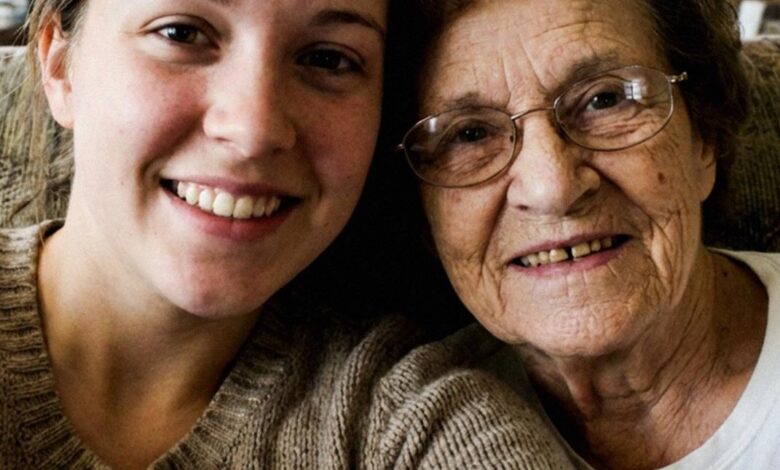
The morning of the funeral was as gray and still as the house next door. I am Claire, a thirty-year-old woman living a quiet, solitary life in a house with a mailbox that leans a bit to the left—a quirk I never bothered to fix because some things are better left imperfect. For three years, that mailbox was the bridge between me and Mrs. Whitmore. It started when I noticed her mail piling up like a neglected mountain. Unopened bills and catalogs sat there for days, a silent alarm that no one was paying attention.
When I finally knocked, an eighty-two-year-old woman answered, wrapped in a cardigan that seemed too heavy for the warmth of the evening. She looked embarrassed, her pride struggling against the mounting overwhelm of age. That night, we sorted mail together, and in doing so, we began to sort through the loneliness that had settled over both our lives.
I became her shadow and her support. I picked up her prescriptions, brought her groceries, and learned the exact science of her tea—steeped for precisely four minutes, no more, no less. We sat on her porch and filled the air with stories. She spoke of her late husband and the three children they had raised. I spoke less, keeping the memory of my own lost daughter and the husband I’d lost in the aftermath of that grief tucked away like a pressed flower in a book. Mrs. Whitmore never pushed; she simply existed alongside me, a ginger cat named Pumpkin purring between us.
For the first time since my world collapsed, I wasn’t alone. But as I drew closer to her, I saw the cracks in her family. Mrs. Whitmore had three children—two daughters and a son—who treated her home like a showroom. They rarely visited, and when they did, they brought a cold, calculating energy. I would sit in the next room, pretending to sort wool, while they argued loudly about “when the time came.” They measured the walls for new paint and eyed her jewelry box with the hunger of vultures circling a weakening animal. When they left, the house felt hollowed out, and Mrs. Whitmore would sit in a heavy silence that broke my heart.
Last month, the stillness became permanent. I found her in her bed, peaceful as a drifting cloud. I was the one who handled the hymns, the simple flowers, and the cookies from the bakery she loved. Her children arrived for the service dressed in expensive, practiced grief, looking more interested in the paperwork than the person they were burying.
The morning after the funeral, the pounding on my door shattered the quiet. I opened it to find two police officers and one of Mrs. Whitmore’s daughters, her face twisted in a mask of righteous fury.
“Were you the one taking care of Mrs. Whitmore?” the officer asked. Before I could even nod, the daughter screamed, “She’s a thief! She’s responsible for everything!”
A cold chill traveled up my spine. They accused me of stealing a diamond necklace—a family heirloom they claimed had been in the family for generations. I stepped aside, my heart hammering against my ribs, and allowed them to search. I had nothing to hide. I had spent three years giving to that woman; why would I take from her now?
The officers moved through my house with clinical efficiency, tossing cushions and opening closets. Then, the lead officer reached into the purse I had carried to the funeral the day before. From a small side pocket, he pulled out a velvet pouch. Inside was a diamond necklace that sparkled cruelly in the morning light.
“That’s not mine,” I whispered, my knees buckling. “I’ve never seen that before.”
The daughter’s eyes flashed with a dark triumph. “Looks obvious to me, Officer. She took advantage of my mother.”
I was led to the patrol car in a blur of humiliation. Neighbors watched from behind their curtains as the woman who had spent years caring for the neighborhood’s eldest resident was driven away like a common criminal. In the interrogation room, under the hum of fluorescent lights, I felt the familiar weight of helplessness—the same ghost that had haunted me when the doctors told me my daughter wouldn’t recover.
The detective was firm. “You had access to the house, Claire. People do desperate things for money.”
“I was her friend,” I argued, my voice trembling but steady. “I didn’t need her money.”
I forced myself to think back to the funeral. I remembered the heavy crowds, the emotional exhaustion, and the moments I had left my purse on a chair to hand out programs or accept condolences. I remembered the daughter hovering nearby.
“The funeral home,” I said suddenly. “They have security cameras in the lobby and the parlor. Check the footage from yesterday afternoon.”
The daughter, who had been sitting in the corner of the station watching the interrogation with a smug grin, stood up abruptly. “That’s unnecessary. You found the necklace in her bag. Case closed.”
The detective looked at her, then back at me. “It’s a reasonable request.”
An hour later, we sat in a small viewing room. On the grainy monitor, the scene unfolded: I moved toward the door to speak to a guest, leaving my purse on a velvet chair. Seconds later, the daughter approached. She looked left, then right, then reached into the pocket of her black coat. In one swift, practiced motion, she slipped something small into my bag and walked away.
The room went silent. The detective rewound the tape, watching the betrayal play out again. He turned to the daughter, whose face had turned the color of ash. “Do you want to explain what we just saw? Because it looks like you just admitted to planting evidence and filing a false police report.”
The truth spilled out like a broken dam. Mrs. Whitmore had changed her will two days before her passing. She had left a substantial portion of her estate to me—not as payment, but as a final “thank you” for being the only person who stayed. Her children were furious. They had planned to frame me for theft to argue in probate court that I had “manipulated” an elderly woman, hoping to have the will invalidated.
“You took advantage of her!” the daughter hissed at me as they led her toward a holding cell.
“I was her friend,” I replied, looking her in the eye. “Something you never bothered to be.”
I walked out of that station a free woman, but the world felt different. Kindness, I realized, isn’t always met with gratitude; sometimes, it’s met with resentment from those who failed to show it. I went home and sat on Mrs. Whitmore’s porch, Pumpkin curling up against my leg as the sun dipped behind the trees.
That evening, I finally opened the letter the estate lawyer had handed me.
“Dear Claire,” it began. “If you’re reading this, I’m gone. You gave me three years of companionship when I thought I’d spend my last days alone. You never asked for anything; you just showed up. This gift isn’t a payment. It’s gratitude. Use it to build the life you deserve. And please, don’t let my children make you feel guilty. They stopped seeing me as a person years ago. But you never did. Thank you for that. With all my love, Mrs. Whitmore.”
I folded the paper and tucked it into my pocket. Mrs. Whitmore hadn’t just left me money. She had left me the quiet, unshakable certainty that showing up for someone—truly seeing them—is never a waste of time. I looked at the leaning mailbox and decided, for the first time, that I wouldn’t fix it. It was a reminder of how we started, and how, in the end, we both found our way home.