I Fell Asleep in the Laundry Room with My Baby, But When I Opened the Washer, I Could Not Believe What I Saw Inside
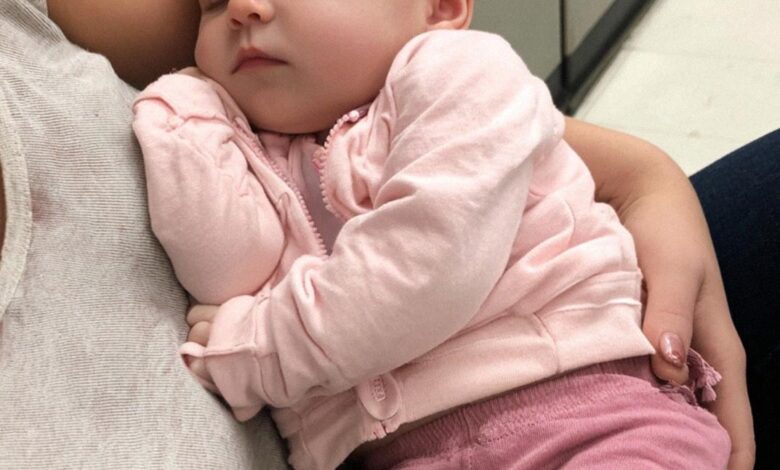
By the time I reached the laundromat that morning, exhaustion had hollowed me out. My body ached from another overnight shift at the pharmacy, and my seven-month-old daughter, Mia, slept heavy in my arms, her small head tucked against my shoulder. I only wanted to get the laundry done before collapsing into bed. Instead, that trip changed everything.
Working nights is the only way I can keep us afloat. When a coworker calls out or the store runs short, I always take the extra hours. Formula and diapers don’t wait for payday. My mother, who should be enjoying her retirement, spends her nights rocking Mia so I can work. I tell myself I’m grateful, not guilty, though the truth is both.
Our apartment is small, second-floor, and old — cheap enough to manage but without a washing machine. The laundromat down the street is our routine: flickering neon sign, sticky floor, humming rows of tired machines. That morning, the laundry basket was overflowing again. I sighed, bundled Mia in her tiny jacket, and headed out before the city was fully awake.
Inside, the place was nearly empty. One woman, maybe in her fifties, was folding clothes from a dryer. She glanced up, smiled, and said, “What a beautiful baby.” Her voice was kind, steady. I thanked her, loaded the washer, and when she left, it was just me, Mia, and the rhythmic churn of the machines.
I threw everything in together — onesies, towels, my work shirts — fed the quarters, hit start, and sat down. Mia fussed, and I pulled a small blanket from the laundry pile, shaking it out before wrapping her snugly against my chest. She sighed and drifted off. I told myself I’d close my eyes for just a moment.
The next thing I knew, sunlight was pouring through the window at a sharper angle. I blinked, confused, heart pounding. How long had I been asleep? My first instinct was panic — was Mia okay? She was. Still breathing softly against me, her tiny fist gripping my shirt. But something around me had changed.
The machines were silent. My laundry — which I had left soaking in the wash — was now neatly folded on the table beside me. My uniforms stacked in perfect squares. Mia’s onesies arranged by color. Towels folded with crisp corners. I froze, staring at it all. Someone had been here, close enough to touch my baby while I slept.
Fear prickled my skin. I checked everything — wallet, keys, phone — all still there. Mia was safe. Slowly, relief replaced panic, but confusion remained. Who would do this?
Then I noticed the washer I had used. The door was still closed, but something sat inside. Not clothes. Through the glass, I saw shapes, colors — things that didn’t belong. I walked closer, heart thudding. When I opened the door, I gasped.
Inside was a pack of diapers, two cans of baby formula, baby wipes, a soft fleece blanket, and a stuffed elephant with floppy ears. On top, a folded note:
“For you and your little girl. — S.”
My throat tightened. I looked around the laundromat — empty. Whoever had done this was long gone. Tears welled in my eyes as I sank back into the chair. That note, those simple words, felt like a lifeline. Someone had seen me — not just a tired mother, but a person trying her best.
When I got home, I laid everything out on the bed. My mother came in, rubbing sleep from her eyes, and gasped. “There are still good people in this world,” she whispered.
I pinned the note to the fridge with a sunflower magnet. Every time I saw it, I felt a spark of hope. The world wasn’t as cold as it sometimes felt.
A week later, after another grueling double shift, I climbed the stairs to our apartment and stopped dead. Sitting outside the door was a wicker basket. Inside were groceries — oatmeal, bananas, jars of baby food, crackers, and another note, the same handwriting as before:
“You’re doing amazing. Keep going. — S.”
I laughed and cried at once, half-sobbing, half-smiling. How could someone care so deeply without wanting anything in return? How did they even know what we needed?
That night, after putting Mia to bed, I wrote my own note:
“Thank you. Please tell me who you are. I want to thank you properly.”
I slipped it under our doormat. Days passed. Nothing. The note stayed untouched, fluttering slightly each time the door opened. I began to think maybe they were done — maybe this anonymous kindness had been a one-time miracle.
Then, one early morning as I came home from work, I saw a man standing near the gate of our building. He looked nervous, shifting his weight, glancing at me, then away.
“Sarah?” he asked.
I hesitated. “Yes?”
He smiled awkwardly. “It’s Sean. From high school.”
The name clicked. Sean — the quiet boy who always sat alone, the one other kids teased. I’d sat beside him in English class, shared notes, and told the bullies to back off.
He rubbed the back of his neck, still shy. “My mom uses that laundromat near here. A couple weeks ago, she told me about a young woman with a baby, looked completely worn out but still smiling at her little girl. She said she recognized you. She couldn’t stop thinking about you, and when she told me, I couldn’t either.”
My heart skipped. “Your mom… she was there that morning?”
He nodded. “Yeah. Lorraine. She said you reminded her of you — the way you used to stand up for people. She wanted to help but didn’t know how. So I did. The diapers, the groceries — that was me. Well, us.”
Tears filled my eyes. “Sean, you didn’t have to—”
He shook his head. “You once stood up for me when everyone else laughed. You told me to be proud of who I was. I never forgot that. I just wanted to return the kindness.”
I stood there, holding Mia, speechless. That kind of full-circle grace doesn’t happen often.
After that, Sean stopped by sometimes — dropping off diapers, fixing a loose cabinet, changing a lightbulb. My mother started calling him “Uncle S,” a nickname that made him blush. There was no romance between us, just a quiet friendship built on gratitude and respect.
Months passed. One afternoon, my boss called me into his office. “You’re getting a raise,” he said. “And a more stable schedule.” When I asked why, he only smiled. “Someone called, said you’re one of the hardest-working people they know.” I didn’t need to ask who.
That evening, I looked at the faded note still hanging on our fridge. “For you and your little girl. — S.” The ink had smudged a little, but the message was clear as ever.
I smiled through tears, tracing the letters with my fingertip. Sometimes, the kindness you give long ago doesn’t disappear. It just waits — patient, quiet — until life brings it back when you need it most.
Sean hadn’t just folded my laundry or filled my pantry. He reminded me that the smallest act of compassion can ripple through time, finding its way home years later.
Kindness doesn’t vanish. It simply rests, waiting for the right moment to return — sometimes in the form of a stranger at a laundromat, a folded note, and a simple letter “S.”