How to Check Claims About Mysterious Footage From the Amazon
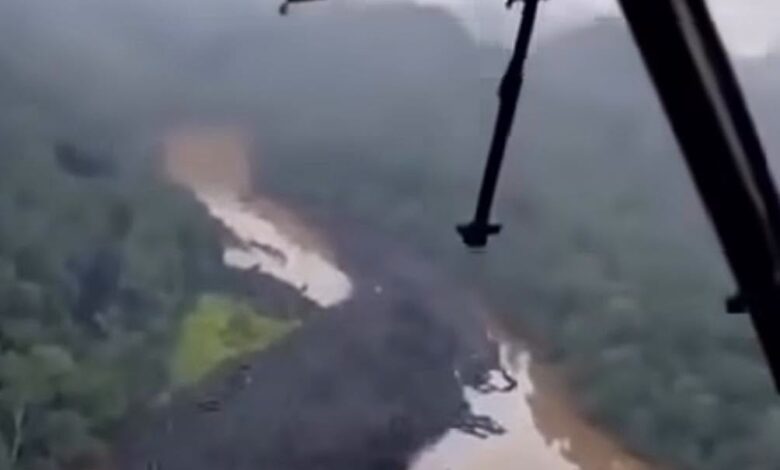
That kind of story is designed to feel convincing, but it follows a very familiar pattern:
dramatic buildup, vague location, unnamed footage, and a mystery that’s “too real to ignore.” In reality, there’s no verified scientific evidence of a giant unknown creature appearing in a jungle like this.
What people do often capture on camera are misidentified real things—large animals partly obscured by vegetation, shadows stretching at unusual angles, or even machinery (like excavators or logging equipment) seen from a distance. In dense jungle environments, scale and perspective can be very misleading.
There’s also a long history of similar claims tied to folklore. For example, legends like Bigfoot or Yeti often resurface when unclear footage goes viral.
In many cases, later analysis shows hoaxes, editing tricks, or simple misinterpretations.
Modern video tools make it even harder to trust what you see. With CGI and AI editing, a convincing “towering figure in the mist” can be created without much effort.
Even small distortions—like compression artifacts or motion blur—can make ordinary objects look unnatural when slowed down or zoomed in.
Scientists don’t dismiss these clips out of hand—they just require solid evidence. That means clear footage, multiple angles, physical traces, and independent verification. Without that, a video remains interesting but unproven.
So the most likely explanation isn’t a hidden guardian emerging from myth—it’s a mix of storytelling, visual ambiguity, and possibly digital manipulation. If you have the actual clip, I can help break down what’s really happening frame by frame.
A clip is less informative when the person who recorded it is unnamed and the location is given only as an enormous region. The Amazon spans several countries and includes rivers, cities and forested areas that are quite different from one another. A broad location label gives readers very little they can use to identify a particular event. A date and a place would make a meaningful difference.
The next question is whether the viewer can find the earliest available copy. A repost may add narration, music or a caption to a scene that originally appeared in another context. Comparing copies sometimes reveals that the part viewers remember most is the commentary supplied later. An original recording can show whether the voice-over was present when the scene was filmed or added afterward.
People and objects visible in a clip can give clues about its setting. A distinctive road sign, storefront or river crossing may be more useful than a claim in the caption. An identifiable detail still needs corroboration. The same road or building may appear in footage recorded years apart, and a short edit can leave out features that would help date the scene.
A separate question is what the clip actually shows. The viewer may be able to see movement or hear a sound while remaining unsure what produced it. A caption can turn that uncertainty into a specific claim, but the claim needs support of its own. Naming an animal, a person or an incident takes information beyond the fact that the clip drew attention.
The original post is often the best place to look for those details because it may carry a location, a date or a description from the person who uploaded the footage. If that material is missing, a modest description of what is visible is more useful than a confident conclusion. The point of checking the origin is to make it possible for someone else to trace the same evidence.