Hollywoods Quietest Tragedy Exposed!
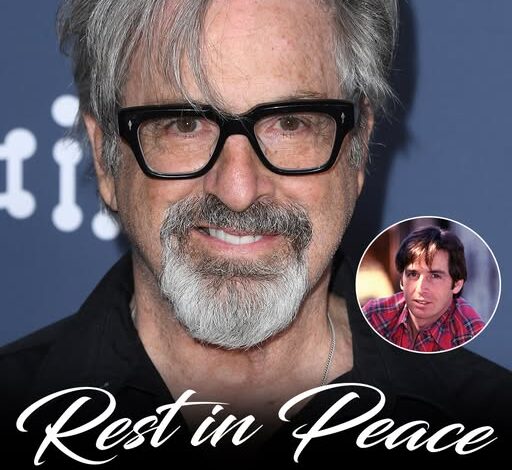
The passing of Robert Carradine at the age of 71 marks the conclusion of a life that burned with a gentle, enduring brilliance, even as it was privately weathered by a storm that lasted for more than two decades. A vital member of the legendary Carradine acting dynasty, Robert was a man who navigated the immense pressure of his family’s Hollywood legacy to forge a path that was entirely his own. While the public celebrated him for his iconic roles and his distinct, scrappy charm, his family has now revealed that his final years were defined by a silent, valiant battle with bipolar disorder—a struggle they are choosing to speak about openly in the hope of transforming a private tragedy into a meaningful legacy of awareness.
To several generations of audiences, Robert Carradine was a comforting constant. He first captured the public imagination in the 1970s, making a rugged debut alongside John Wayne in The Cowboys, before displaying a more cerebral intensity in Hal Ashby’s Coming Home and Martin Scorsese’s Mean Streets. However, it was in 1984 that he achieved a unique kind of cinematic immortality as Lewis Skolnick in Revenge of the Nerds. In that role, Carradine gave voice and victory to the underdog, creating a character whose iconic laugh and unwavering self-acceptance became a cultural touchstone. He didn’t just play a “nerd”; he elevated the archetype, proving that intelligence and authenticity were the ultimate forms of cool.
Later in his career, a new generation came to know and love him as Sam McGuire, the gentle and anchoring father on the Disney Channel’s Lizzie McGuire. For millions of young viewers, he was the personification of the “safe place” in a story—the steady, humorous, and deeply kind heart of a family that felt like their own. This duality defined his public persona: he was the man who could lead a fraternity of misfits to victory or provide a quiet word of wisdom over a kitchen table. Audiences trusted him without thinking, drawn to an on-screen warmth that felt entirely genuine because, by all accounts from those who knew him, it was.
In the wake of his passing on February 23, 2026, his family has made the brave decision to pull back the curtain on the “quietest tragedy” of his life. In a series of moving statements, they confirmed that Robert had lived with bipolar disorder for twenty years, a condition that was exacerbated by the tragic loss of his brother, David Carradine, in 2009. By naming the illness, the Carradine family—led by his brother Keith and his children, including actress Ever Carradine—is refusing to let his story be rewritten through the lens of Hollywood gossip. Instead, they are framing his life as a testament to resilience, characterizing his two-decade struggle as a “valiant war” fought with immense dignity.
The choice to be transparent about the nature of his death is a radical act of love and advocacy. The family’s grief has evolved into a powerful call to action, urging the public to treat mental illness with the same urgency and lack of stigma as any physical ailment. They are asking the world to look past the “I’m fine” that often masks deep suffering and to recognize that even the funniest, most compassionate person in the room might be holding on by a precarious thread. In honoring Robert, they are not just asking for remembrance of his filmography; they are asking for a fundamental shift in how society perceives and supports those navigating the complexities of mental health.
The outpouring of tributes from the Hollywood community underscores the depth of the loss. Hilary Duff, who played his on-screen daughter for years, shared a heart-wrenching message reflecting on the “warmth” he brought to her life and the profound sadness of knowing he was suffering in silence. His co-stars and friends have recalled a man who was pragmatic, eccentric, occasionally cranky, and always deeply human. He was a musician, a car enthusiast, a director, and a producer, but most importantly, he was a man who deeply valued the connections he built with those around him.
As the industry reflects on the 2026 awards season, the omission of Robert Carradine from certain tributes has sparked a renewed conversation about how we honor those who have shaped our cultural landscape. For fans, however, his legacy remains secure. It lives on in the “nerds” who found confidence through his portrayal of Lewis, and in the “Lizzie McGuire” generation who found a sense of home in his portrayal of a father. His work was characterized by a rare lack of vanity; he was an actor who was always willing to be the punchline if it served the heart of the story.
The Carradine family has requested privacy during this “unfathomable loss,” but they have also provided a beacon of hope for others. By sharing Robert’s journey, they hope to encourage a world where addressing mental health is met with “gratitude, understanding, and compassion” rather than shame. They have urged anyone struggling to reach out to the 988 Suicide & Crisis Lifeline, emphasizing that help is available and that no one has to fight these battles alone.
Robert Carradine’s life was a complex tapestry of light and shadow. He was a man who brought immense joy to millions while navigating a profound internal darkness. In the end, he is remembered not for how he died, but for how he lived—with a scrappy, beautiful soul that refused to be defined by anything other than his own unique spirit. He was, as his family so poignantly put it, a “beacon of light” in a world that can often feel dark. As he is laid to rest, his story serves as a reminder to be kinder, to listen more closely, and to cherish the steady hearts that anchor our lives.