He Was Homeless, Sold His Dog for Food, and Hollywood Called Him Too Ugly, Then He Became a Global Icon!
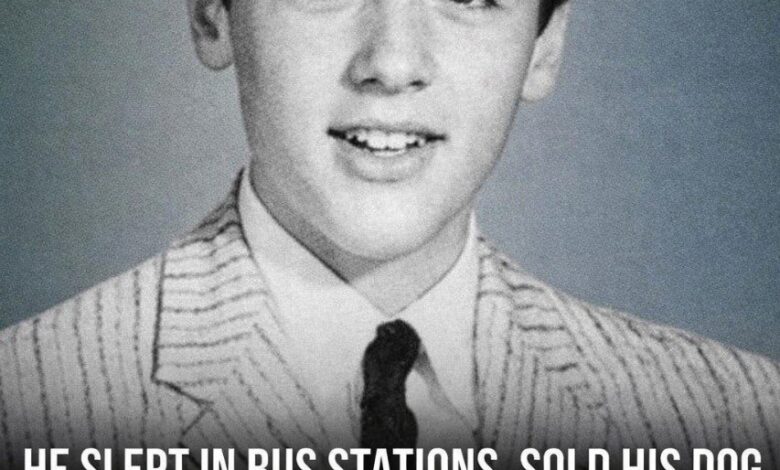
Long before he became one of the most recognizable and enduring figures in Hollywood, Sylvester Stallone lived a life defined by struggle, rejection, and moments of real desperation. His rise to global fame wasn’t built on privilege or luck—it was forged through hardship, persistence, and an almost stubborn refusal to give up when everything around him suggested he should.
Stallone’s story begins in New York City, where he was born on July 6, 1946. Even his arrival into the world came with complications. During childbirth, a medical error damaged nerves in his face, leaving him with partial paralysis. This condition gave him the slurred speech and drooping facial features that would later become instantly recognizable—but as a child, it made him an easy target.
Growing up, he didn’t fit in. Other kids mocked him relentlessly, often focusing on the way he spoke and looked. Teachers underestimated him, assuming his speech issues reflected a lack of intelligence. He struggled academically and found himself frequently in trouble, not because he lacked ability, but because he felt disconnected and out of place. Stability was also missing at home. His parents’ relationship was turbulent, filled with arguments that eventually led to divorce. Stallone was shuffled between households, growing up without a consistent sense of support or belonging.
That early instability shaped him. He felt isolated, misunderstood, and constantly judged. At times, he was expelled from schools due to behavioral issues, further reinforcing the idea that he didn’t belong anywhere. But somewhere in the middle of that chaos, he found something that gave him direction—acting.
Acting became more than a hobby. It was an escape. It allowed him to step into different identities, to express emotions he couldn’t articulate in his own life. For the first time, he had a sense of purpose. So he made a decision that would define his future: he would pursue acting professionally.
That decision led him to New York again as a young adult—but this time, the city didn’t welcome him with opportunity. It tested him.
He had almost no money. At times, he was effectively homeless. He slept in bus terminals, stayed in cheap accommodations when he could afford them, and sometimes had nowhere to go at all. Every day was a grind just to survive, let alone chase a career.
He went to audition after audition, only to hear the same blunt feedback over and over. Casting agents told him he wasn’t good-looking enough. They mocked his voice. They said audiences wouldn’t understand him. They dismissed him outright, insisting he would never succeed as a leading man. The rejection wasn’t occasional—it was constant.
There came a point when things got so bad that he was forced to make a decision that would haunt him. With no money left and no way to feed himself, he sold his dog, Butkus, outside a liquor store for $40. The dog wasn’t just a pet—it was his companion during his lowest moments. Letting him go wasn’t a choice he wanted to make, but at that time, survival came first. Stallone would later describe it as one of the most painful moments of his life.
Everything could have ended there. Most people would have walked away, found a different path, accepted defeat. But Stallone didn’t.
In 1975, something shifted. He watched a boxing match between Muhammad Ali and Chuck Wepner. Wepner wasn’t expected to last long against Ali, yet he went the distance, pushing through punishment and proving his resilience. That fight struck a nerve.
That same night, Stallone went home and started writing.
What came out of that moment was the script for Rocky. He poured himself into it, writing with urgency and purpose. In just three days, he had completed a screenplay that mirrored his own life—a story about an underdog given one shot to prove himself.
When he began pitching the script, studios immediately saw its potential. They offered to buy it. But there was a condition—they wanted a more established actor to play the lead role.
Stallone refused.
He was offered money, more than he had ever seen before. Enough to solve his immediate problems. Enough to make his life easier. But he turned it down again and again. He believed in the story, and more importantly, he believed he was meant to play Rocky. Without that, the deal meant nothing to him.
Eventually, a studio agreed to take the risk—but with a very limited budget. It wasn’t a glamorous deal. It wasn’t safe. But it was enough.
When Rocky was released in 1976, everything changed.
The film became a massive success, capturing audiences around the world. It wasn’t just a boxing movie—it was a story about resilience, about fighting against the odds, about refusing to quit. People connected with it because it felt real.
Rocky went on to win the Academy Award for Best Picture, and almost overnight, Sylvester Stallone transformed from a struggling, rejected actor into a global star.
The same qualities that once held him back—his voice, his appearance—became part of his identity. What had been seen as flaws turned into strengths.
And he didn’t stop there.
Stallone built an entire career on characters who reflected his journey. The Rocky series became a long-running franchise. He created Rambo, another iconic figure defined by toughness and survival. He continued to star in major films like Cliffhanger and Cobra, and later returned to his roots with the Creed series, introducing Rocky to a new generation.
Despite all that success, he never forgot where he came from.
After Rocky’s breakthrough, one of the first things he did was track down the man he had sold his dog to. It wasn’t easy—the man didn’t want to give the dog back. But Stallone persisted. Eventually, he bought Butkus back for $15,000, an enormous amount compared to the $40 he had originally received. It didn’t matter. He wanted his companion back.
That moment says a lot about who he is. Fame didn’t erase his past—it reminded him of it.
Today, Sylvester Stallone stands as one of Hollywood’s most iconic figures, but his story isn’t just about success. It’s about endurance. It’s about pushing forward when everything is stacked against you.
He was told he wasn’t good enough. He was broke, homeless, and overlooked. He lost almost everything at one point.
And he still made it.
From sleeping in bus stations to standing on the biggest stages in the world, his journey is a reminder that rejection doesn’t define the outcome—persistence does.