Greys Anatomy star Eric Danes made a haunting final post before his death!
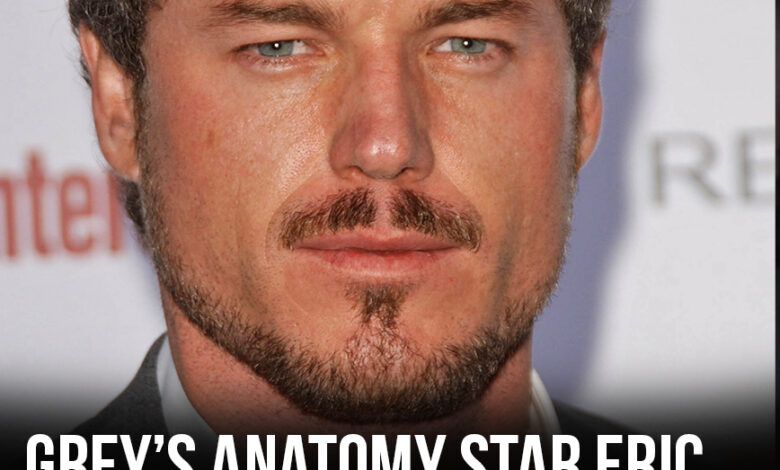
The global entertainment community is currently unified in a profound state of mourning following the news that Eric Dane, the charismatic actor who became a household name through his iconic portrayal of Dr. Mark Sloan on Grey’s Anatomy, has passed away at the age of 53. His death on Thursday, February 19, 2026, followed a courageous and deeply personal battle with Amyotrophic Lateral Sclerosis (ALS), a progressive neurodegenerative disease. While fans have long admired him for his “McSteamy” persona, the days following his passing have seen a massive groundswell of respect for a different side of the actor: his unwavering role as a dedicated advocate for those suffering from the same debilitating condition.
As tributes pour in from former co-stars and admirers across the globe, many have found themselves drawn back to Eric Dane’s final Instagram post, a message that has taken on a haunting and prophetic significance in the wake of his death. In the final weeks of his life, Dane used his platform not to dwell on his own physical decline, but to announce his appointment to the board of the Target ALS Foundation. The post featured a photo marking this new chapter of service, accompanied by a caption that perfectly encapsulated his resilient spirit: “This disease takes something from me every day. But I won’t let it take my spirit”. To those who followed his journey, these words were more than just a caption; they were a mission statement that he upheld until his final moments.
The progression of Dane’s illness was a harrowing testament to the severity of ALS. By the middle of 2025, reports indicated that he had lost the full use of his right arm and hand. By the following autumn, the man known for his robust physical presence on screen was utilizing a wheelchair full-time. Despite these life-altering changes, Dane refused to retreat into the shadows. Instead, he became a vocal critic of the “rocky” landscape of research funding, which he described as being “littered with hurdles and bureaucracy”. His advocacy was born from a desire to humanize the diagnosis and to push for systemic changes that would benefit future patients who currently face a reality where there is no known treatment or cure.
In a remarkably candid reflection shared just two months before his passing, Dane spoke about the emotional weight of his daily life. He admitted that there were days when he felt he had “no reason to be in a good spirit,” and that no one would have blamed him if he had chosen to spend weeks “crawled under the sheets” in tears. The fact that he chose to spend those same days advocating for others only served to heighten the impact of his strength. His family, including his daughters Billie and Georgia and his former wife Rebecca Gayheart, emphasized this in their official statement, noting that advocacy had become the defining centerpiece of his final chapter. They shared that he was “determined to make a difference for others facing the same fight”.
Eric Dane’s journey to becoming a global television star began in San Francisco, where he was born in 1972. He spent much of the 1990s building a steady career before his breakout moment in 2006 on Grey’s Anatomy. What was originally intended to be a brief guest appearance evolved into one of the most beloved and enduring roles in the series’ history, transforming “McSteamy” into a cultural phenomenon. However, Dane’s talent was far-reaching, and he demonstrated incredible range in projects like Charmed, The Last Ship, and most recently, the gritty HBO drama Euphoria. His film career was equally diverse, with notable appearances in blockbusters like X-Men: The Last Stand, Marley & Me, and the recent Bad Boys: Ride or Die.
One of the most poignant professional choices he made toward the end of his life was his role in the series Brilliant Minds. In a striking instance of life imitating art, Dane portrayed a patient living with ALS while he was privately navigating his own diagnosis. He described the experience as both physically challenging and emotionally cathartic, allowing him to use his craft to provide a window into the reality of the disease. This final performance, much like his advocacy work, was a gift to the ALS community, providing visibility to a struggle that is often suffered in isolation.
As the world processes the loss of such a vibrant talent, the narrative has shifted away from the characters he played and toward the man he became when the cameras were off. His final public words now stand as a permanent testament to his courage and his refusal to be defined solely by his physical limitations. Fans have noted the painful irony that a man who spent his life portraying healers and heroes on screen spent his final days fighting for a cure that would not come in time for him. Yet, as his final post promised, the disease never managed to claim his spirit.
Eric Dane’s legacy is now woven into the fabric of television history and the ongoing fight for medical research. He proved that even in the face of a devastating diagnosis, an individual can choose to use their remaining time to light the way for others. For his daughters, his colleagues, and his millions of admirers, his memory will be defined by that mix of charisma, emotional depth, and profound bravery. He will be remembered not only for the way he occupied the spotlight, but for the way he used it to illuminate the struggles of others, ensuring that his spirit remains intact in the hearts of those he inspired.