Fans really want to believe the Wendys logo has a secret message?!
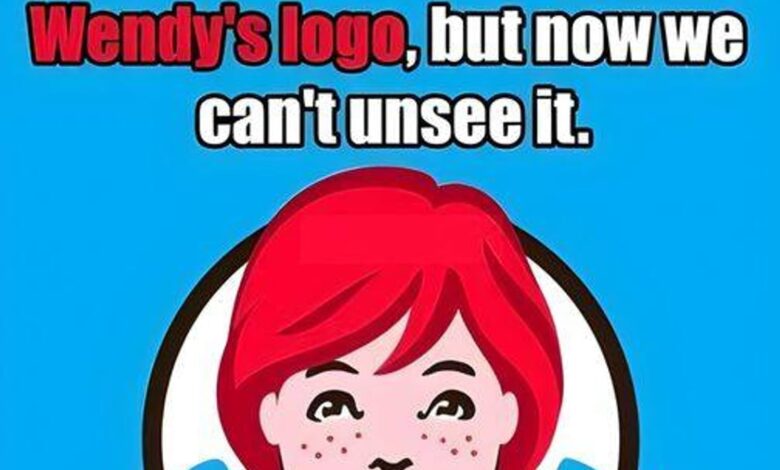
At first glance, the Wendy’s logo feels simple, almost nostalgic. A smiling red-haired girl with freckles, neatly tied pigtails, and a vintage-style collar stares back at you with a kind of warmth that’s rare in fast food branding. It doesn’t scream for attention the way many corporate logos do. Instead, it leans into something softer, something familiar. It suggests comfort, like a home-cooked meal or a place where people gather without pretense. That tone wasn’t accidental. From the beginning, the brand was built around the idea of quality, care, and a slightly more personal touch than its competitors.
But over time, people started to notice something that changed how they looked at the logo entirely. It wasn’t obvious at first. You had to slow down and really look at the details, particularly the ruffled collar beneath the girl’s chin. Once you saw it, though, it was hard to unsee. The folds and shadows in the design seemed to form the word “MOM.”
That small observation sparked something much bigger than anyone expected. Suddenly, what had been a straightforward brand image became layered with meaning. Fans didn’t just see a logo anymore—they saw a message. And not just any message, but one that tied directly into emotion, memory, and identity. “MOM” wasn’t just a word; it carried weight. It suggested care, nurturing, home, and trust. For a fast food chain, that’s powerful territory.
People began connecting the dots in ways that felt almost too perfect to be coincidence. Wendy’s, after all, was founded by Dave Thomas, who named the company after his daughter, Melinda “Wendy” Thomas. The idea that the logo might quietly include a tribute to motherhood—or to family more broadly—felt believable. It aligned with the brand’s image and its origin story. The narrative practically wrote itself: a father builds a company inspired by family values, and somewhere in its design hides a subtle nod to “MOM,” reinforcing the idea that the food is made with the same care you’d expect at home.
That interpretation spread quickly. Social media amplified it, turning a quiet observation into a widely shared theory. People posted close-up images, highlighted the collar, traced the letters. Others chimed in with their own interpretations, reinforcing the idea that this wasn’t random. It became one of those internet discoveries that felt like uncovering a hidden truth, something that had been there all along, waiting to be noticed.
And the more it circulated, the more it resonated. Because it wasn’t just about design—it was about what people wanted to believe. Fast food is often associated with speed, convenience, and, at times, a lack of authenticity. But this theory flipped that perception. It suggested that even in a massive corporate brand, there was a human touch, a quiet reminder of home and family embedded in plain sight.
Then came the official response. Wendy’s addressed the theory and made it clear: the “MOM” detail wasn’t intentional. According to the company, the design of the collar wasn’t meant to spell anything. It was simply part of the illustration, a stylistic choice without hidden meaning.
In most cases, that would be the end of the story. A rumor gets debunked, people move on, and the moment fades. But that’s not what happened here. If anything, the denial made the theory stronger.
Because by the time the company spoke up, the idea had already taken on a life of its own. People had invested in it emotionally. They had shared it, discussed it, and woven it into their understanding of the brand. The official explanation didn’t erase that—it just added another layer to the conversation.
There’s something interesting about how meaning works in situations like this. Once a piece of art or design is released into the world, it doesn’t belong solely to its creator anymore. It becomes part of a larger cultural space where people interpret it through their own experiences and perspectives. What the designer intended is only one part of the equation. What people see, feel, and believe can matter just as much, if not more.
In this case, the “MOM” interpretation tapped into something universal. It wasn’t about whether the letters were deliberately placed there. It was about the feeling they created. People saw care, comfort, and familiarity, and those associations stuck. The logo became more than a visual—it became a story.
And stories are powerful, especially in branding. Companies spend enormous amounts of time and money trying to create emotional connections with their audiences. They want customers to feel something, to associate their products with positive experiences and values. What happened with the Wendy’s logo is a rare example of that connection forming organically, without a deliberate push.
Even after the clarification, many people chose to hold onto the original interpretation. Not out of ignorance, but because it felt meaningful. It made the brand more relatable, more human. It added depth to something that might otherwise be overlooked.
There’s also a kind of quiet defiance in that choice. It reflects the idea that consumers aren’t just passive recipients of branding—they’re active participants. They interpret, reinterpret, and sometimes reshape the meaning of what they see. In doing so, they create a shared cultural narrative that exists alongside, and sometimes independent of, the official one.
The Wendy’s logo, with its freckled face and old-fashioned collar, hasn’t changed. But the way people see it has. For some, it’s still just a friendly, recognizable symbol. For others, it carries that extra layer of meaning, whether or not it was ever intended.
And that’s what makes the whole situation interesting. It’s not really about whether the collar spells “MOM.” It’s about how easily people can find meaning in small details, and how those meanings can spread, evolve, and stick. It’s about the gap between intention and perception, and how that gap can sometimes create something more powerful than either side alone.
In the end, the logo did something every brand hopes for, even if it happened by accident. It made people stop, look closer, and feel something. It sparked curiosity, conversation, and a sense of connection. Whether the hidden message is real or imagined almost doesn’t matter anymore.
Because once people see it, and once they feel it, it becomes real in a different way.