Donald Trump dementia fears spike as doctor makes new dire claims!
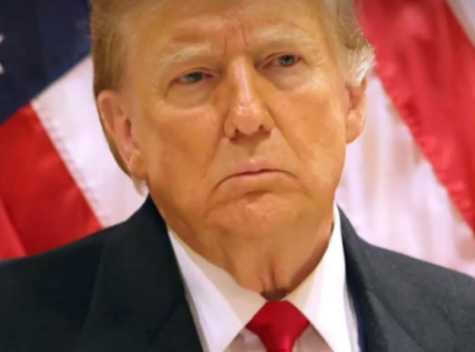
Fresh debate over the cognitive health of Donald Trump has intensified following new public claims from a mental health expert, even as official medical evaluations continue to describe the former president as fit, stable, and capable of holding the highest office in the country. The clash between formal medical reporting and external expert commentary has once again placed presidential health under a microscope, amplifying political tension and public scrutiny during a critical period in American politics.
Earlier this year, the White House released a comprehensive medical assessment conducted by Trump’s physician, Dr. Sean Barbabella. The report presented a detailed snapshot of Trump’s physical condition, noting that he is 75 inches tall, weighs 224 pounds, and shows normal findings across examinations of his cardiovascular system, eyes, ears, throat, and neurological function. According to the document, Trump previously underwent cataract surgery, remains on several prescribed medications, and recently completed a routine colonoscopy that identified a benign polyp along with mild diverticulitis. None of the findings were described as alarming or limiting.
Barbabella characterized Trump’s overall condition as strong and resilient, citing an active lifestyle and sustained public engagement as contributing factors. In his written conclusion, the physician stated that Trump demonstrates excellent cognitive and physical health and is fully capable of executing the duties required of a commander-in-chief and head of state. The report was framed as definitive, leaving little room for ambiguity regarding Trump’s fitness.
Trump reinforced that message personally. Speaking to reporters after the examination, he emphasized that he had taken a cognitive test and answered every question correctly. He highlighted the breadth of the evaluation, stressing that it involved extensive testing beyond basic screening, including heart assessments and multiple diagnostic checks. His remarks were delivered with confidence, echoing his long-standing insistence that he remains in peak condition.
Despite these assurances, criticism and doubt have persisted outside official medical channels. One of the most prominent voices challenging the assessment is Dr. John Gartner, a psychologist and former instructor at Johns Hopkins University Medical School. Gartner has publicly suggested that Trump may be exhibiting early signs of frontotemporal dementia, a progressive neurological disorder associated with changes in behavior, speech, judgment, and motor coordination.
In a recent interview on The Dean Obeidallah Show, Gartner outlined his concerns, arguing that observable changes in Trump’s physical movement and coordination warrant closer attention. He pointed to older video footage from the 1980s, showing Trump playing volleyball with agility and balance, diving for the ball and quickly regaining his footing. Gartner contrasted that footage with more recent appearances in which Trump appears slower, more rigid, and occasionally unsteady.
According to Gartner, these changes extend beyond what would typically be expected from aging alone. He cited Trump’s gait as a particular area of concern, describing what he characterized as a semicircular swing of the right leg during walking. Gartner stated that he consulted neurologists who identified the movement as a potential indicator associated with frontotemporal dementia. He described the leg motion as resembling a “dead weight” swing, suggesting impaired motor control.
Gartner also referenced instances in which Trump appeared to struggle with stairs or lost his balance during public events. While such moments have been widely circulated online, Gartner argued that their consistency over time strengthens the case for neurological decline rather than isolated missteps. He emphasized that frontotemporal dementia often presents differently from other cognitive disorders, with early symptoms frequently manifesting through physical and behavioral changes rather than memory loss.
Adding to the speculation are unverified claims circulating on social media suggesting that Trump may be wearing a catheter beneath his clothing. These assertions have neither been confirmed nor denied by Trump’s team, yet they have fueled online discussion and heightened curiosity among political commentators. Medical professionals caution that such speculation, particularly when based on images or video clips taken out of context, can easily lead to misinformation.
Gartner has also cited input from another medical professional, Dr. Zoffman, who reportedly reviewed video footage of Trump’s movements. According to Gartner, she expressed strong confidence that the observed gait pattern aligns with frontotemporal dementia. These claims, however, remain informal opinions rather than diagnoses, as neither Gartner nor Zoffman has examined Trump directly or reviewed his medical records.
Trump and his representatives have not responded publicly to Gartner’s remarks. The White House continues to stand by the April medical report as the authoritative assessment of Trump’s health. Supporters argue that the physician’s evaluation, based on direct examination and clinical testing, carries far more weight than speculative analysis derived from public appearances.
The controversy underscores a recurring issue in American politics: the balance between medical privacy and public accountability for leaders whose decisions affect millions. Presidential health disclosures have historically been selective, often designed to reassure rather than inform in exhaustive detail. Critics argue that this approach leaves room for speculation, while defenders maintain that unfounded diagnoses based on observation alone are irresponsible.
As the discussion continues, Trump’s health has become both a medical and political talking point, intertwined with debates over age, stamina, and leadership capacity. The contrast between official medical findings and external expert opinions highlights the difficulty of separating legitimate concern from partisan interpretation in a hyper-polarized environment.
What remains clear is that Trump’s physical and cognitive condition will continue to attract intense attention. With formal medical evaluations affirming his fitness and critics raising questions based on visible behavior, the issue sits at the intersection of science, politics, and public perception. The outcome of that tension will likely shape how voters, commentators, and institutions approach the question of health transparency for national leaders moving forward.